
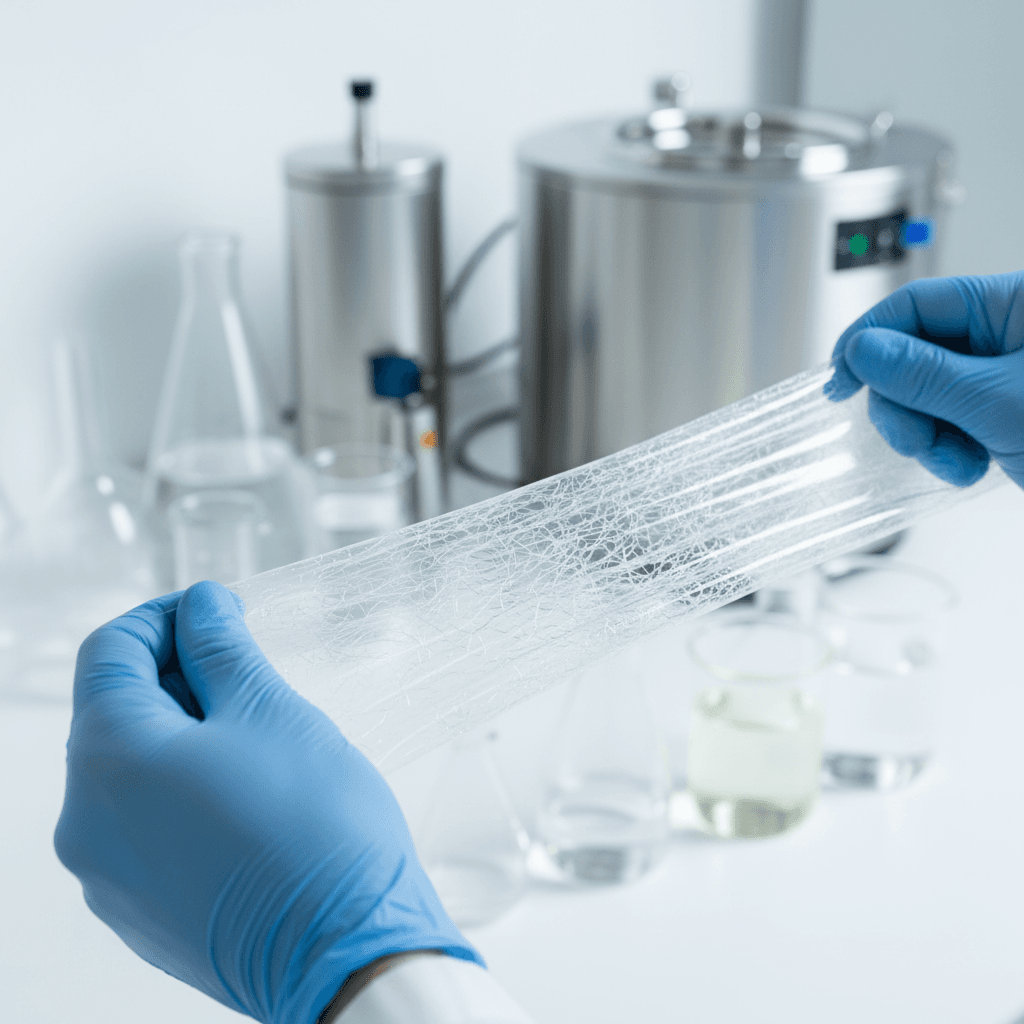
Concerns about the environmental impact of petroleum-based plastics continue to grow, particularly regarding their widespread use in packaging for food, beverages, and consumer products. A new development in materials science offers an alternative: a hemp-based plastic. U.S. researchers have identified a hemp-derived material that demonstrates malleability, stretch, and durability comparable to, or even superior to, conventional plastics, maintaining its integrity even when exposed to boiling water. These characteristics position it as a viable option for various packaging and specialty applications, addressing the urgent need for more sustainable materials.
Developing a High-Performance Hemp-Based Plastic
The research, highlighted by Forbes, focuses on a novel material derived from low-grade CBD oil. Gregory Sotzing, a chemistry professor at the University of Connecticut and one of the study’s authors, noted the material’s robust performance. He emphasized that this new polymer is sourced from a non-food crop, which helps to mitigate concerns about diverting agricultural resources from food production, a common criticism leveled against some other bio-based materials.
The scientific study found that this hemp-derived alternative possesses several key properties making it attractive for industrial use:
- Malleability and Stretch: Its ability to be shaped and stretched is on par with, or in some cases, superior to conventional plastics, offering flexibility in manufacturing.
- Thermal Durability: The material remains durable even when it comes into contact with boiling hot water, suggesting suitability for applications requiring heat resistance.
- Sustainable Sourcing: It is made from low-grade CBD oil, a byproduct of hemp processing, which can add economic value to industrial hemp cultivation and reduce waste.
Environmental and Economic Advantages
Beyond its physical properties, the environmental profile of this hemp-based plastic presents significant advantages over its petroleum-based counterparts. Sotzing explained that, unlike conventional plastics, there is no indication of toxicity in soil or water as the hemp-based material breaks down. He clarified that “when this plastic degrades, it’ll degrade like hemp CBD,” meaning it will naturally oxidize over time in the soil without harmful environmental effects, a stark contrast to the persistent microplastic pollution from fossil-fuel derived materials.
Another notable benefit is its potential for a truly circular economy through advanced recyclability. While very little conventional plastic packaging is actually recycled, the hemp-based version is designed for reusability. Sotzing highlighted an “upcycling” potential, stating, “Because this plastic is made of CBD, you could upcycle and sell it, converting it back to CBD oil.” He further suggested that this process could potentially be more cost-effective than extracting CBD directly from the plant, thereby creating an additional economic incentive for recycling and fostering a more sustainable material lifecycle.
Scaling Production and Future Market Entry
While the scientific findings are promising, scaling up the production of this new plastic will require a substantial increase in industrial hemp cultivation to achieve cost-competitiveness for widespread applications. Sotzing has established a startup, PolyC Plastics and Composites, specifically to advance the commercial applications of this research and bring the material to market.
The initial market for this hemp-based plastic is expected to be in higher-end applications that demand durable, specialty materials, such as medical implants. Sotzing anticipates that these niche markets will serve as an entry point due to their higher value proposition, before broader applications like consumer packaging become economically viable. He noted, “This is brand new stuff,” and highlighted that no one else has previously demonstrated a high-temperature polymer that is a thermoplastic natural resource derived from a non-food source. This strategic approach acknowledges the current cost structure while laying the groundwork for future expansion as industrial hemp production grows and processing efficiencies improve, building on earlier coverage of hemp plastics and their potential to reduce reliance on fossil fuel derivatives.
Disclaimer: This article is for informational purposes only and does not constitute medical advice. Hemp Gazette does not provide medical recommendations, diagnoses, or treatment plans. Always consult a qualified healthcare practitioner before making any decisions regarding your health or any medical condition. Statements concerning the therapeutic uses of hemp, cannabis, or cannabinoid-derived products have not been evaluated by Australia’s Therapeutic Goods Administration (TGA). Medicinal cannabis products in Australia are accessed via prescription pathways under TGA regulation.