
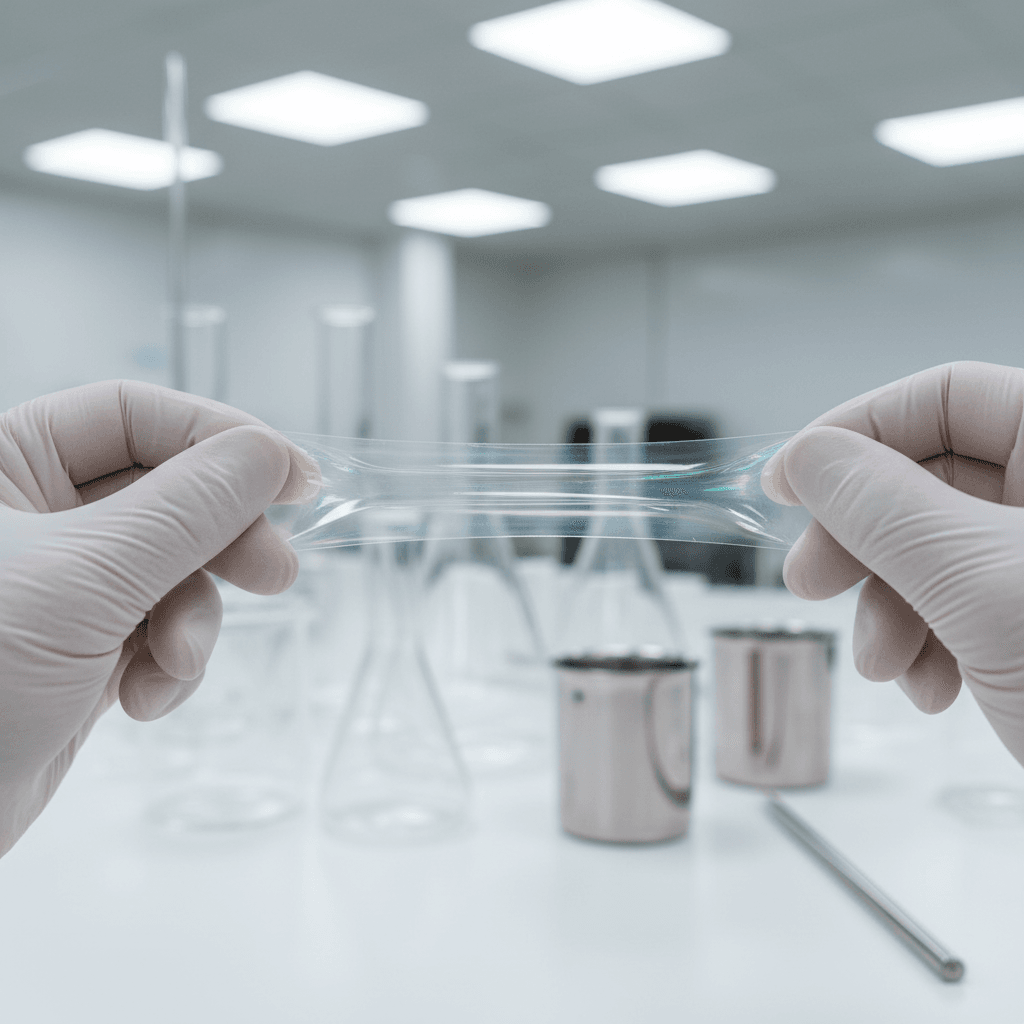
Revolutionising Packaging: Industrial Hemp Plastic from CBD
The global demand for sustainable materials is driving innovation, and according to GN: industrial hemp, a significant breakthrough has emerged from the University of Connecticut. A team led by Professor Gregory Sotzing has developed an eco-friendly polycarbonate plastic film using cannabidiol (CBD), a key component of industrial hemp. This novel material presents a promising alternative to conventional petroleum-based plastics like PET, which are widely used in packaging but contribute to microplastic pollution and rely on volatile crude oil supplies.
Amidst concerns over the stability of petrochemical supply chains, this CBD-derived material offers a timely solution. The research, published in the international journal ‘Chem Circularity’, highlights a thermoplastic that not only performs comparably to traditional plastics but also addresses many of their environmental drawbacks.
The Innovation: CBD-Derived Polycarbonate
The material developed by Professor Sotzing’s team is a type of polycarbonate, a high-strength, transparent plastic typically used in products like eyeglass lenses and bulletproof glass. Unlike existing polycarbonates that often contain bisphenol A (BPA), a known endocrine disruptor, this CBD-based material is expected to be a potential BPA substitute, which may offer advantages regarding BPA exposure.
Key properties of this innovative industrial hemp plastic include:
- Exceptional Heat Resistance: It maintains its transparency and shape even after being submerged in boiling water, demonstrating a high glass transition temperature.
- High Elasticity: The material can stretch up to an impressive 1600% of its original size, showcasing remarkable flexibility and durability.
- Superior Waterproof Performance: It exhibits a high ‘contact angle,’ indicating excellent water-repellent and anti-fouling properties. This characteristic makes it suitable for applications requiring resistance to moisture, and its anti-fouling properties suggest potential for applications where resistance to bacterial growth is desired, such as surface coatings for medical tubing.
These attributes address critical shortcomings of many other plant-derived polymer materials, which often fall short of PET’s heat resistance and elasticity, or are expensive and complex to produce. Professor Sotzing noted the unexpected water-repellent properties, opening up new application possibilities.
From Lab to Industrial Scale
While the potential of this industrial hemp plastic is immense, the research team is actively working to overcome hurdles before commercialisation. Current efforts include:
- Analysing the composition and safety of byproducts from the synthesis process.
- Developing improved materials with enhanced resistance to tearing and breaking.
- Establishing a large-scale mass production process to meet future demand.
One significant challenge is the current global production volume of CBD, which is not yet sufficient to fully replace the vast quantities of PET used worldwide. However, as Professor Sotzing points out,
Disclaimer: This article is for informational purposes only and does not constitute medical advice. Hemp Gazette does not provide medical recommendations, diagnoses, or treatment plans. Always consult a qualified healthcare practitioner before making any decisions regarding your health or any medical condition. Statements concerning the therapeutic uses of hemp, cannabis, or cannabinoid-derived products have not been evaluated by Australia’s Therapeutic Goods Administration (TGA). Medicinal cannabis products in Australia are accessed via prescription pathways under TGA regulation.