
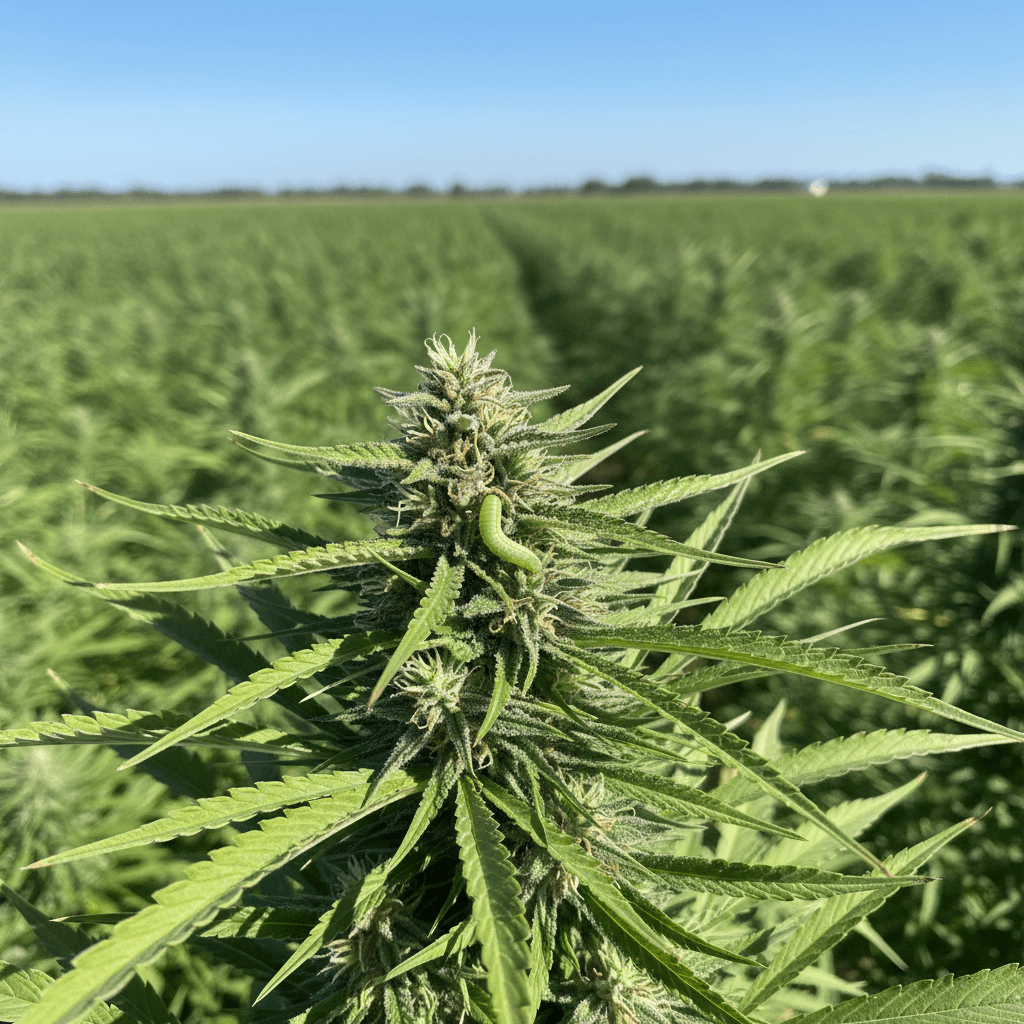
The corn earworm is a significant challenge for industrial hemp farmers, known for its destructive feeding habits on the plant’s flowers. This pest can reduce yields by up to 60%, impacting the marketable portion of the crop. Research underway at the University of Maryland, Eastern Shores, is investigating how hemp plants naturally defend themselves against this insect, aiming to develop resistant varietals. Freweyni Abrha, a Ph.D. student with a background in plant science and pathology, is leading this four-year study, focusing on the molecular and biochemical interactions within hemp when faced with pests like the corn earworm, as reported by Cannabis & Tech Today.
Hemp’s Defense Mechanisms Against the Corn Earworm
When an industrial hemp plant detects an infestation, its defense system activates, similar to an immune response in other organisms. The initial response involves the production of jasmonic acid, which then triggers the synthesis of what Abrha refers to as “secondary metabolites.” These include cannabinoids like CBD and various terpenes, which the plant uses to deter pests. Abrha notes, “When they are affected by the insect, they have a tendency to produce more of the secondary metabolites.” Her research aims to understand the relationship between these secondary metabolites and the plant’s defense mechanisms, with the goal of leveraging hemp’s natural production ability for insect management.
Breeding for Resistance
Abrha’s work involves analyzing which of the plant’s genes are affected by corn earworm presence and how these genes influence the plant’s defensive output. The ultimate objective is to create non-chemical pest management solutions, specifically insect-resistant varietals of industrial hemp. This could be achieved through targeted breeding programs. Abrha explains, “Through breeding we can increase the concentration of those genes in another way that makes the plant more resistant to the insect. Or we can suppress the genes that are attracting the insect, so the plant is no longer attractive to the insect.” This approach offers a sustainable alternative, especially given the current lack of registered pesticides for corn earworm in hemp. Some farmers currently use intercropping, planting corn alongside hemp, to draw the earworms to their preferred host plant.
Implications for Hemp Definition
Beyond pest resistance, Abrha’s research also highlights potential implications for the legal definition of hemp. Federal regulations currently define hemp as cannabis plants containing less than 0.3% THC. However, Abrha’s findings suggest that THC percentages are not “genetically fixed” and can be influenced by environmental factors, including pest infestations. “What I’m finding through my research is THC can be affected by everything including environmental factors,” she states. This means an industrial hemp crop, initially planted with compliant genetics, could potentially exceed the 0.3% THC threshold if stressed by pests like the corn earworm, leading to the destruction of an entire crop. This research underscores the need for a nuanced understanding of plant biochemistry in regulatory frameworks. While her specific focus is industrial hemp, Abrha notes the findings could also apply to other cannabis cultivation, given that they are technically the same plant.
The ongoing research into industrial hemp’s natural defenses against the corn earworm represents a step forward for sustainable agriculture. By understanding and enhancing the plant’s inherent ability to protect itself, scientists aim to provide farmers with robust, insect-resistant varietals, reducing reliance on chemical interventions. This work not only addresses immediate pest challenges but also contributes to a deeper scientific understanding of hemp’s complex biochemistry, potentially influencing future cultivation practices and regulatory considerations for the plant.
Disclaimer: This article is for informational purposes only and does not constitute medical advice. Hemp Gazette does not provide medical recommendations, diagnoses, or treatment plans. Always consult a qualified healthcare practitioner before making any decisions regarding your health or any medical condition. Statements concerning the therapeutic uses of hemp, cannabis, or cannabinoid-derived products have not been evaluated by Australia’s Therapeutic Goods Administration (TGA). Medicinal cannabis products in Australia are accessed via prescription pathways under TGA regulation.