
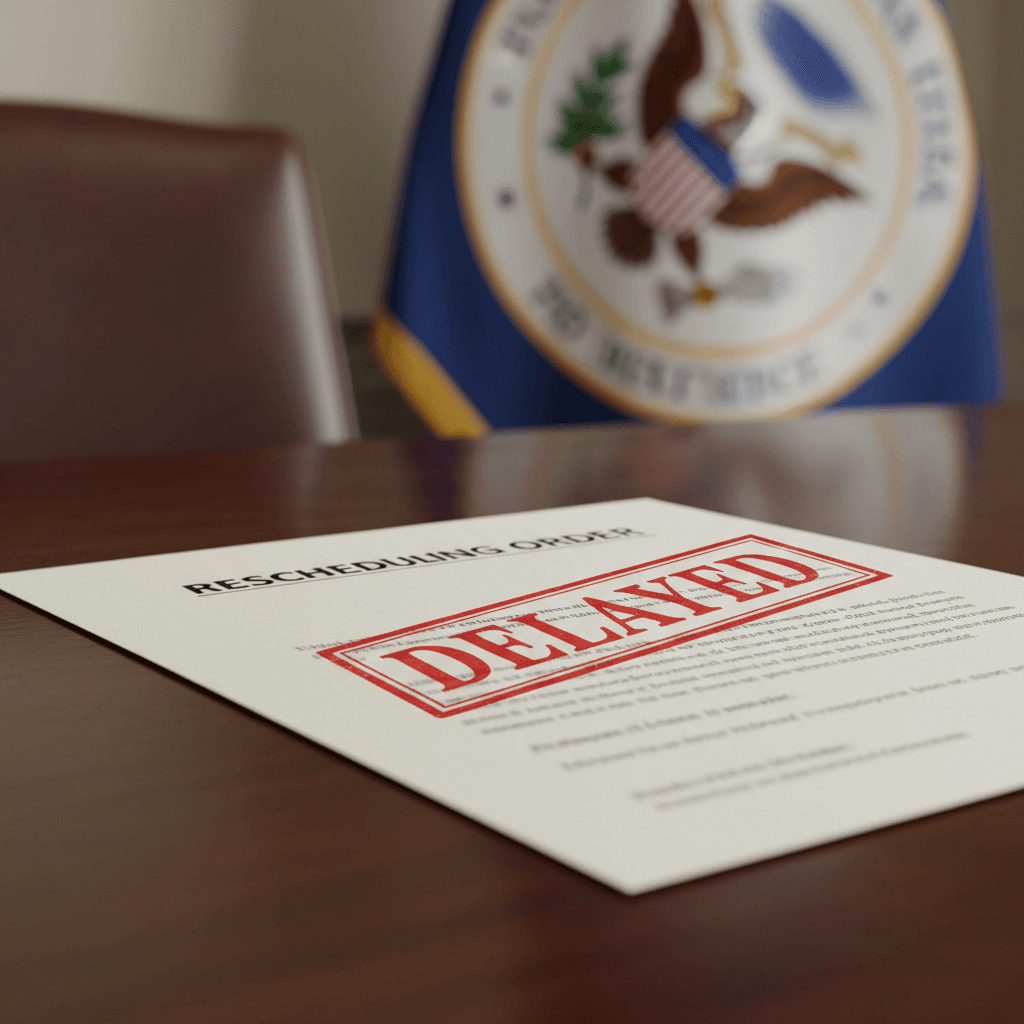
The Alabama Department of Public Health (ADPH) has voted to object to the federal medical cannabis rescheduling, seeking additional time to determine the implementation process within the state. This decision initiates a public comment period, allowing stakeholders to provide input on the implications for Alabama’s medical cannabis program, according to a report by Marijuana Moment.
Federal Rescheduling Context
The U.S. Department of Justice (DOJ) initiated a move in April to reclassify cannabis from Schedule I to Schedule III under the Drug Enforcement Administration’s (DEA) Controlled Substances Act. This change places cannabis alongside drugs with a moderate to low potential for physical and psychological dependence, a significant shift from its previous classification as a substance with high abuse potential and no accepted medical use.
As previously reported by Hemp Gazette, this federal medical cannabis rescheduling follows an executive order signed by President Donald Trump in December, instructing the DOJ to advance the reclassification process. The federal order specifically applies to state-licensed medical cannabis products in jurisdictions that permit medicinal use.
Key implications of this federal reclassification for businesses include:
- Eligibility for federal tax deductions on business expenses, which were previously disallowed for Schedule I and II substances.
- Increased access for researchers to state-legal cannabis products, addressing a long-standing limitation where only cannabis grown in federal facilities could be studied.
Alabama’s Objection and Public Comment Period
The State Committee of Public Health, the governing body of the ADPH, unanimously voted to object to the automatic implementation of the federal medical cannabis rescheduling. Dr. Scott Harris, Alabama’s top health official, stated that while the state “fully intends” to implement the change, more time is required to integrate it effectively with existing state regulations.
Brian Hale, ADPH’s chief legal officer, explained that the objection triggers a public comment period, expected to last between 30 and 60 days. This period will include a public hearing and consultations with various stakeholders, including licensing boards, to gather input on the regulatory adjustments needed. The objective of the objection is to allow for a comprehensive assessment of the rescheduling’s implications before it takes effect at the state level.
Impact on Alabama’s Medical Cannabis Program
Alabama established its medical cannabis program through legislation passed in 2021. The state’s current framework permits the use of medical cannabis for specific qualifying conditions, with dispensaries preparing for patient access.
Dr. Harris indicated that while the federal medical cannabis rescheduling does not directly conflict with state law, its implementation requires careful consideration to harmonise with Alabama’s existing rules. Justin Aday, general counsel for the Alabama Medical Cannabis Commission (AMCC), stated that the commission does not anticipate any immediate impact from either the federal rescheduling or the state-level delay. The AMCC plans to participate in the public comment process to provide necessary information and insights.
The delay by the ADPH underscores the regulatory complexities involved in aligning state-specific medical cannabis programs with evolving federal drug classifications, particularly concerning operational and prescribing pathways.
Disclaimer: This article is for informational purposes only and does not constitute medical advice. Hemp Gazette does not provide medical recommendations, diagnoses, or treatment plans. Always consult a qualified healthcare practitioner before making any decisions regarding your health or any medical condition. Statements concerning the therapeutic uses of hemp, cannabis, or cannabinoid-derived products have not been evaluated by Australia’s Therapeutic Goods Administration (TGA). Medicinal cannabis products in Australia are accessed via prescription pathways under TGA regulation.