
Advocacy Groups Urge Approval of Virginia Cannabis Sales Framework
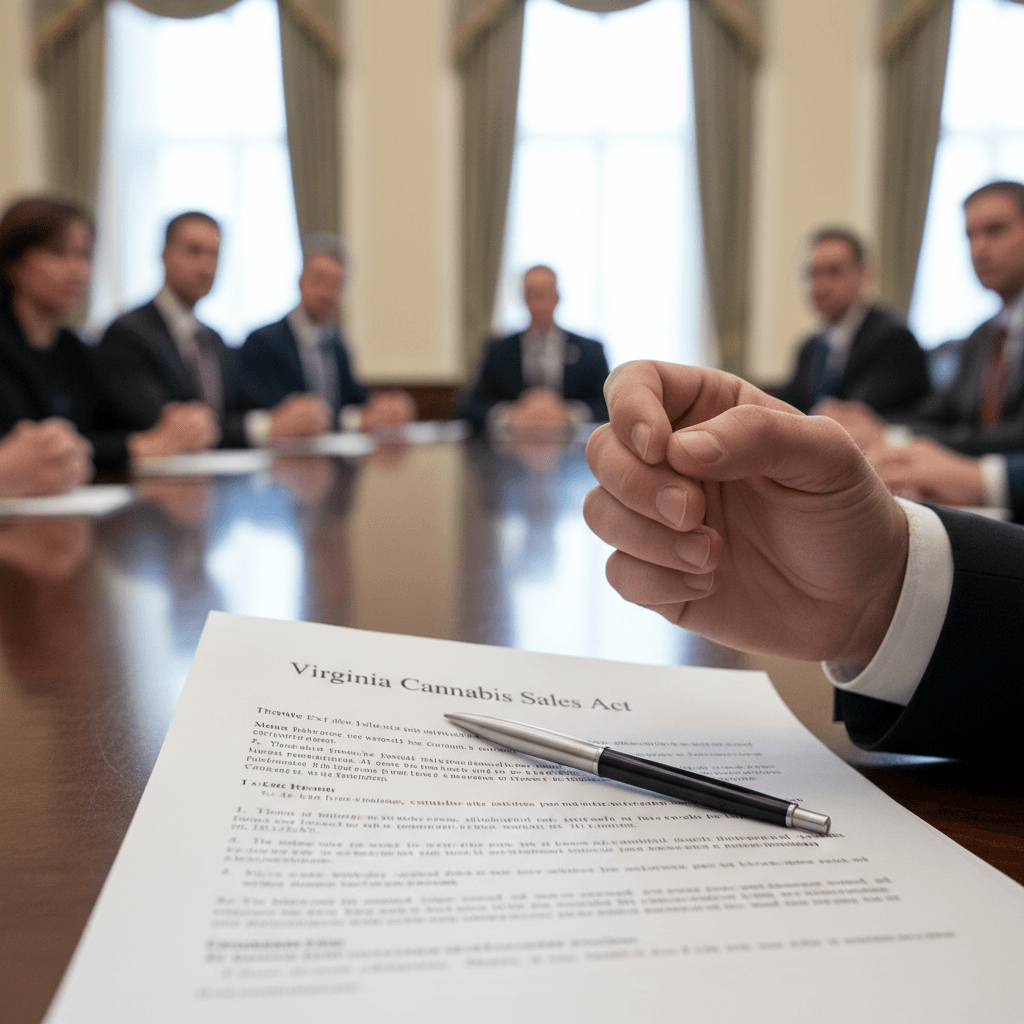
A coalition of cannabis reform advocacy organizations and businesses has formally requested that Virginia Governor Abigail Spanberger not veto legislation aimed at establishing a regulated framework for Virginia cannabis sales. This appeal follows the General Assembly’s rejection of the Governor’s amendments to the measure. The groups, including Virginia NORML, Marijuana Justice, and the Virginia Cannabis Association, argue that the bills (SB 542 and HB 642) address an existing unregulated market by introducing consumer protections, age verification, and retail oversight.
In a letter to Governor Spanberger, the coalition stated that the legislation would replace illicit operators with a regulated marketplace, incorporating strict consumer safety standards already applied to Virginia medical cannabis. This development follows previous legislative impasses concerning the establishment of a regulated adult-use market in the Commonwealth, as previously reported by Hemp Gazette.
Legislative Proposals and Gubernatorial Amendments
The legislation, sponsored by Sen. Lashrecse Aird (D) and Del. Paul Krizek (D), seeks to establish a legal and regulated market for adult-use cannabis. While personal possession and home cultivation have been legal in Virginia since 2021, a retail sales framework has yet to be implemented. Governor Spanberger had proposed several amendments to the bills, which were subsequently rejected by both the House of Delegates and the Senate last month.
Key differences between the legislative plan and the Governor’s proposed amendments include:
- Purchase Limits: Lawmakers approved a limit of 2.5 ounces of marijuana per transaction, or an equivalent amount of other cannabis products. The Governor proposed a limit of 2 ounces.
- Sales Commencement Date: The legislature’s plan sets January 1, 2027, for legal sales to begin, while the Governor suggested pushing this back to July 1, 2027.
- Taxation Structure: The approved bills impose a 6 percent excise tax on cannabis sales, a 5.3 percent retail sales and use tax, and allow for an additional local tax of up to 3.5 percent. The Governor’s plan largely aligns but would increase the excise tax to 8 percent starting July 1, 2029.
- Revenue Distribution: Under the legislative plan, revenue would be allocated to the Cannabis Equity Reinvestment Fund (30 percent), early childhood education (40 percent), the Department of Behavioral & Developmental Health Services (25 percent), and public health initiatives (5 percent). The Governor proposed directing all revenue to the general fund with earmarks for various purposes, including the elimination of specific support for the Cannabis Equity Reinvestment Fund.
- Criminal Penalties: The Governor proposed reclassifying public marijuana use from a civil violation with a $25 fine to a Class 4 criminal misdemeanor. For individuals under 21, possession would become a Class 1 misdemeanor, punishable by a mandatory minimum fine of $500 or 50 hours of community service, and a minimum six-month driver’s license suspension.
Regulatory Oversight and Market Entry
The Virginia Cannabis Control Authority would be responsible for overseeing the licensing and regulation of the new industry, including the transfer of hemp oversight from the Department of Agriculture and Consumer Services. The legislation also stipulates that local governments could not opt out of allowing cannabis businesses to operate within their jurisdictions, and delivery services would be permitted.
Existing medical cannabis operators would be allowed to enter the adult-use market upon payment of a licensing conversion fee set at US$10 million. Cannabis businesses would also be required to establish labor peace agreements with workers. The Governor’s amendments sought to remove language directing a legislative commission to study on-site consumption licenses and microbusiness cannabis event permits.
Deadline for Decision
The bills have returned to Governor Spanberger in their original form. She has until May 23 to either sign the legislation, veto it, or allow it to become law without her signature. The advocacy groups’ letter emphasizes that the legislation reflects extensive study by state bodies, including the Joint Legislative Audit and Review Commission and the Cannabis Oversight Commission, and offers solutions tailored to Virginia’s current market conditions.
Disclaimer: This article is for informational purposes only and does not constitute medical advice. Hemp Gazette does not provide medical recommendations, diagnoses, or treatment plans. Always consult a qualified healthcare practitioner before making any decisions regarding your health or any medical condition. Statements concerning the therapeutic uses of hemp, cannabis, or cannabinoid-derived products have not been evaluated by Australia’s Therapeutic Goods Administration (TGA). Medicinal cannabis products in Australia are accessed via prescription pathways under TGA regulation.