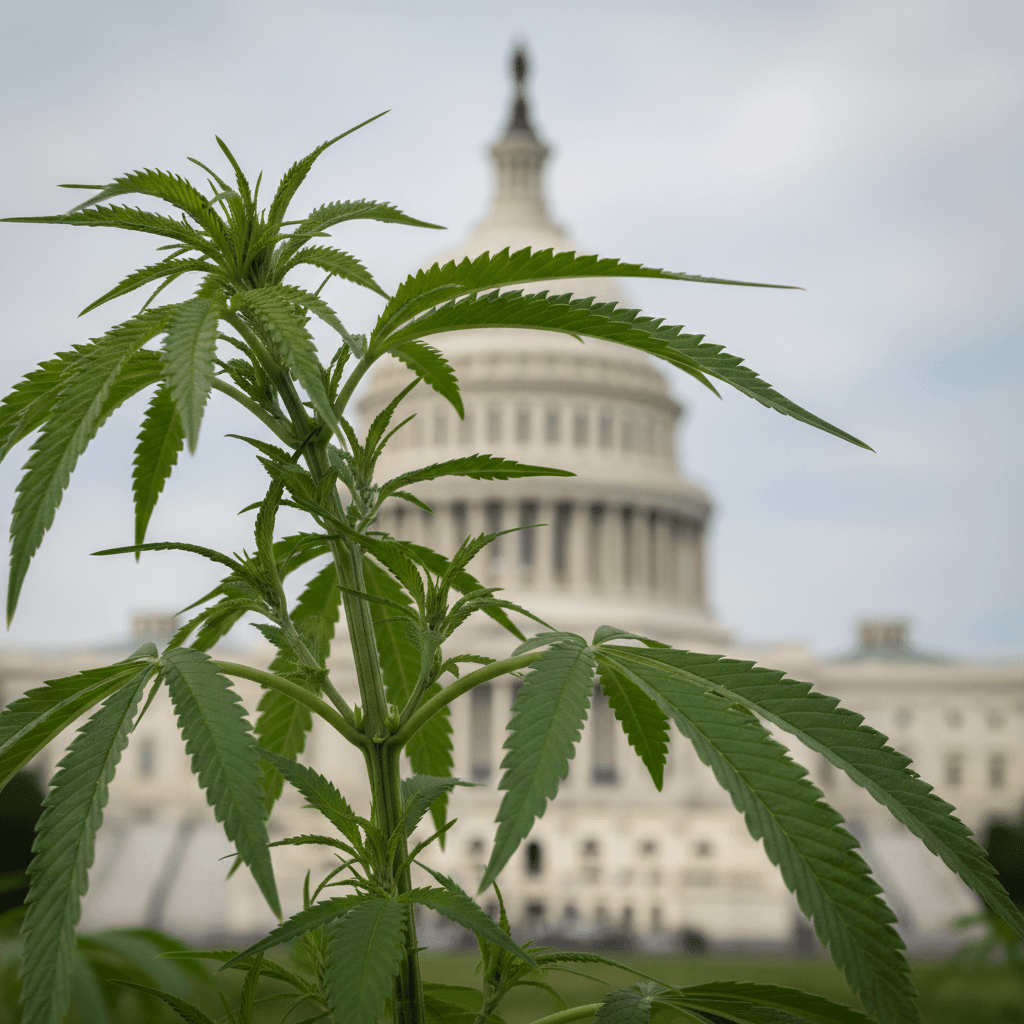
Hemp farmers and industry stakeholders across the United States are expressing concern regarding new federal hemp-derived product regulation. The new provisions, spearheaded by Senator Mitch McConnell (R-Ky.), aim to address the sale of unregulated, intoxicating hemp-derived products. These regulations have prompted discussion within the sector about their scope and potential impact on businesses operating under the 2018 Farm Bill framework.
New Federal Hemp-Derived Product Regulation
The core of the new regulatory effort targets what Senator McConnell described as a “loophole” in the 2018 legislation. According to McConnell, this allowed companies to extract legal amounts of THC from industrial hemp and convert them into intoxicating substances, which were then sold nationwide without specific oversight. The senator stated in November that the provision, set to take effect in November, is intended to “root out bad actors” in the market.
Under these new regulations, industrial hemp and cannabidiol (CBD) derived from hemp will continue to be permissible for traditional industrial applications. This includes uses such as seed, stock, fiber, and grain oil, as confirmed by Senator McConnell. The distinction drawn by the regulations is between these established industrial uses and intoxicating hemp-derived products, which are now subject to stricter control.
Industry Response to Regulation Changes
The industry’s reaction to the new hemp-derived product regulation has been mixed, with some acknowledging the necessity of addressing unregulated products but questioning the breadth of the measures. Jonathan Miller, General Counsel for the U.S. Hemp Roundtable, a national advocacy organization with offices in Washington and Kentucky, articulated these concerns. Miller noted that while the intent to address problematic entities was clear, the execution might be overly broad, potentially impacting compliant businesses.
“The problem is, he did root out bad actors, but he also rooted out good actors,” Miller stated. “They took a sledgehammer to where a precision laser was needed.”
This perspective suggests that the regulations may inadvertently affect legitimate businesses that operate within the spirit of the 2018 Farm Bill. The U.S. Hemp Roundtable is a national advocacy organization, and its counsel’s remarks reflect a broader sentiment among some operators who fear overreach.
Implications for the Hemp Sector
The implementation of these new provisions in November will necessitate significant adjustments for various segments of the US hemp industry. Businesses that have developed products leveraging hemp-derived compounds for intoxicating effects will need to reassess their operations, manufacturing processes, and product lines to ensure compliance.
For investors and operators in the US hemp market, understanding the nuances of this hemp-derived product regulation is crucial for strategic planning. The focus remains on ensuring compliance while navigating a landscape where the legal status and market access for certain hemp-derived products continue to evolve. The distinction between industrial applications and intoxicating hemp-derived products is becoming more defined, as companies adapt to the new federal guidelines.
Disclaimer: This article is for informational purposes only and does not constitute medical advice. Hemp Gazette does not provide medical recommendations, diagnoses, or treatment plans. Always consult a qualified healthcare practitioner before making any decisions regarding your health or any medical condition. Statements concerning the therapeutic uses of hemp, cannabis, or cannabinoid-derived products have not been evaluated by Australia’s Therapeutic Goods Administration (TGA). Medicinal cannabis products in Australia are accessed via prescription pathways under TGA regulation.