
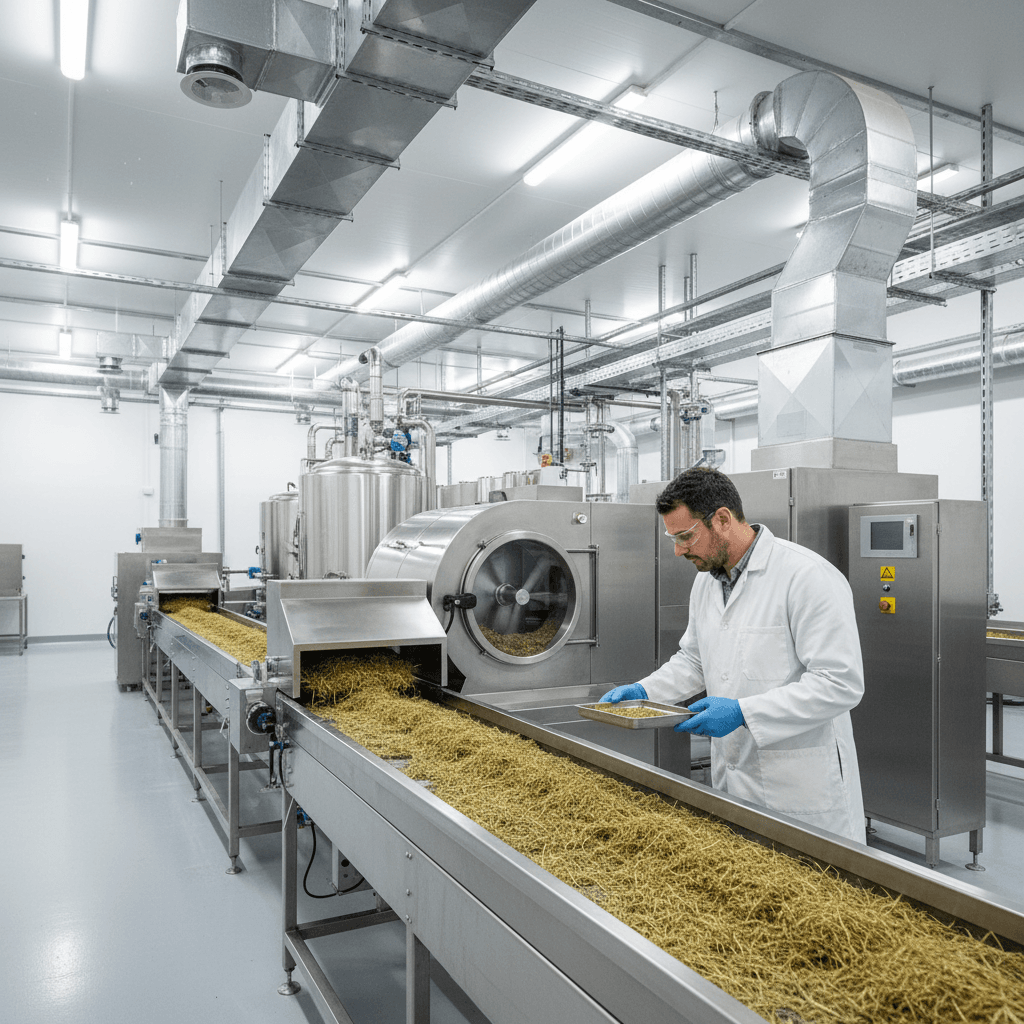
Effective management of cannabis air quality is a critical, yet often underestimated, factor in controlled environment cultivation operations. Maintaining optimal air quality is essential for supporting the prevention of contamination of batches, safeguarding worker health, and supporting positive community relations. Overlooking air handling decisions during facility design or scale-up can lead to significant costs, impacting both product integrity and operational efficiency.
The Cost of Inadequate Filtration
Many cannabis facilities initially install Minimum Efficiency Reporting Value (MERV) 8 filters, similar to those found in residential HVAC systems. While these filters capture larger dust particles, they permit bacteria, mold spores, and fine particulates to pass through. In contrast, MERV 13 filters, which are used in critical air-quality environments such as hospitals, data centers, and schools, are reported to capture particles down to 0.3 microns, including the bacterial range that MERV 8 filters may not capture. According to the Cannabis Industry Journal, the Centers for Disease Control and Prevention (CDC) and ASHRAE (American Society of Heating, Refrigerating and Air-Conditioning Engineers) aligned on MERV 13 as a baseline standard during the COVID-19 pandemic for environments with biological sensitivity. Upgrading to MERV 13 filters may be a modest investment, especially when compared to potential financial losses from a single batch of cannabis product contaminated by microbes.
Addressing Outside Air Intake
Some facilities focus heavily on internal air filtration while neglecting the quality of incoming outdoor air. Unfiltered outside air can introduce pollen, environmental particulates, and mold spores directly into the grow space. A comprehensive cannabis air quality system may consider treating both recirculated air and outside intake air as equally vulnerable pathways for contamination. This oversight is particularly problematic in high-humidity regions or during peak pollen seasons, when external bioaerosol loads increase, making unfiltered intake air a direct source of contamination.
Challenges with Repurposed Buildings
Many cannabis operations begin in repurposed warehouses, retail spaces, or industrial buildings, where the inherited HVAC infrastructure is often not ideally suited for the specific demands of indoor cultivation. These systems may be adequate for storage or light manufacturing but are frequently undersized for the humidity loads, temperature precision, and air exchange rates that may be required for cannabis. This can contribute to:
- Inconsistent temperature and humidity levels.
- Lack of proper pressure differentials between different functional zones (e.g., cutting rooms, dry rooms, and packaging areas).
- Increased risk of cross-contamination between areas with varying risk profiles.
A thorough facility audit before any buildout or retrofit can identify these vulnerabilities, potentially preventing costly issues down the line.
The Importance of Odor Control
Cannabis cultivation generates significant VOC and terpene emissions that require active treatment. Community complaints regarding these odors can escalate from a nuisance to a significant business risk, potentially leading to lawsuits, municipal enforcement actions, or even facilities being forced to shut down or relocate. Active odor treatment systems, including carbon filtration, vapor-phase systems, and specialized filter cassettes, are reported as solutions. In many jurisdictions, odor control is evolving from a courtesy to a compliance requirement, underscoring the need for proactive management.
Beyond Filters: A Holistic Approach to Air Handling
Even the most effective filter is only one component of a functional air handling system. Achieving optimal cannabis air quality may require a comprehensive approach that integrates:
- Air changes per hour: Supporting adequate air circulation.
- Pressure differentials: Controlling airflow between different rooms to support the prevention of contamination.
- Humidity control: Maintaining precise moisture levels to inhibit mold and mildew.
- Proper air intake and exhaust design: Managing the flow of air into and out of the facility.
Facilities claiming to meet hospital-level air quality standards without comprehensive air-handling systems in place are not meeting that bar in any meaningful way. The rigor applied to FDA-regulated pharmaceutical manufacturing, which requires HEPA filtration under 21 CFR 211 as part of a full environmental control system, offers a relevant benchmark for cannabis products, especially those intended for consumption or sensitive applications. Federal regulation of cannabis air quality is a matter of when, not if. Proactive investment in comprehensive air quality management is not merely a regulatory consideration; it can provide a competitive advantage by supporting the prevention of costly operational disruptions, such as a single failed compliance test, a community lawsuit, or a forced facility retrofit, and by supporting product integrity.
Disclaimer: This article is for informational purposes only and does not constitute medical advice. Hemp Gazette does not provide medical recommendations, diagnoses, or treatment plans. Always consult a qualified healthcare practitioner before making any decisions regarding your health or any medical condition. Statements concerning the therapeutic uses of hemp, cannabis, or cannabinoid-derived products have not been evaluated by Australia’s Therapeutic Goods Administration (TGA). Medicinal cannabis products in Australia are accessed via prescription pathways under TGA regulation.