
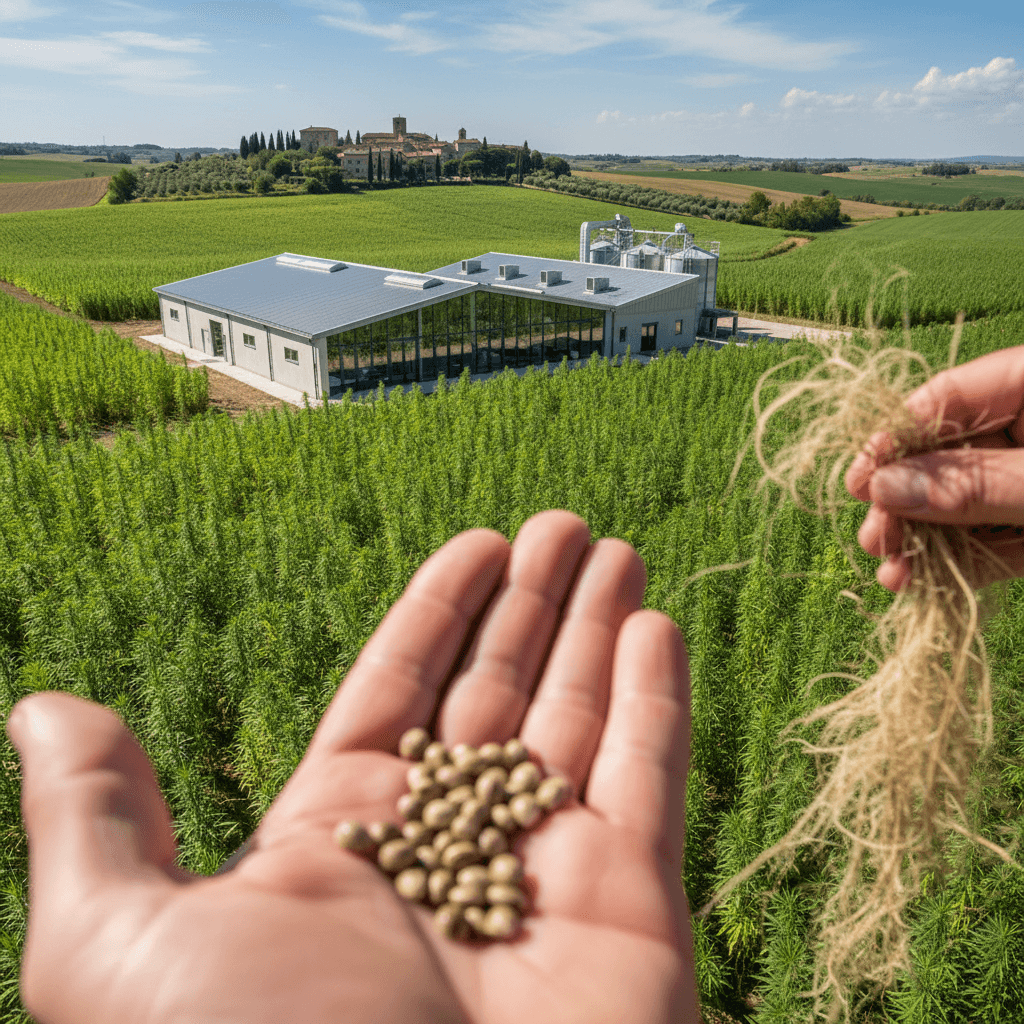
Italy’s industrial hemp sector is experiencing a strategic shift, with renewed focus on food seed and green-building materials. This movement suggests a return to more traditional industrial markets centered on grain and stalk, following a period influenced by the country’s “cannabis light” and CBD trade. According to an analysis published by Hemp Today, this reorientation presents Italy with an opportunity to establish robust hemp value chains.
Jacopo Paolini of Enecta, an Italian genetics specialist and the report’s author, emphasized the need for clear regulations and institutional dialogue to treat hemp as a vital agricultural and industrial resource. The analysis, which incorporated insights from Italy’s Council for Agricultural Research and Analysis of Agricultural Economics (CREA), along with agricultural groups and hemp industry associations like Federcanapa and the European Industrial Hemp Association (EIHA), highlights the gradual stabilization of fragmented supply chains for grain and fiber outputs.
Resurgence in Industrial Hemp Food Seed
The market for grain farmed for food appears to be the most resilient segment, offering a clear commercial path for Italian hemp operators. This area benefits from lower regulatory risk, identifiable buyers, and increasing demand driven by broader European interest in plant proteins, specialty oils, and functional food ingredients. Demand for edible hemp seed is strengthening, with interest from Dutch buyers and Italian grain and rice processors. Certified organic varieties are particularly sought after.
- Conventional edible hemp seed is trading at approximately €1.80-€2.00 per kilogram.
- Organic seed commands a premium, reaching about €2.80-€3.00 per kilogram.
CREA, a prominent European research center, is actively developing a new grain hemp variety. This initiative aims to improve yield and enhance the natural content of omega-3, omega-6, and polyphenols already present in the plant, further solidifying the nutritional value of Italian industrial hemp.
Hemp Fiber and Sustainable Construction Materials
Interest in hemp hurds, bast fiber, and insulation materials is growing, particularly in Central and Northern Italy, where much of the country’s hemp farming and processing infrastructure is concentrated. This trend aligns with wider European interest in bio-based construction materials. However, Italy’s market for these materials remains relatively small compared to more developed sectors in France and northern Europe.
The sector faces ongoing challenges, including limited processing capacity, fragmented logistics, and inconsistent supply volumes. Despite these hurdles, a working group involving leading Italian fashion brands is exploring the development of a 100% “Made in Italy” hemp textile supply chain. Paolini noted that Italy’s textile tradition could position hemp as a strategic fiber for sustainable fashion, provided farmers, processors, and brands collaborate effectively. As previously reported by Hemp Gazette, industrial hemp has a long history as a building material, and its current resurgence in sustainable construction is a testament to its versatility.
Cultivation Trends and Market Evolution
While Italy’s hemp cultivation area remains below historical peaks, official data suggests the decline may have stabilized. Confagricoltura, citing figures from ISTAT (Italy’s national statistics agency), reported 513 hectares cultivated in 2025. However, Federcanapa estimates the actual planted area to be closer to 250 hectares, indicating potential discrepancies in official statistics. Most hemp cultivation and processing infrastructure is located in Northern Italy.
The “cannabinoids and hemp flowers” market, which dominated Italy’s hemp economy for much of the past decade, appears to be entering a contraction across Europe. This is largely due to tightening food-safety standards and narrower legal pathways for wellness CBD products. This shift could help reduce a significant source of legal friction within Italy’s hemp sector, as most enforcement actions in recent years have focused on flowers and smokable products rather than traditional fiber and grain activities. The refocus on core industrial hemp applications promises a more stable and predictable environment for growers and processors.
Disclaimer: This article is for informational purposes only and does not constitute medical advice. Hemp Gazette does not provide medical recommendations, diagnoses, or treatment plans. Always consult a qualified healthcare practitioner before making any decisions regarding your health or any medical condition. Statements concerning the therapeutic uses of hemp, cannabis, or cannabinoid-derived products have not been evaluated by Australia’s Therapeutic Goods Administration (TGA). Medicinal cannabis products in Australia are accessed via prescription pathways under TGA regulation.