
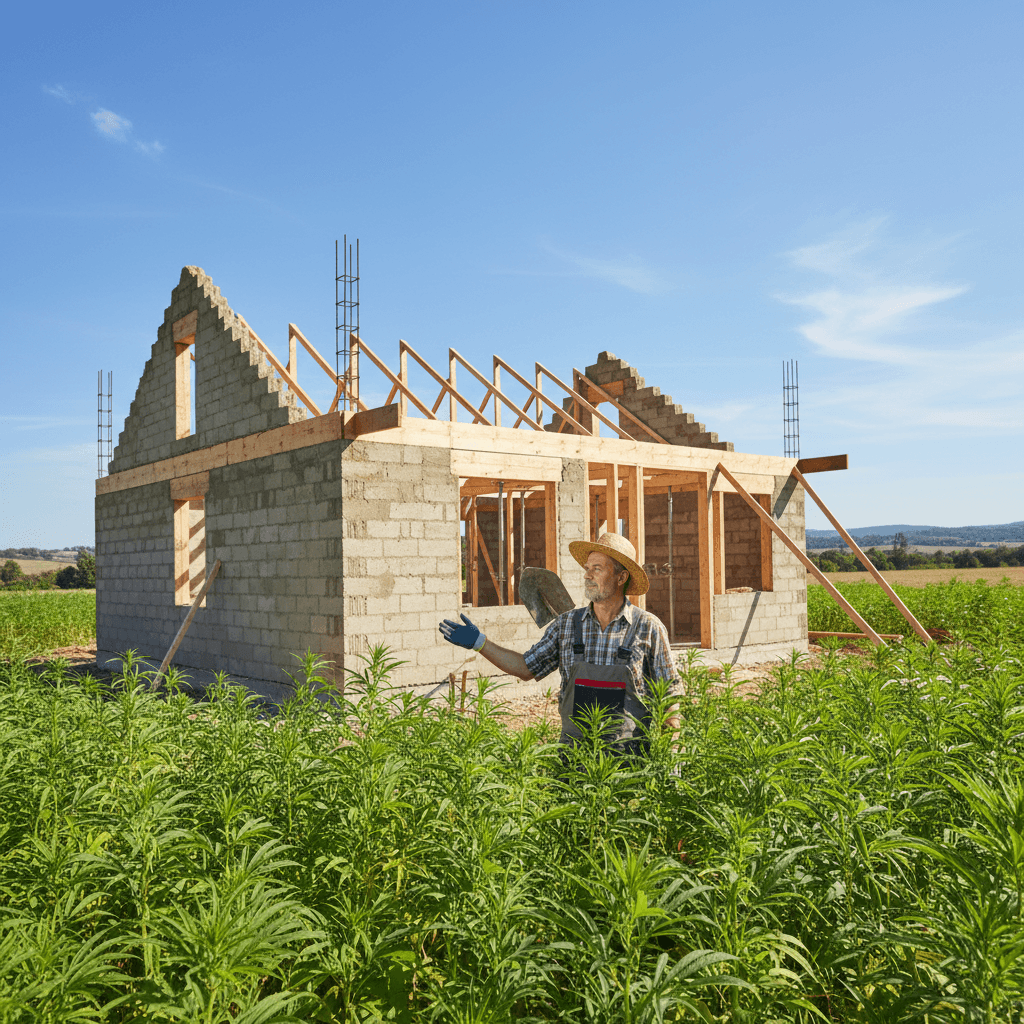
The Rise of Industrial Hemp Construction
The potential of industrial hemp construction to contribute to reducing carbon emissions and support the building industry is gaining substantial traction. Thousands of new homes are now being built using plant-based materials, highlighting hemp’s historical importance and its modern capabilities as a sustainable building solution, as recently reported by BBC News. Once a staple crop in Britain, industrial hemp was unfortunately made illegal in the 1920s due to its association with its psychoactive cousin. Today, its non-psychoactive varieties are being explored for sustainable development, a topic we have explored in previous coverage, including Hemp Gazette’s prior reporting.
Industrial hemp offers a diverse range of applications, from structural elements to insulation. The woody core of the hemp stem, known as ‘shiv’, is a key component. When mixed with lime and water, this material dries to form ‘hempcrete’ – a solid, fire-resistant, and breathable building material. This innovative composite is already being used in projects like a barn at FarmED, a West Oxfordshire-based not-for-profit farming education and research centre, which features hempcrete and hemp blocks in its walls.
Hempcrete: Versatility and Environmental Benefits
Beyond hempcrete, the outer fibres of the hemp stalk can be separated and processed into effective insulation. This comprehensive use of the plant aims to ensure minimal waste and maximise its environmental benefits. While industrial hemp is more widely adopted for construction in Europe, its use is steadily growing in the UK, driven by increasing awareness of its ecological advantages.
A Benefit for Environment and Farmers
The environmental benefits of industrial hemp are substantial, particularly in carbon sequestration. Architect Tim Tasker highlighted that using hemp products in house building effectively “locks away carbon” – a stark contrast to traditional, carbon-intensive building materials. He noted that it takes approximately two to three acres of hemp, grown within a single three-month season, to build a four to five-bedroom family house. To achieve similar carbon capture with spruce trees on the same acreage would take around 25 years, according to BBC News.
For farmers, cultivating industrial hemp presents an opportunity. Ian Wilkinson, co-founder of FarmED, describes it as a beneficial crop:
- It requires minimal inputs, suppressing weeds effectively, thereby potentially reducing the need for herbicides.
- It needs hardly any fertiliser, potentially contributing to healthier soil and reduced agricultural runoff.
- Hemp cultivation can help farmers diversify their operations and improve soil health, as explored by the Centre for High Carbon Capture Cropping.
This £6 million, four-year research project, sponsored by government agency Innovate UK and involving FarmED and 21 other partners, is actively investigating how crops like hemp can contribute to addressing climate change while supporting agricultural sustainability.
Scaling Up Sustainable Building: Opportunities and Challenges
The vision for widespread industrial hemp construction is becoming a reality, with ambitious plans underway. Greencore Homes, for instance, aims to build 10,000 new homes using hempcrete within the next ten years. Co-founder Ian Pritchett confirmed that the first 3,000 of these homes are already in their pipeline, representing billions of pounds’ worth of development value. The Canopies housing development near Didcot is one of the pioneering projects utilising this material.
Despite this momentum, significant hurdles remain, primarily around market development and regulation. Ian Wilkinson stressed the importance of developing robust markets to ensure consistent demand for farmers. Furthermore, the existing regulatory framework poses a challenge. Currently, industrial hemp, despite containing virtually no tetrahydrocannabinol (THC) – the psychoactive compound in cannabis – is still classified under the same legislation as narcotics, requiring a strict government licence for cultivation.
“It’s crazy. It’s like putting a chihuahua and a rottweiler in the same category just because they’re dogs,” stated Ian Pritchett, advocating for a more proportionate regulatory approach.
A Home Office spokesperson indicated that while some rules around industrial hemp have been eased, there are “no plans to remove the requirement for a licence to grow low-THC cannabis.” This legislative classification continues to be a point of contention for industry advocates striving to accelerate the adoption of this highly beneficial crop. As industrial hemp continues to demonstrate its value across the construction sector, its role in building a more sustainable and carbon-neutral future becomes increasingly clear.
Disclaimer: This article is for informational purposes only and does not constitute medical advice. Hemp Gazette does not provide medical recommendations, diagnoses, or treatment plans. Always consult a qualified healthcare practitioner before making any decisions regarding your health or any medical condition. Statements concerning the therapeutic uses of hemp, cannabis, or cannabinoid-derived products have not been evaluated by Australia’s Therapeutic Goods Administration (TGA). Medicinal cannabis products in Australia are accessed via prescription pathways under TGA regulation.