
New research from China indicates that the cultivation and use of industrial hemp were far more central to ancient agricultural economies than previously understood. A study published in the Journal of Archaeological Science by researchers at Shandong University positions industrial hemp as a staple crop among the “five grains” – alongside rice, millet, barley, and soybean – that were fundamental to the ancient Eurasian economy.
The findings suggest that industrial hemp was deeply integrated into the daily lives of inhabitants in northern China during the Late Neolithic era, primarily for food and fiber. This challenges previous underestimations of the plant’s historical significance, which often relied on limited organic remains.
Ancient Industrial Hemp Cultivation in Northern China
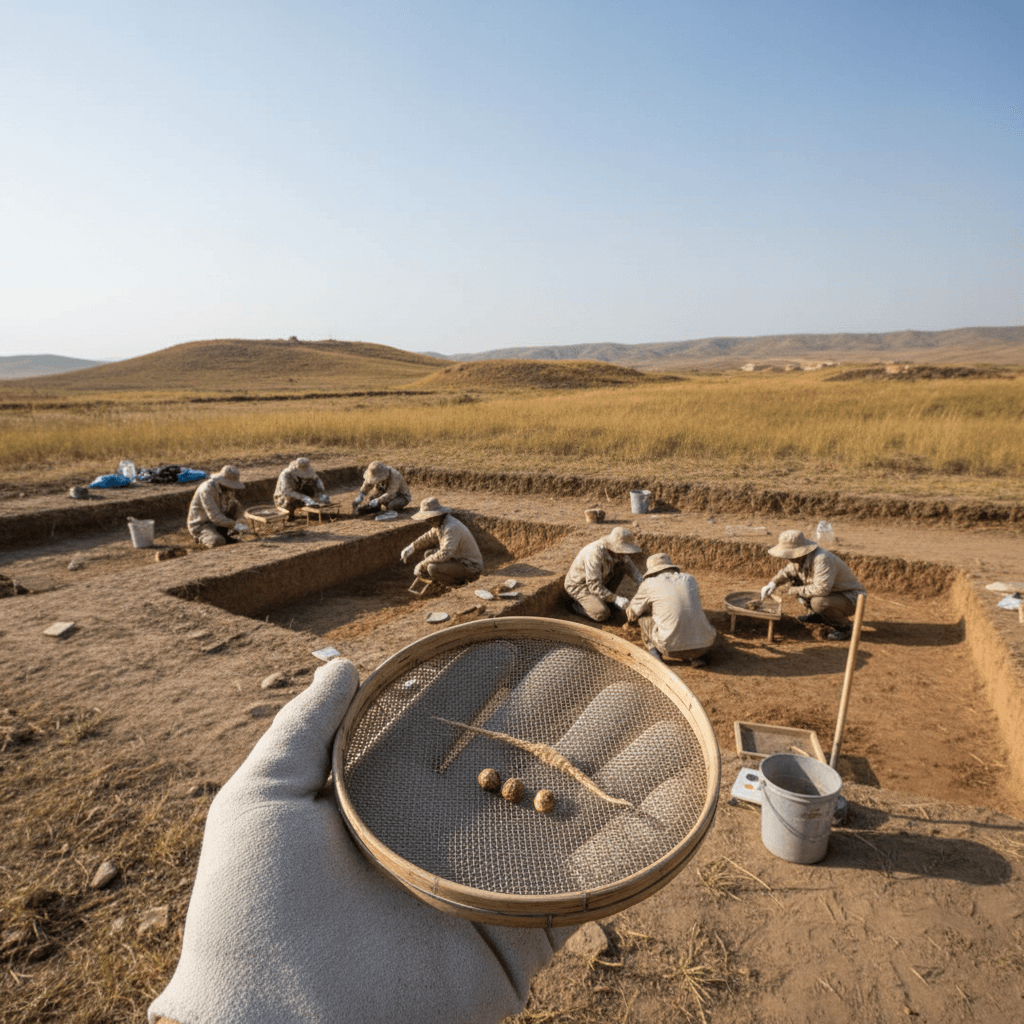
The study involved phytolith extraction and analysis from 132 samples collected at the Beitaishang and Qianzhongzitou settlements, dating back to the Late Neolithic period. Phytoliths are microscopic silica structures found in plant tissues, which can survive in archaeological contexts long after organic matter has decayed. This method allowed researchers to identify the presence and prevalence of cannabis.
According to the study authors, who are affiliated with institutions including the Chinese Ministry of Education and the Institute of Cultural Relics and Archaeology of Shandong Province, the analysis indicates that cannabis had become a “core crop in northern China, primarily used for food or fiber” by the Late Neolithic. The systematic integration of industrial hemp into the local agricultural economy made it a key component of the region’s core crop assemblage.
Daily Integration and Economic Significance
The archaeological samples were collected from various features such as ash pits, floors, and foundations within small- to medium-sized settlements in the Shandong region. This context provides insights into the role of industrial hemp in the local agricultural economy, reflecting “daily seed processing and consumption activities at the household level.”
- At the Beitaishang site, cannabis phytoliths were found in 22 out of 32 samples (68.8 percent) from the Longshan period.
- At the Qianzhongzitou site, cannabis phytoliths were identified in 47 out of 65 samples (72.3 percent) from the Longshan period, and in 16 out of 31 samples (51.6 percent) from the Yueshi period.
These high percentages underscore the plant’s widespread use and importance in daily life during these periods.
Challenging Previous Underestimations
The research fundamentally redefines the historical status of industrial hemp. The study demonstrates that cannabis had already become one of the “five grains” in Shandong since the Longshan period. The analysis of the archaeological context further reveals that its processing and consumption were deeply integrated into the daily lives of the inhabitants, making it an indispensable component of their agricultural subsistence.
Distinguishing Industrial Use from Other Applications
The researchers were careful to differentiate these findings from other archaeological records that sometimes associate psychoactive cannabis with burial and ritual contexts. The Shandong findings, in contrast, emphasize a “more daily and subsistence-oriented use of cannabis.”
The study specifically focused on fiber-type cannabis for its analysis. As one of the study authors, Yong Ge, conveyed to Marijuana Moment, the researchers “stand against the abusive use of cannabis as a drug,” aligning with China’s strict drug control policies. This distinction reinforces the focus on industrial hemp’s historical utility rather than its psychoactive properties.
This research provides a clearer picture of industrial hemp’s long-standing role in human civilization, particularly as a versatile crop for food and fiber in ancient agricultural systems.
Disclaimer: This article is for informational purposes only and does not constitute medical advice. Hemp Gazette does not provide medical recommendations, diagnoses, or treatment plans. Always consult a qualified healthcare practitioner before making any decisions regarding your health or any medical condition. Statements concerning the therapeutic uses of hemp, cannabis, or cannabinoid-derived products have not been evaluated by Australia’s Therapeutic Goods Administration (TGA). Medicinal cannabis products in Australia are accessed via prescription pathways under TGA regulation.