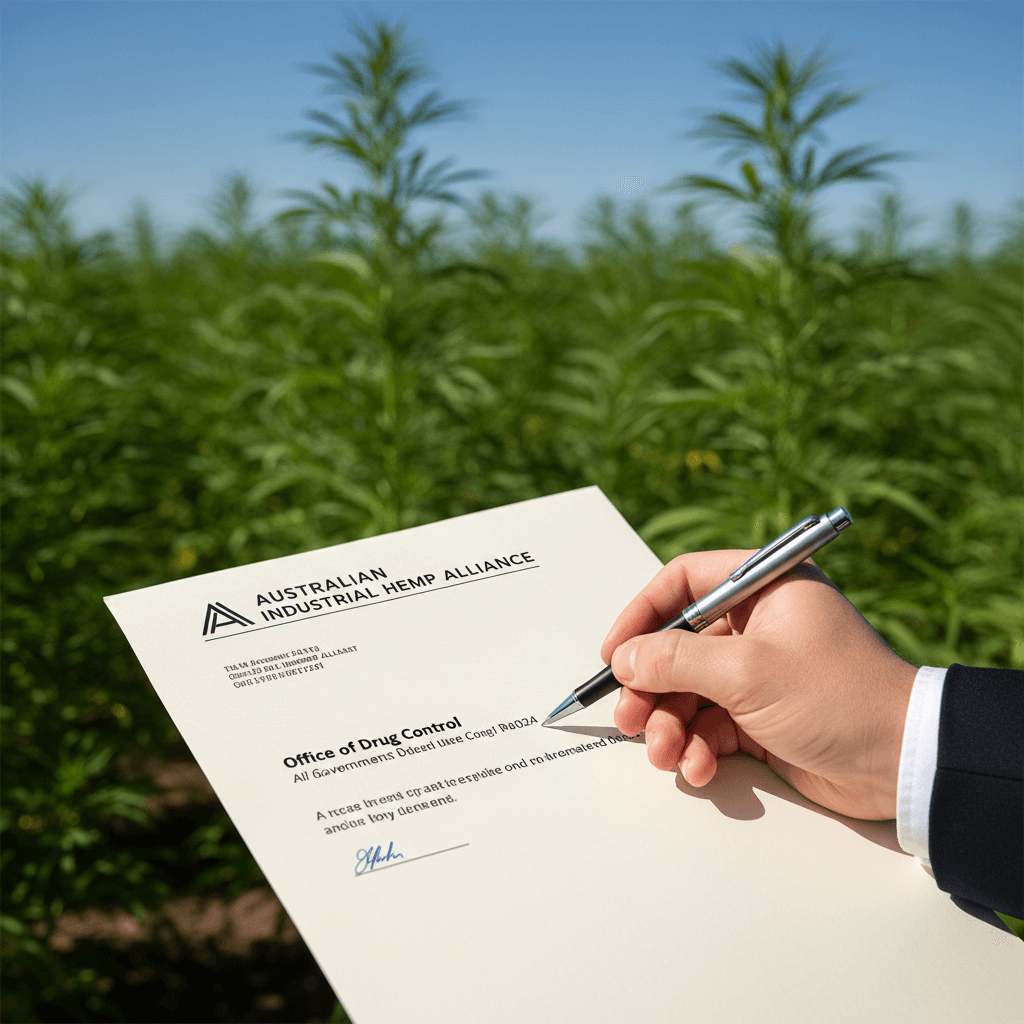
The Australian Industrial Hemp Alliance (AIHA) has formally communicated with the Office of Drug Control (ODC), contending that Australia’s current regulatory framework for industrial hemp regulation is impeding investment, disadvantaging farmers, and positioning the nation out of step with significant international markets. The communication, detailed by Cannabiz AU, underscores the AIHA’s argument that the ODC has adopted an unduly restrictive interpretation of global drug control statutes pertaining to hemp.
Critique of ODC’s Regulatory Interpretation
The AIHA’s letter, addressed to the secretary of the ODC, articulates specific concerns regarding the regulator’s approach. The Alliance posits that the ODC’s interpretation of international drug laws, particularly as they apply to industrial hemp, is excessively stringent. This stance, according to the AIHA, creates an environment that stifles the growth and development of the Australian industrial hemp sector.
Key points raised by the AIHA include:
- The current regulatory framework is suppressing necessary investment.
- Farmers engaged in hemp production are experiencing adverse effects due to these restrictions.
- Australia’s regulatory position is diverging from that of major global markets, which have adopted more progressive frameworks for industrial hemp.
Economic and Market Implications for Industrial Hemp
The implications of what the AIHA describes as an overly restrictive approach extend to the economic viability and international competitiveness of Australia’s industrial hemp industry. By maintaining a more conservative interpretation than many other nations, Australia may be hindering its capacity to fully capitalise on the diverse applications of hemp.
The AIHA’s position suggests that the current regulatory landscape may deter both domestic and international entities from investing in Australian hemp ventures. This advocacy by the AIHA aligns with its broader efforts to streamline and clarify regulations impacting the hemp sector, building on earlier coverage of the Alliance’s calls for reform concerning nutritional products derived from hemp for animal use, as previously reported by Hemp Gazette.
Advocating for Regulatory Alignment
The AIHA’s communication to the ODC represents an appeal for a comprehensive review of the existing regulatory framework to foster an environment conducive to the industrial hemp industry’s expansion. The Alliance seeks a regulatory approach that is more aligned with international standards and practices, which it argues would unlock investment, support agricultural producers, and enhance Australia’s position in the global hemp market. Such alignment would provide greater certainty for businesses and farmers, potentially encouraging greater participation and innovation.
A recalibration of the ODC’s interpretation, as advocated by the AIHA, could facilitate greater innovation and commercial activity within the industrial hemp sector. The AIHA’s objective is to ensure that Australia’s regulatory settings enable, rather than impede, the responsible growth of its industrial hemp sector, allowing it to compete effectively on a global stage and realise its full economic potential.
Disclaimer: This article is for informational purposes only and does not constitute medical advice. Hemp Gazette does not provide medical recommendations, diagnoses, or treatment plans. Always consult a qualified healthcare practitioner before making any decisions regarding your health or any medical condition. Statements concerning the therapeutic uses of hemp, cannabis, or cannabinoid-derived products have not been evaluated by Australia’s Therapeutic Goods Administration (TGA). Medicinal cannabis products in Australia are accessed via prescription pathways under TGA regulation.