
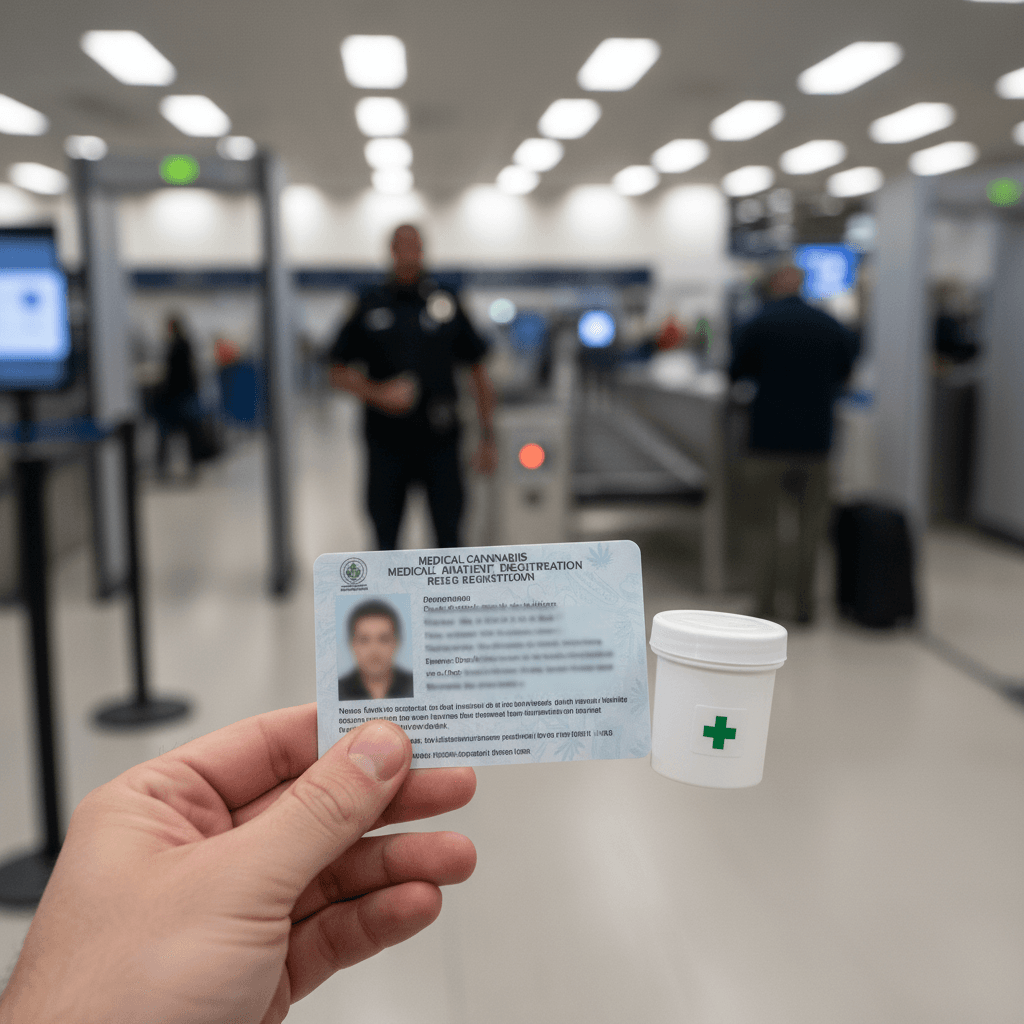
The landscape for medical marijuana travel in the United States has seen recent adjustments following a federal reclassification of medical marijuana and subsequent updates from the Transportation Security Administration (TSA). While the federal government no longer classifies medical marijuana as a Schedule I controlled substance, legal experts indicate that significant ambiguities persist for patients navigating air travel with their medication, as reported by MLive.com.
Federal Reclassification and TSA Guidance on Medical Marijuana Travel
Previously, all forms of marijuana were federally considered an illegal Schedule I controlled substance. This classification has been revised, with medical marijuana now categorised as a Schedule III drug. This change applies to FDA-approved medicinal marijuana and cannabis sold through existing state-licensed medical programs, aligning its regulatory classification with various prescription medications.
In response to this federal reclassification, the TSA updated its “medical marijuana” section on its security screening page on April 27. The revised language removed previous statements asserting that “marijuana and certain cannabis infused products, including some Cannabidiol (CBD) oil, remain illegal under federal law.” The updated guidance now indicates that medical marijuana is permitted in both carry-on and checked luggage.
However, the TSA’s revised site also states that “security officers do not search for illegal drugs, but if any illegal substance or evidence of criminal activity is discovered during security screening, TSA will refer the matter to a law enforcement officer.” This distinction, particularly regarding what constitutes an “illegal substance” versus permitted medical cannabis, remains largely undefined by the agency, according to the MLive.com report.
Navigating Legal Ambiguity and Interstate Travel
Despite the federal reclassification and TSA website update, the practical implications for patients undertaking medical marijuana travel are not fully clear. Attorneys interviewed by MLive.com highlighted the lack of explicit guidance from the TSA on how agents are to determine if cannabis found during screening is medical or recreational. Bloomfield Hills attorney Jessica Spiro noted, “They’re not looking for it, they’re looking for bombs,” but cautioned that “this hasn’t been tried, this is all brand new and so we don’t know.”
Legal professionals recommend several precautions for travelers:
- Keep commercial medical cannabis in its original packaging.
- Discreetly pack it in suitcases or carry-ons.
- Maintain proof of a medical marijuana patient registration.
A significant area of concern involves interstate travel. While Michigan has legalised all forms of marijuana, the legal status of medical cannabis from one state when transported to another state with different laws remains ambiguous. Lapeer-based attorney Bernard Jocuns stated, “If you’re flying out of Michigan, if you have a marijuana card, you’re good,” but acknowledged a “gray area” if traveling to a state without medical or adult-use cannabis programs. East Lansing-based defense attorney Michael Nichols expressed a desire for “something on government letterhead that says we won’t prosecute people who get on airplanes (with marijuana),” underscoring the ongoing need for official clarification.
Existing Protections and Unanswered Questions
Patients do have some federal protection. A federal budget rider, first enacted in 2014 and consistently renewed, prohibits the Justice Department from using funds to prosecute individuals compliant with state medical marijuana programs. However, this rider does not explicitly address air travel specifics or the actions of other federal agencies like the TSA.
Airport administrations and public safety agencies in multiple Michigan airports, including Detroit Metropolitan Airport and Gerald R. Ford International Airport, declined to offer specific clarification on their procedures in response to MLive.com inquiries, referring questions back to the TSA. Gerald R. Ford International Airport spokesman Brian Greenleaf stated, “We typically don’t comment on our partners’ operations. However, I’d encourage you to continue connecting with TSA for any clarifying questions.”
As previously reported by Hemp Gazette, the evolving guidance from the TSA amidst reclassification efforts continues to shape the environment for medical marijuana travel. While the recent changes appear to reduce some uncertainty, attorneys advise that passengers should remain aware of the potential for varied interpretations and enforcement, particularly without explicit federal directives on air travel with medical marijuana.
Disclaimer: This article is for informational purposes only and does not constitute medical advice. Hemp Gazette does not provide medical recommendations, diagnoses, or treatment plans. Always consult a qualified healthcare practitioner before making any decisions regarding your health or any medical condition. Statements concerning the therapeutic uses of hemp, cannabis, or cannabinoid-derived products have not been evaluated by Australia’s Therapeutic Goods Administration (TGA). Medicinal cannabis products in Australia are accessed via prescription pathways under TGA regulation.