
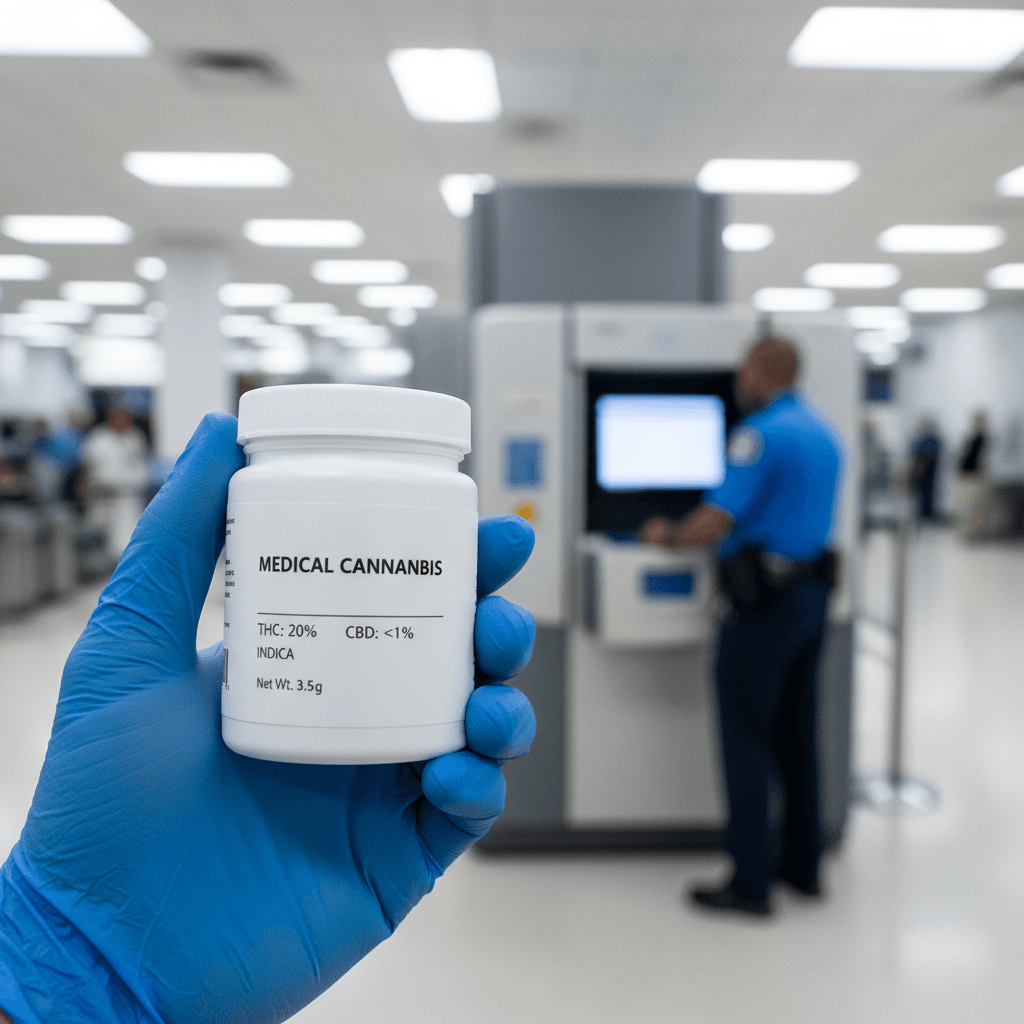
The landscape for medical cannabis travel is undergoing clarification following recent updates from the Transportation Security Administration (TSA) and a significant reclassification by the Drug Enforcement Administration (DEA). While the TSA has reiterated its long-standing policy regarding medical marijuana in carry-on and checked bags, experts note that the practical implications for travelers remain complex due to varying state laws and the discretion of security personnel.
TSA Policy and Federal Reclassification
In late April, the TSA updated its “What Can I Bring?” webpage to confirm that medical marijuana is permissible in both carry-on and checked luggage, albeit with unspecified “special instructions.” The agency did not provide further explanation when contacted by the Los Angeles Times, as reported on May 22, 2026. A critical caveat remains: the final decision on whether an item is allowed through a checkpoint rests with the individual TSA officer.
This update follows an announcement by the Justice Department and DEA concerning an order to place FDA-approved drugs containing cannabis derivatives and marijuana products regulated by a state medical marijuana license into the Schedule III category of the Controlled Substances Act. This reclassification indicates that these products are considered to have a moderate-to-low potential for physical and psychological dependence. Meital Manzuri, managing partner at Manzuri Law, a firm specializing in cannabis and hemp law, stated that this marks the first time qualifying medical marijuana activity is recognized within a federal Schedule III structure, providing a legal basis for medical patients to travel with such products consistent with the new rule.
Operationally, the TSA’s approach to personal-use marijuana had reportedly softened prior to this federal rescheduling, particularly in states where cannabis is legal. Vincent Joralemon, director of UC Berkeley’s Life Sciences Law and Policy Center, noted that TSA officers are primarily focused on security threats, not actively seeking personal marijuana. However, a person or bag flagged for additional inspection could lead to the discovery and potential confiscation of cannabis products.
Navigating State-Specific Regulations
Despite federal reclassification, the varied landscape of state laws governing cannabis introduces significant challenges for medical cannabis travel. Airports in states with permissive laws, such as Los Angeles International Airport (LAX), have adopted local policies allowing passengers aged 21 and older to possess specific amounts of cannabis within state legal limits, even when cannabis remained federally illegal. However, this local permissiveness does not override federal or destination state laws.
Issues with passengers transporting marijuana typically arise when:
- Quantities suggest commercial distribution or trafficking.
- Broader law enforcement or security concerns exist.
- The traveler has otherwise been flagged for inspection.
The DEA’s federal order did not broadly legalize cannabis federally. Therefore, recreational marijuana remains prohibited on flights. Permitted items under the new scheduling order include FDA-approved products containing cannabis derivatives and marijuana products regulated by a state-issued medical license.
Practical Considerations for Medical Cannabis Travel
For individuals undertaking medical cannabis travel, the destination state’s laws are a primary concern. Traveling between states that both permit medical marijuana, such as a direct flight from California to Nevada, is generally considered acceptable under the new scheduling order. Joralemon advises keeping the product in its original packaging with a prescription label and carrying a valid state medical marijuana identification card.
Conversely, flying from a state like California to a state like Texas, or having a layover there, presents significant risks. Texas does not recognize out-of-state medical cards and treats any possession of marijuana as a crime. While technically permissible to depart a California airport with medical marijuana, the risk of arrest upon landing in Texas remains. Ultimately, TSA officers retain the final authority on whether an item is allowed through a checkpoint.
Given the ongoing complexities, Joralemon suggests that patients ideally try to avoid traveling with marijuana until regulatory frameworks are fully settled. If travel is necessary, he recommends purchasing legal medical marijuana at the destination, if possible, to mitigate potential legal complications.
Disclaimer: This article is for informational purposes only and does not constitute medical advice. Hemp Gazette does not provide medical recommendations, diagnoses, or treatment plans. Always consult a qualified healthcare practitioner before making any decisions regarding your health or any medical condition. Statements concerning the therapeutic uses of hemp, cannabis, or cannabinoid-derived products have not been evaluated by Australia’s Therapeutic Goods Administration (TGA). Medicinal cannabis products in Australia are accessed via prescription pathways under TGA regulation.