
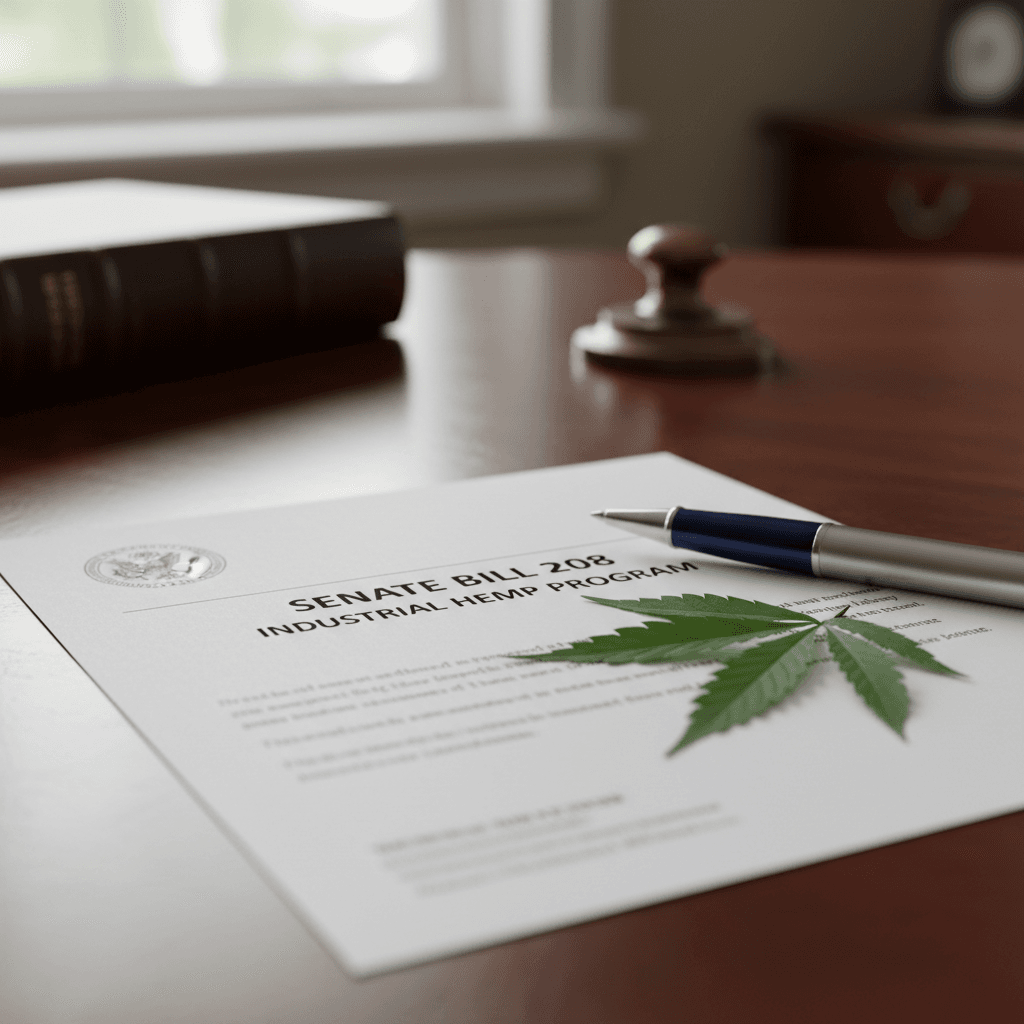
The Alaska Legislature has passed a bill designed to modernize the state’s industrial hemp regulation, sending the legislation to Governor Mike Dunleavy for his signature. The measure, which originated as House Bill 325 (HB 325) sponsored by Representative Kevin McCabe, R-Big Lake, was incorporated into Senate Bill 208 (SB 208), a broader agricultural bill.
The legislative action aims to update the regulatory framework for industrial hemp, aligning Alaska’s statutes with current federal agricultural standards and supporting the state’s developing agricultural sector.
Legislative Action and Program Modernization
Representative McCabe’s original HB 325, after moving through a state House committee, was integrated into SB 208. This broader agriculture bill, focused on strengthening Alaska agricultural land use laws, subsequently passed both the House and Senate. The bill’s progression to the Governor’s desk marks a step in establishing a more defined operational environment for industrial hemp in Alaska.
McCabe stated that industrial hemp is an agricultural crop regulated under both federal and Alaska law. He further indicated that it represents a growing opportunity for Alaska agriculture, small business development, and future manufacturing initiatives.
Key Provisions of the Bill
The provisions from HB 325, now part of SB 208, are intended to modernize Alaska’s Industrial Hemp Program through several key adjustments:
- Alignment with Federal Standards: Portions of Alaska law are being updated to conform with current federal agricultural standards.
- Reduced Regulatory Burden: The legislation seeks to decrease regulatory requirements for industrial hemp growers and processors.
- Improved Clarity: The bill aims to provide clearer guidelines for licensing, transportation, testing, and overall compliance within the industrial hemp sector.
- Updated Enforcement: Remediation and enforcement provisions are being revised to better reflect practical farming operations.
Regulatory Framework and THC Limits
A central aspect of the bill is its preservation of the existing 0.3% Tetrahydrocannabinol (THC) limit, consistent with both state and federal law. Oversight authority for industrial hemp remains with the Department of Natural Resources.
Representative McCabe clarified that the legislation does not legalize recreational marijuana, weaken controlled substance laws, or reduce public safety protections. Instead, it specifically modernizes the regulatory framework for an agricultural commodity that is already legal and regulated.
Industry Impact and Future Outlook
The passage of this bill is anticipated to support Alaska farmers, agricultural producers, and small businesses that are looking to participate in emerging hemp-related agricultural markets. Sara Williams, President of Sacred Seeds Foundation, commented that the bill helps establish a
Disclaimer: This article is for informational purposes only and does not constitute medical advice. Hemp Gazette does not provide medical recommendations, diagnoses, or treatment plans. Always consult a qualified healthcare practitioner before making any decisions regarding your health or any medical condition. Statements concerning the therapeutic uses of hemp, cannabis, or cannabinoid-derived products have not been evaluated by Australia’s Therapeutic Goods Administration (TGA). Medicinal cannabis products in Australia are accessed via prescription pathways under TGA regulation.