
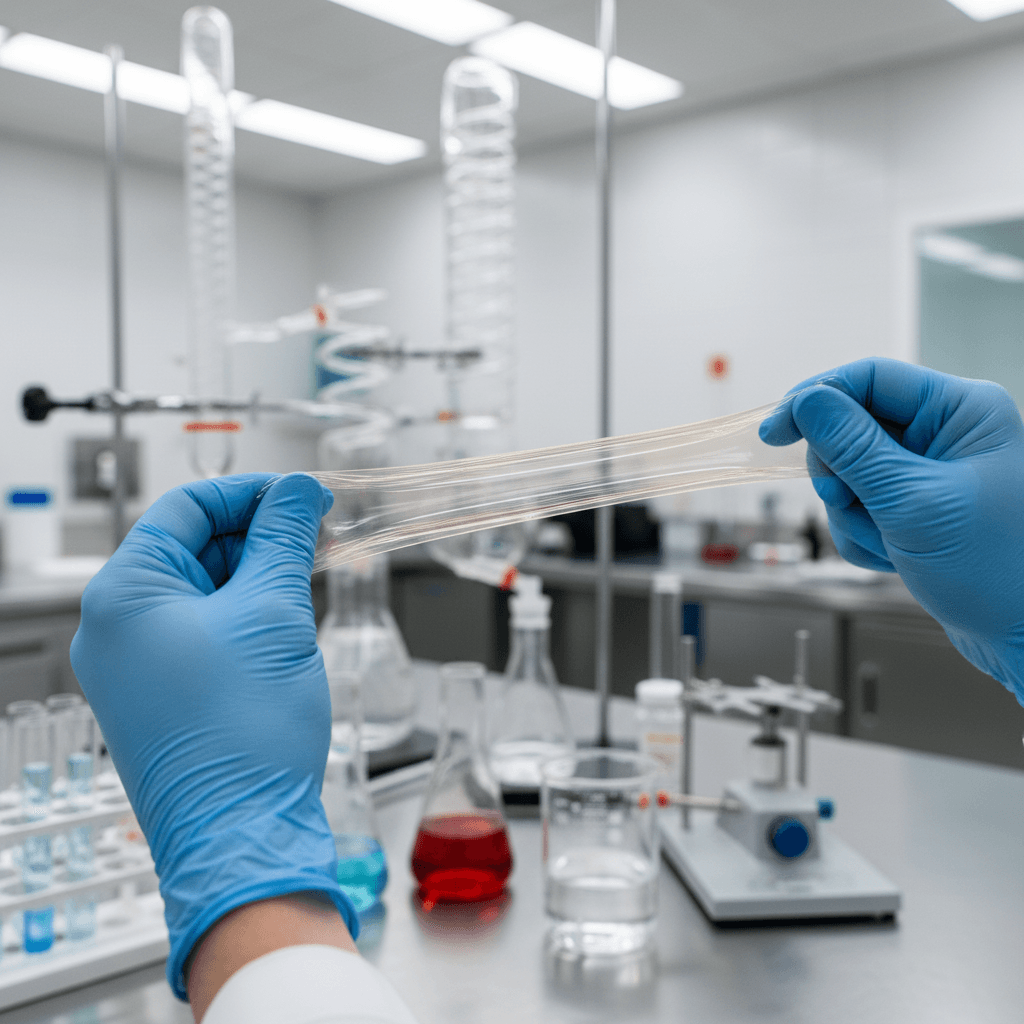
Researchers at the University of Connecticut (UConn) and Purdue University have developed a non-toxic, high-temperature stable hemp-derived plastic from cannabidiol (CBD). This development represents a step forward in creating sustainable alternatives to conventional plastics, building on earlier coverage of industrial hemp plastic alternatives.
Advancements in Hemp-Derived Plastic Technology
The study, published in the journal Chem Circularity, details a stretchy, hemp-derived thermoplastic that can extend up to 1,600% of its original size. A key feature of this new material is its high “glass transition temperature,” which allows the plastic to maintain its dry and durable properties even when exposed to boiling water. This is a notable characteristic, as it marks the first time a hemp-based polycarbonate material has demonstrated both high-temperature stability and melt processability at this scale.
Gregory Sotzing, a study author and UConn Department of Chemistry professor, noted that “very few, if any, plastics made from natural resources have [the glass transition temperature] quality.” He further stated, as reported by Ganjapreneur, that cannabidiol may be considered as a replacement for bisphenol-A, an endocrine disruptor commonly found in processed plastics today.
Applications and Environmental Benefits
This hemp-derived plastic could serve as a replacement for petroleum-based materials such as polyethylene terephthalate (PET). Potential applications include:
- Transparent films
- Protective coatings
- Water bottles
- Food packaging
- Substrates for flexible electronics
Mukerrem Cakmak of Purdue University, another author of the research, stated that the work establishes “CBD-based polycarbonates as sustainable replacements for widely used thermoplastics such as PET.” He added that the team developed a rigorous processing science framework linking molecular architecture to melt processability, orientation development, and stretchability without compromising manufacturability.
Recyclability and Resource Recovery
The researchers also highlighted the material’s recyclability. Sotzing explained that the plastic can be chemically recycled using a base without the need for enzymes. Furthermore, the CBD used in its creation could potentially be recovered during this recycling process, enhancing the material’s circular economy potential.
Scaling Up for Industrial Use
While the potential for this hemp-derived plastic is significant, the researchers acknowledge that current global CBD production is not sufficient to fully replace PET in all its applications. However, they suggest that hemp could be cultivated specifically for this purpose, indicating a future pathway for scaling up production to meet industrial demand for sustainable plastic alternatives.
Disclaimer: This article is for informational purposes only and does not constitute medical advice. Hemp Gazette does not provide medical recommendations, diagnoses, or treatment plans. Always consult a qualified healthcare practitioner before making any decisions regarding your health or any medical condition. Statements concerning the therapeutic uses of hemp, cannabis, or cannabinoid-derived products have not been evaluated by Australia’s Therapeutic Goods Administration (TGA). Medicinal cannabis products in Australia are accessed via prescription pathways under TGA regulation.