
Thailand’s Evolving Medical Cannabis Prescription Framework
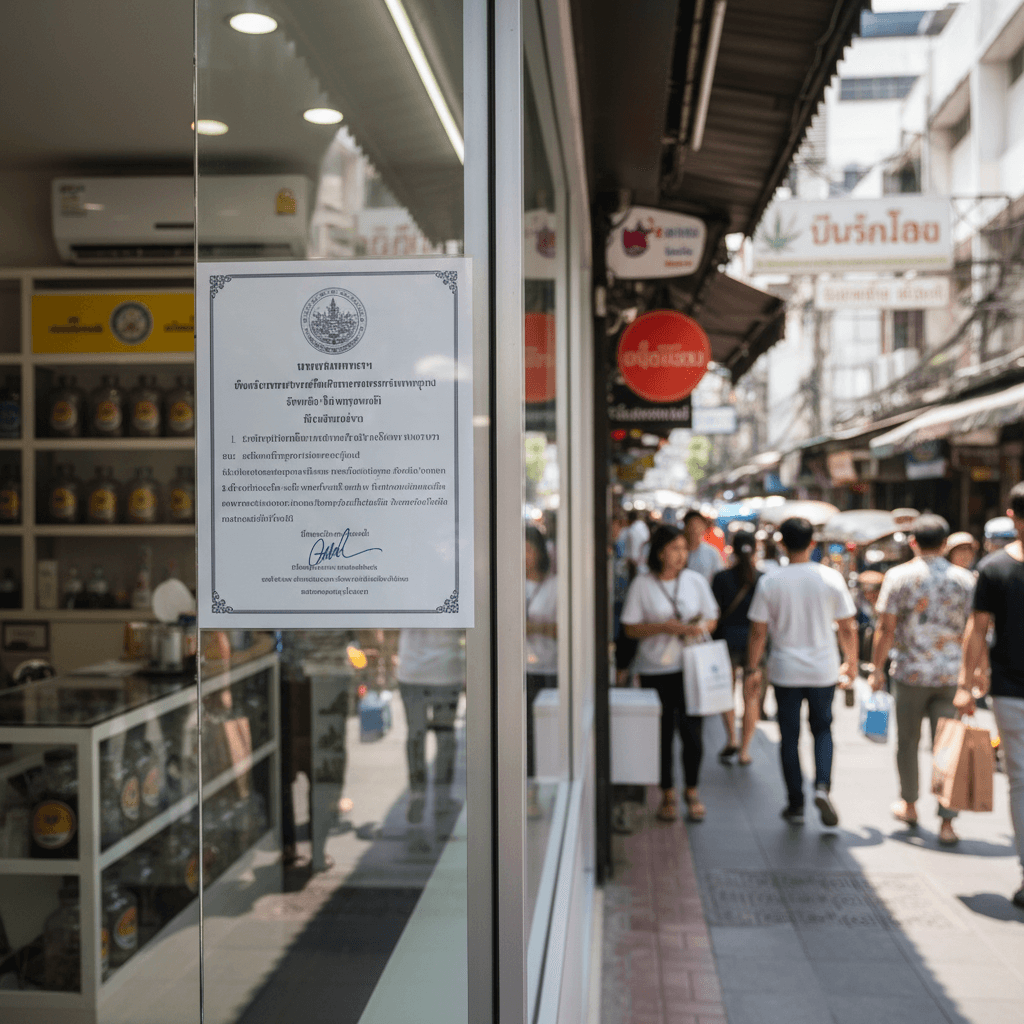
Thailand’s recent implementation of stricter controls for medical cannabis prescription has introduced new requirements, yet observations on the ground, particularly in Bangkok’s tourist areas, indicate that retail practices have not uniformly aligned with the updated framework. Despite regulations designed to limit cannabis use to medical applications, including specific prescription mandates, cannabis products remain widely available for broader consumption. This discrepancy highlights the challenges authorities face in directing a rapidly expanding market towards its intended medical focus.
Public Health Minister Pattana Promphat stated that a comprehensive Cannabis and Hemp Bill is undergoing public consultation until the end of May 2026, with legislative efforts aimed at accelerating its passage through parliament. This bill seeks to enhance controls over both cultivation and distribution within the sector.
Regulatory Requirements and Enforcement Challenges
Under the current regulatory framework, consumers are required to obtain a prescription before purchasing cannabis products. This process involves registering with a Thai traditional medicine clinic, receiving a diagnosis, and securing a prescription. Concurrently, retailers are mandated to record transactions and maintain documentation for official inspection.
However, critics argue that the practical implementation of these rules diverges from the official guidelines. Cannabis advocate Chokwan Chopaka noted that the formal process is largely disconnected from daily practice, stating that “No one really follows the official way of making a legal purchase.” She further stated that shops frequently sell products without requiring prescriptions, creating documentation retrospectively if necessary. Additionally, concerns have been raised regarding some medical practitioners issuing prescriptions in bulk or through informal arrangements with retailers, alongside limited oversight of telemedicine systems. Ms. Chopaka emphasized that regulations lacking consistent enforcement yield minimal practical impact.
This criticism reflects broader industry concerns that while regulations are becoming more detailed, enforcement remains inconsistent. This is particularly evident in areas like Khaosan Road, where numerous cannabis dispensaries operate within close proximity, often with customers browsing or consuming products on-site without apparent adherence to prescription requirements.
Industry Adaptation and Compliance Costs
Dispensaries are navigating the shifting regulatory landscape with varying approaches. One dispensary employee reported increased operational costs due to compliance efforts, including hiring a doctor to verify documentation and requiring prescriptions. This has led to higher product prices and, in some cases, deterred customers concerned about privacy when providing personal details for prescriptions. Despite these efforts, enforcement appears limited, with reports suggesting tourists may receive more lenient treatment from authorities if found without a prescription.
Conversely, another dispensary indicated that its operations had not been significantly affected, citing a valid license for three more years. The Public Health Ministry previously announced in April 2026 that cannabis businesses would have a three-year transition period to convert into medical-style clinics, aligning with license expiry cycles. However, regulations stipulate that all shops must sell only to customers with prescriptions, irrespective of their license status.
A staff member from a different dispensary acknowledged the need for stricter regulation but advocated for cannabis to remain legal. This establishment requires prescriptions and employs a doctor to ensure appropriate administration. The worker noted that customers are increasingly seeking prescriptions due to concerns about police encounters, while acknowledging widespread uncertainty among operators regarding the system. Businesses are balancing compliance with profitability, with some operators suggesting that strict adherence to medical-only sales would significantly impact business viability.
Official Stance and Future Outlook
Officials, including the Department of Thai Traditional and Alternative Medicine, maintain that stricter measures are necessary to regulate the rapidly expanding sector. The department stated that cannabis businesses would gradually transition towards operating more like medical clinics. Regulations enacted on April 30, 2026, strengthened controls over research, imports, processing, and distribution. New license applicants must now be associated with healthcare-related activities, such as clinics, herbal product manufacturers, pharmaceutical companies, or licensed traditional healers. Licensed outlets are also required to employ trained staff.
Existing businesses may continue operations until their licenses expire but must comply with new requirements upon renewal. The ministry has also introduced enhanced inspections and digital reporting systems, enabling public reporting of suspected violations. These reforms are a response to concerns regarding widespread recreational use following decriminalization, including complaints about cannabis smoke, youth access, and an increase in hospital cases linked to excessive consumption. Approximately 12,000 cannabis distribution licenses, valid between 2026 and 2028, have been issued nationwide, with about half scheduled to expire this year.
Critics like Ms. Chopaka argue that enforcement alone is insufficient without public education. She warned that a lack of public understanding risks pushing the industry further into an informal system where regulations exist on paper but daily practice relies on workarounds. Thailand’s ongoing challenge appears to be less about drafting new rules and more about ensuring their consistent and effective enforcement in practice.
Disclaimer: This article is for informational purposes only and does not constitute medical advice. Hemp Gazette does not provide medical recommendations, diagnoses, or treatment plans. Always consult a qualified healthcare practitioner before making any decisions regarding your health or any medical condition. Statements concerning the therapeutic uses of hemp, cannabis, or cannabinoid-derived products have not been evaluated by Australia’s Therapeutic Goods Administration (TGA). Medicinal cannabis products in Australia are accessed via prescription pathways under TGA regulation.