
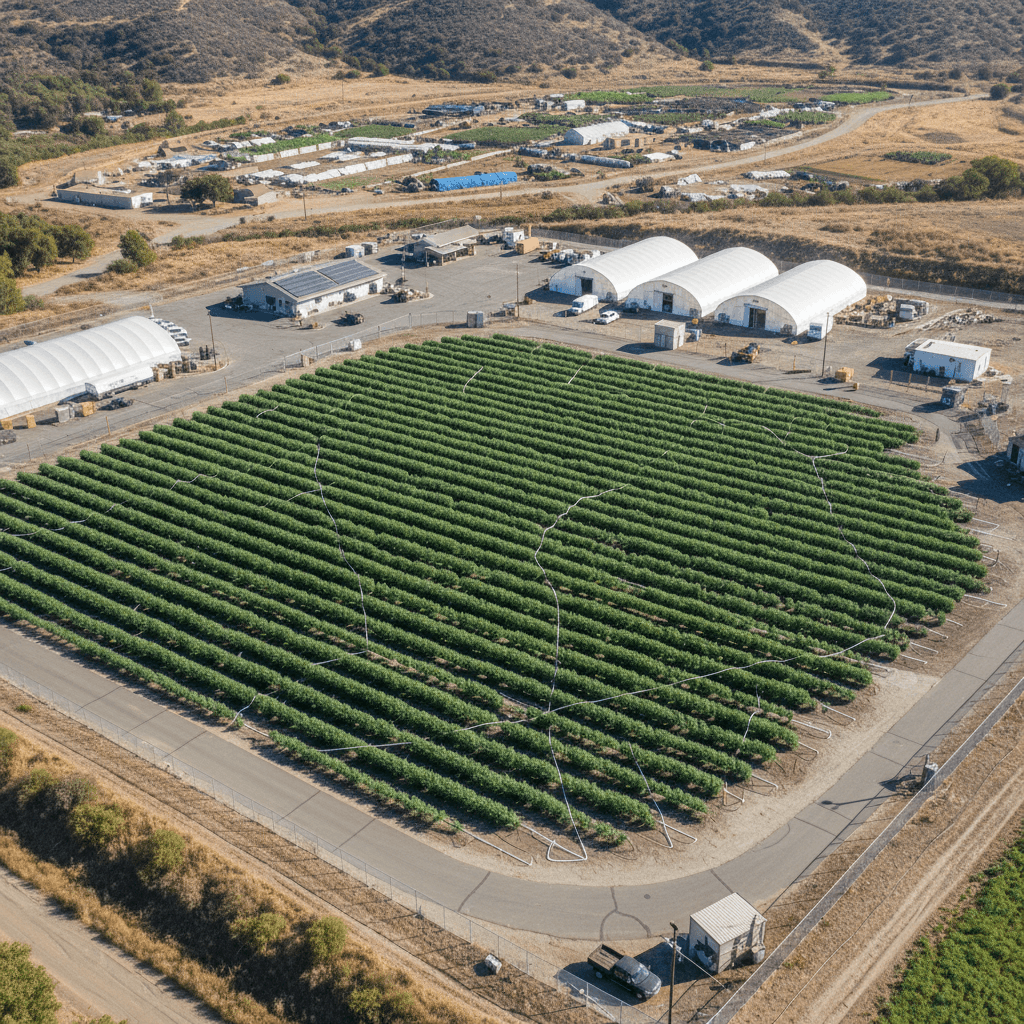
A recent study conducted by UC Berkeley’s Cannabis Research Center indicates that the presence of licensed cannabis farms acts as a more effective deterrent to unlicensed cannabis cultivation than government bans. This finding offers insights into the evolving landscape of cannabis farming in California since the state’s legalization of the plant.
Licensed Operations as a Deterrent to Unlicensed Cannabis Cultivation
The primary finding of the UC Berkeley study, as reported by GN: cannabis research, challenges the efficacy of prohibition-based approaches in curbing illicit activity. Christopher Dillis, a researcher with the Department of Environmental Science, Policy, and Management involved in the study, noted that obtaining a cultivation license in California can cost farmers between $50,000 and over $100,000. This expenditure covers a range of permits, including:
- County permits
- Water board permits
- Department of Fish and Wildlife permits
These licensing requirements necessitate significant operational adjustments for cultivators. Licensed farms must implement properly engineered roads to prevent runoff, install irrigation systems that meet code standards, and ensure adequate water storage. Unlicensed operations, often established in remote areas to avoid detection, typically face substantial challenges in meeting these regulatory compliance standards, a process that Dillis estimates can take one to two years due to state bureaucratic procedures.
Market Dynamics and Regulatory Enforcement
The study observed the proliferation of large, licensed cannabis farms along California’s central coast, frequently supported by venture capital. Due to the federal classification of cannabis, these entities often employ vertical integration models, encompassing cultivation, distribution, and retail operations. This market structure has implications for enforcement against unlicensed activity.
Licensed farms reportedly provide anonymous tips to state authorities regarding their unlicensed neighbors. Enforcement actions against unlicensed cultivators can result in substantial financial penalties. For instance, first-time violations in Humboldt County and Sonoma County may incur fines up to $10,000, while Los Angeles County can levy fines as high as $30,000 per day, according to the study’s findings.
Legislative Intent Versus Market Outcomes
When California initiated its legalization process, the state aimed to provide a competitive advantage to smaller cultivators by initially restricting licenses to farms below a certain size, with plans to permit larger farms in 2023. However, a legislative provision allowed growers to “stack” licenses, effectively enabling large operations to subdivide their land and obtain multiple small or medium farm licenses. This mechanism circumvented the intended head start for genuinely small-scale farmers, leading to market consolidation, as previously reported by Hemp Gazette in its coverage of licensed farms deterring unlicensed cultivation.
Environmental Considerations of Cannabis Cultivation
The study also addressed the environmental footprint of cannabis cultivation. Historically, cannabis farms gained a negative reputation in the early 1990s dues to their use of public and national forest lands. However, by 1996, many operations had transitioned to private land following the legalization of medical marijuana use. Dillis clarified that cannabis itself is not inherently an environmental threat; rather, the environmental impact is largely determined by the specific location and cultivation methods employed. This perspective suggests that regulated, compliant cultivation practices can mitigate environmental concerns associated with the crop.
Disclaimer: This article is for informational purposes only and does not constitute medical advice. Hemp Gazette does not provide medical recommendations, diagnoses, or treatment plans. Always consult a qualified healthcare practitioner before making any decisions regarding your health or any medical condition. Statements concerning the therapeutic uses of hemp, cannabis, or cannabinoid-derived products have not been evaluated by Australia’s Therapeutic Goods Administration (TGA). Medicinal cannabis products in Australia are accessed via prescription pathways under TGA regulation.