
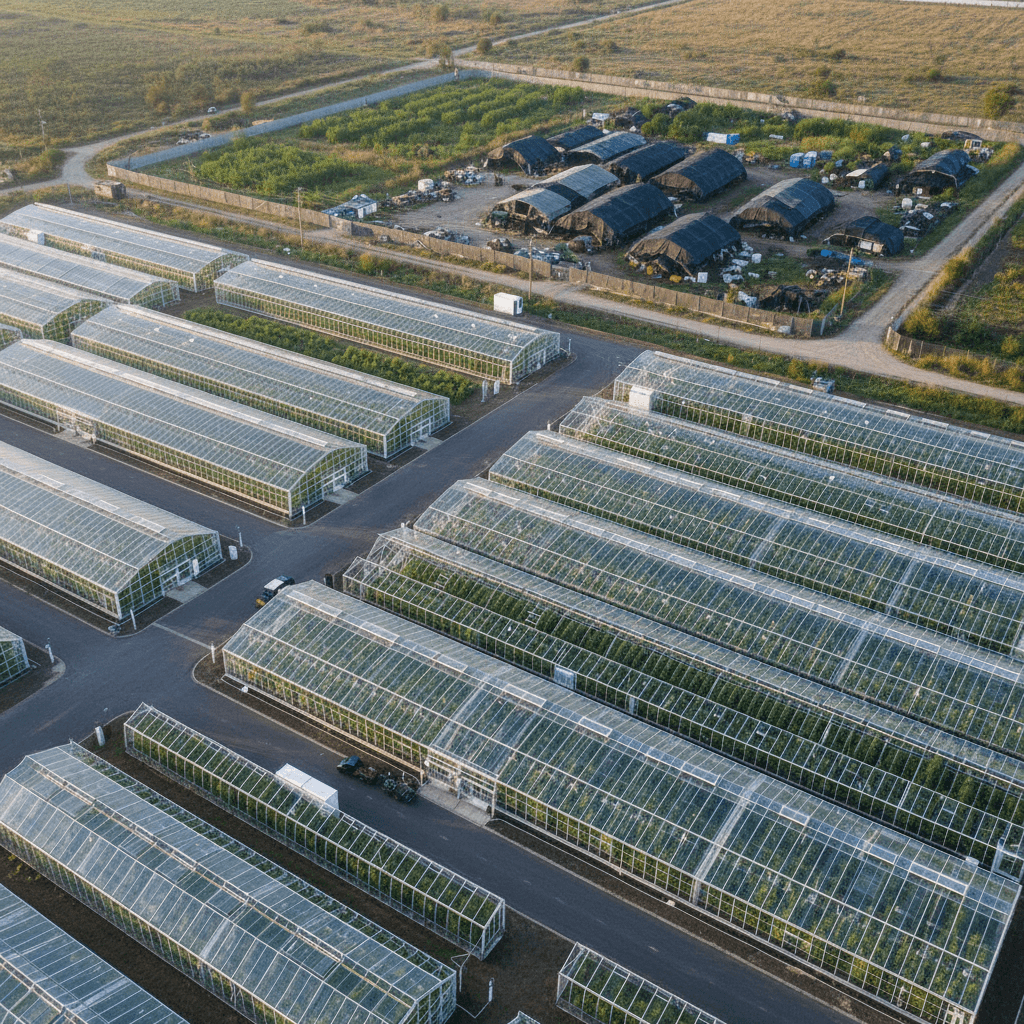
A recent interdisciplinary study conducted by UC Berkeley’s Cannabis Research Center has identified the presence of a licensed farm as the most consistent predictor of reduced unlicensed cannabis cultivation in California. This finding challenges conventional enforcement policies, which have historically focused on eradication and local bans to curb illicit activity.
The two-year study, presented by Michael Polson, director of the Cannabis Research Center, and his co-researchers in a recent webinar, tracked licensed and unlicensed cultivation across California from 2018 to 2024. The research utilized a comprehensive methodology, including satellite mapping, energy consumption data, state track-and-trace analysis, and ethnographic fieldwork across six counties, as detailed in a report by MMJDaily.com.
Shifting Dynamics in California’s Cannabis Market
The study period, marked by a significant expansion in unlicensed activity, a dramatic price collapse, and subsequent stabilization, revealed notable shifts in cultivation practices. Satellite data indicated a substantial surge in unlicensed outdoor cultivation between 2018 and 2020, followed by a sharp contraction by 2022, with activity stabilizing at approximately 2018 levels by 2024.
A sustained trend observed throughout the study was a shift away from pure outdoor production towards mixed-light cultivation. This trend persisted regardless of overall market expansion or contraction, with mixed-light cultivation growing faster during periods of expansion and outdoor cultivation contracting more severely during downturns.
On the licensed front, Santa Barbara County emerged as the state’s largest producing county, accounting for a disproportionate share of the 50.4 million kilograms of cannabis produced by licensed farms across California during the study period. Researchers attributed this to existing greenhouse infrastructure, previously used for flowers and produce, which cannabis companies repurposed. This, combined with favorable climate and permissive local policy, provided a ready-made platform for large-scale mixed-light production that was not easily replicated elsewhere.
Licensed Presence vs. Enforcement Efficacy
The research team’s spatial modeling consistently found that the presence of a licensed farm nearby was the most reliable variable correlated with a decline in unlicensed cannabis cultivation across all three time periods analyzed. Jeremy Sorgan, assistant research professor at Northwestern University Mills campus, explained this mechanism as primarily civil rather than criminal.
- A licensed farm in an area typically leads to increased code enforcement presence.
- It generates more foot traffic, making the environment less hospitable for clandestine operations.
- Unlicensed farms, which sometimes operate in plain sight, find it difficult to remain hidden in areas with higher regulatory activity and public visibility.
Conversely, local bans showed no reliable effect on limiting unlicensed cultivation. In the final period (2022-2024), seven of the ten counties experiencing the most growth in unlicensed activity were “ban counties,” while the six counties with the greatest decreases were all “legacy cultivation counties” with active permitting programs. Eradication-based enforcement was also found by the study to be largely ineffective, with its deterrent effect weakening over time and even correlating with an increase in unlicensed activity in the third period. This “whack-a-mole effect” saw growers in heavily enforced areas relocate to more remote and environmentally sensitive lands, often with faster crop turnaround cycles and less attention to environmental compliance.
In contrast, civil enforcement tools, such as fines, landowner liability rules, and environmental regulations, demonstrated growing efficacy as they matured and information disseminated within communities. The study highlighted a key distinction: enforcement that drives growers underground versus regulation that encourages compliance.
Economic Pressures and Regulatory Challenges
Economic data provided a significant explanation for the composition of the unlicensed market in later years. Black market outdoor cannabis prices plummeted from approximately US$1,000 per pound in 2020 to well below US$300 per pound in 2021 and 2022, often falling below estimated production costs of US$250 to US$400 per pound. Industry insiders in Lake County estimated that 30% to 50% of legacy growers exited the market due to these economic conditions, rather than enforcement actions.
Those who remained in the unlicensed sector were predominantly individuals with limited alternatives, including low-income rural residents, the elderly, and the disabled, whose livelihoods were tied to their land. As one Mendocino County interviewee noted, the economy became “the best enforcer of the illegal market.”
Amanda Ryman, co-principal investigator for the study, also assessed California’s track-and-trace system. While useful for compliance, she found it to be too inconsistent with data and user error to reliably serve as a research instrument. Harvest IDs were often reassigned as batches were combined at distribution and processing centers, hindering product tracking through the supply chain. Consumer survey data from 2022 further indicated a significant leakage from the regulated market, with consumers reporting approximately 1,400 tons of cannabis flower consumed, compared to 466.6 tons recorded as sold through licensed point-of-sale systems and 1,700 tons reported as produced by licensed farms.
Disclaimer: This article is for informational purposes only and does not constitute medical advice. Hemp Gazette does not provide medical recommendations, diagnoses, or treatment plans. Always consult a qualified healthcare practitioner before making any decisions regarding your health or any medical condition. Statements concerning the therapeutic uses of hemp, cannabis, or cannabinoid-derived products have not been evaluated by Australia’s Therapeutic Goods Administration (TGA). Medicinal cannabis products in Australia are accessed via prescription pathways under TGA regulation.