
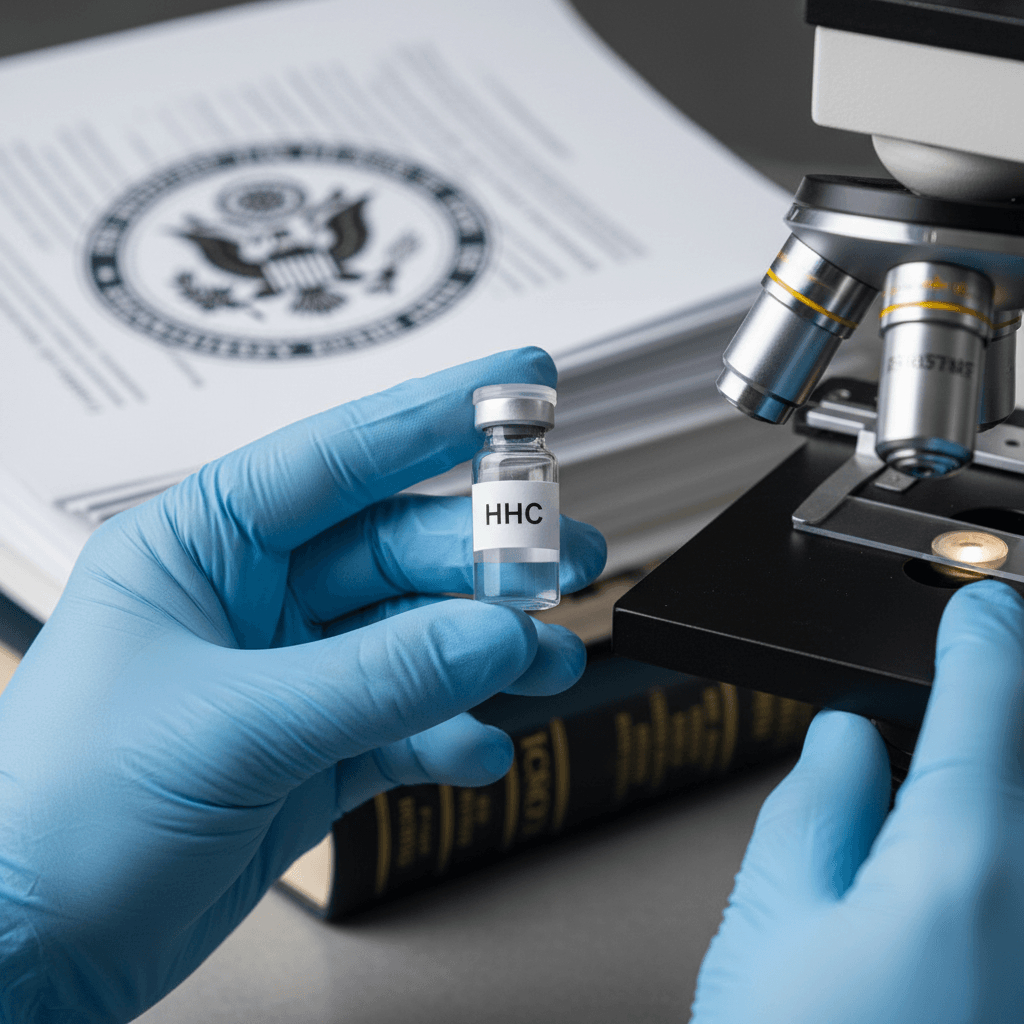
DEA Clarifies HHC Legality as Schedule I Substance
The Drug Enforcement Administration (DEA) has issued a Federal Register notice clarifying its position on the synthetic cannabinoid hexahydrocannabinol (HHC), classifying it as a Schedule I substance. This determination means the DEA does not consider HHC to be legal hemp, and the agency has assigned it a unique drug code for federal classification purposes, as reported by Marijuana Moment.
State-Level Hemp and Cannabis Regulatory Developments
Texas Hemp Product Rulings
In Texas, the legal landscape for hemp-derived products continues to evolve. A state judge issued a temporary injunction, allowing sales of smokable hemp THCA flower and other related products to continue. This injunction is set to remain in effect through at least July 27. Separately, the Texas Supreme Court upheld the ability of state regulators to restrict delta-8 THC products, indicating a bifurcated approach to different cannabinoid derivatives within the state’s regulatory framework.
California License Transition Streamlining
The California Department of Cannabis Control has streamlined the process for businesses to change their license designations from recreational to medical. This initiative aims to facilitate transitions for operators seeking to leverage legal benefits associated with the Trump administration’s federal rescheduling move. The adjustment provides a pathway for businesses to adapt their operational models in response to evolving federal policy.
Other State Regulatory Updates
- Connecticut: Lawmakers are moving to maintain current THC limits for marijuana products, despite legislative efforts that had sought to eliminate or increase potency caps.
- New Jersey: A state court ruled that municipalities cannot terminate police officers for off-duty marijuana use, addressing employment implications of cannabis legalisation.
- Missouri and Maine: Regulators in Missouri announced a recall of marijuana products that failed testing for aspergillus. Similarly, Maine regulators issued an advisory concerning marijuana products found with levels of yeast, mold, and the pesticide piperonyl butoxide that were deemed unsafe. These actions underscore ongoing efforts to support product safety and quality control within regulated markets.
- Nevada: State regulators are expected to reschedule marijuana under state law, following its federal reclassification.
- Massachusetts: Regulators published guidance regarding recently enacted changes to laws governing marijuana business financial interest thresholds.
Industry Business and Legal Actions
In Missouri, two marijuana businesses have initiated a class action lawsuit. The suit alleges that a network of companies formed a “cartel” that has “unlawfully seized control of the Missouri retail dispensary market” through alleged price-fixing, product- and supplier-allocation agreements, and coordinated exclusionary conduct. This legal action highlights ongoing competitive and regulatory challenges within the burgeoning cannabis industry.
On the corporate front, Curaleaf Holdings, Inc. completed the buyout of the stake it did not previously own in Four 20 Pharma GmbH. Separately, Verano Holdings Corp. authorized the repurchase of up to $20 million in shares.
Federal Legislative and Scientific Research Updates
On the federal legislative agenda, Representative Andy Barr (R-KY) is reportedly planning to file a new hemp regulation bill. The White House Office of National Drug Control Policy is also reportedly preparing to issue a new national drug control strategy this week.
In scientific research, a study indicated that cannabidiol (CBD) could function as a natural bioactive compound that may inhibit tumor cell proliferation and induce apoptosis in breast cancer cells. Another study’s findings highlighted the relevance of phytocannabinoids as candidates for the development of non-opioid analgesics.
Disclaimer: This article is for informational purposes only and does not constitute medical advice. Hemp Gazette does not provide medical recommendations, diagnoses, or treatment plans. Always consult a qualified healthcare practitioner before making any decisions regarding your health or any medical condition. Statements concerning the therapeutic uses of hemp, cannabis, or cannabinoid-derived products have not been evaluated by Australia’s Therapeutic Goods Administration (TGA). Medicinal cannabis products in Australia are accessed via prescription pathways under TGA regulation.