
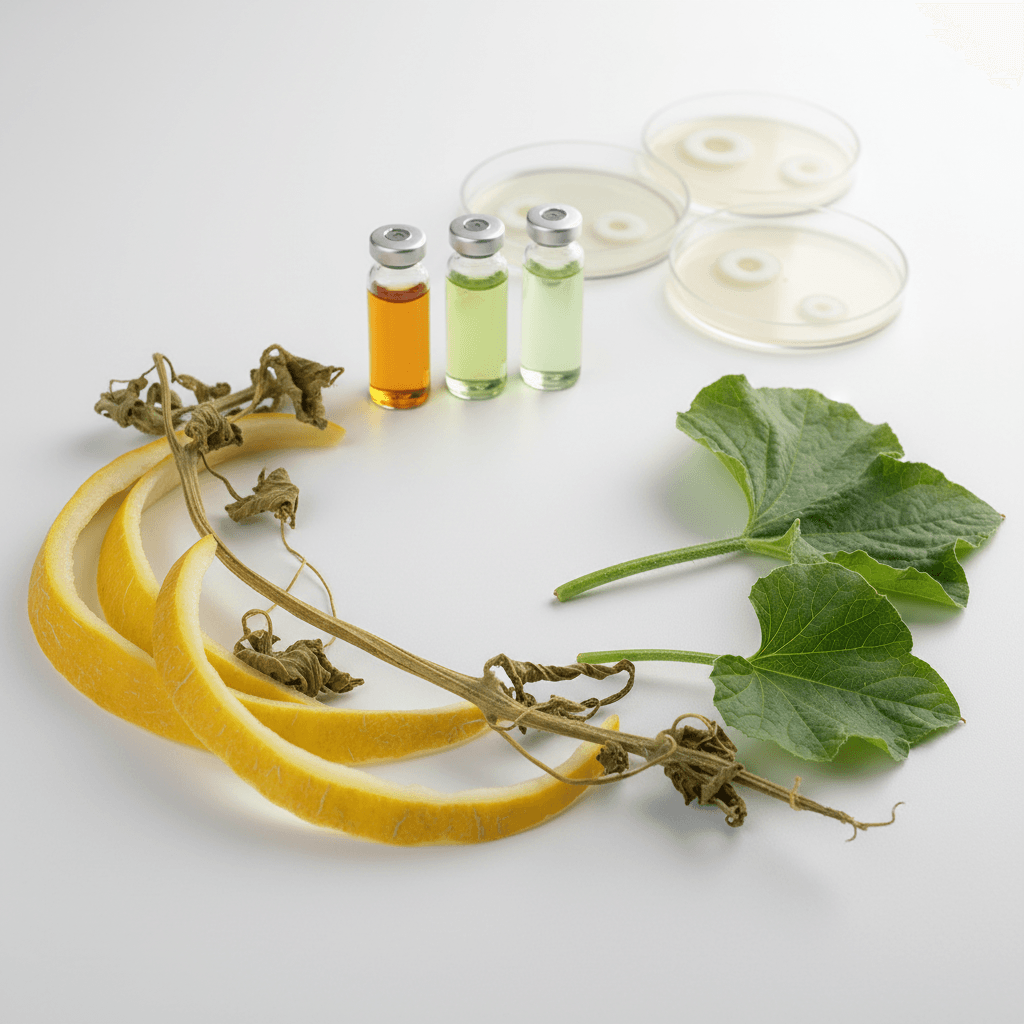
Muskmelon (Cucumis melo L.) is widely cultivated, yet its processing often generates substantial quantities of underutilised by-products, including peel, stems, and leaves. Recent research indicates these discarded materials may serve as valuable sources of bioactive compounds with potential applications in food and pharmaceutical industries, particularly for their natural antimicrobial potential.
A study published in Frontiers in Pharmacology investigated the phytochemical composition, free amino acid content, antimicrobial activity, and molecular interactions of muskmelon by-products. Researchers from institutions including the University of Ha’il in Saudi Arabia and the University of Tunis El Manar in Tunisia aimed to assess the potential for valorising these materials.
Phytochemical Richness and Amino Acid Profile
The study employed various analytical methods to characterise the muskmelon by-products:
- Phytochemical Screening: Qualitative analysis and thin-layer chromatography (TLC) were used to identify major secondary metabolites.
- Amino Acid Quantification: Gas chromatography–mass spectrometry (GC–MS) was utilised to determine the profile of free amino acids.
Phytochemical analysis confirmed the presence of several compound classes, including sterols, triterpenes, flavonoids, phenolics, saponins, and carotenoids. The peel/rind and leaves consistently exhibited the richest profiles of these compounds, while the stem showed lower concentrations.
GC–MS analysis of free amino acids revealed that glutamine was the most predominant (28.0%), followed by alanine (11.2%) and aspartic acid (9.3%).
Assessing Natural Antimicrobial Potential
To evaluate the antimicrobial activity, methanolic extracts from the muskmelon peel/rind, stems, and leaves were tested against a range of microbial pathogens using the agar well diffusion method. The target pathogens included Staphylococcus aureus, Bacillus subtilis, Escherichia coli, and Candida albicans.
Key Findings on Antimicrobial Activity:
- Methanolic extracts demonstrated significant, concentration-dependent antimicrobial activity.
- Stronger inhibition was observed against Gram-positive bacteria (S. aureus, B. subtilis) and the fungal pathogen C. albicans.
- Molecular docking analysis, an in silico method, indicated favourable binding affinities of selected amino acids towards target microbial enzymes, which may contribute to the observed biological activity.
The researchers noted that while amino acids showed promising interactions in computational models, the overall antimicrobial activity is primarily attributed to the broader spectrum of phytochemical constituents present in the extracts.
Implications for Functional Foods and Therapeutics
The findings from this research highlight muskmelon by-products as potential sources of bioactive compounds with notable natural antimicrobial potential. This suggests a pathway for transforming agricultural waste into ingredients for various applications.
According to the study, these results support the potential application of muskmelon waste in: Development of functional foods.
- Formulation of natural antimicrobial agents.
Further studies, including minimum inhibitory concentration (MIC) and minimum bactericidal concentration (MBC) determinations, alongside more targeted phytochemical docking analyses, are recommended to validate and expand upon these initial findings. This research contributes to the growing body of evidence supporting the valorisation of agro-industrial by-products within a circular bioeconomy framework, converting waste materials into functional ingredients for medicinal and food uses.
Disclaimer: This article is for informational purposes only and does not constitute medical advice. Hemp Gazette does not provide medical recommendations, diagnoses, or treatment plans. Always consult a qualified healthcare practitioner before making any decisions regarding your health or any medical condition. Statements concerning the therapeutic uses of hemp, cannabis, or cannabinoid-derived products have not been evaluated by Australia’s Therapeutic Goods Administration (TGA). Medicinal cannabis products in Australia are accessed via prescription pathways under TGA regulation.