
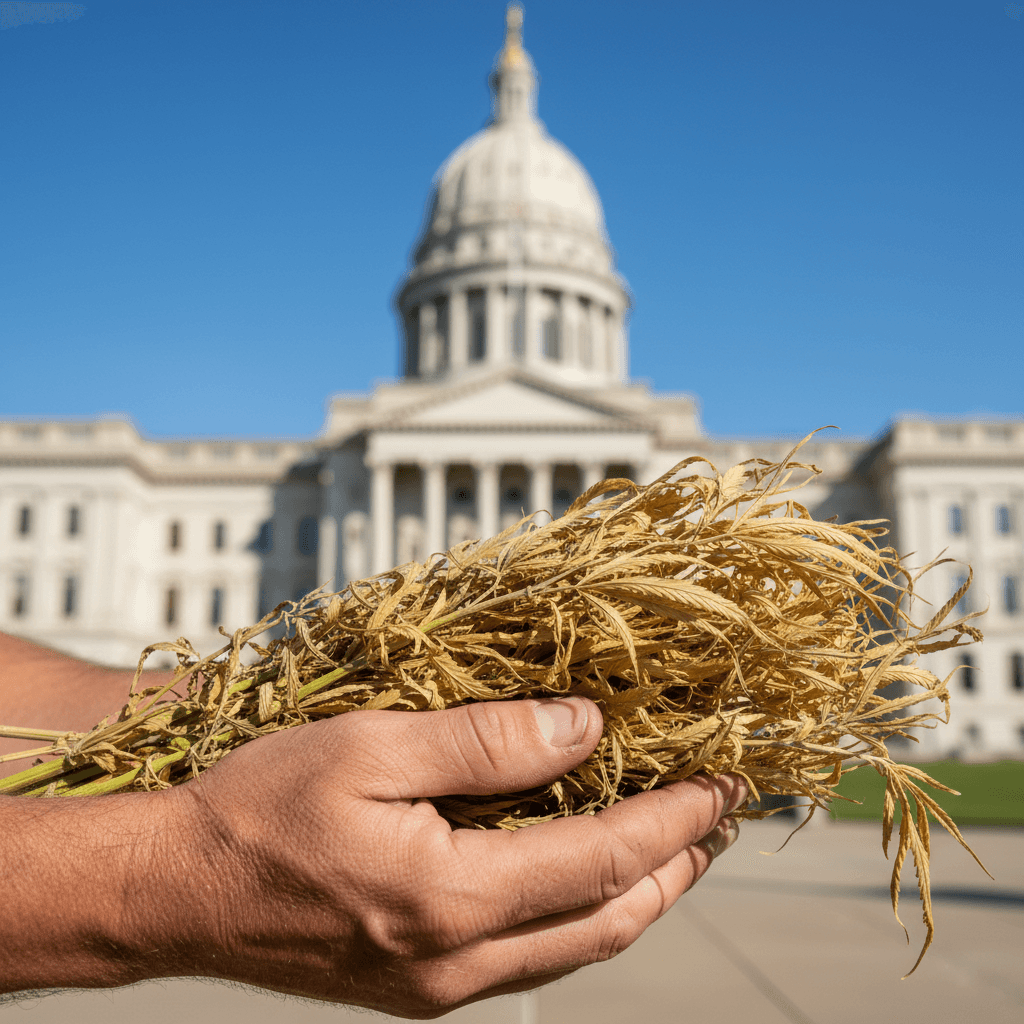
Michigan’s approach to industrial hemp policy is undergoing proposed changes, with recent legislative efforts in Lansing aimed at transferring oversight from the state to the U.S. Department of Agriculture (USDA). iHemp Michigan, an industry advocacy group, has actively supported Senate Bill 608 and Senate Bill 609, which seek to update the state’s industrial hemp laws.
According to a report by MITech News, Dave Crabill from iHemp Michigan testified before the Michigan Senate Regulatory Affairs Committee, advocating for these bills. The proposed legislation, authored by State Senator Dan Lauwers (25th District), intends to dissolve Michigan’s existing state-run hemp program and place it under federal USDA jurisdiction. This move, as previously reported by Hemp Gazette, builds on earlier discussions regarding Michigan’s hemp program.
Addressing Current Program Sustainability
The impetus for this shift stems from the perceived unsustainability of Michigan’s current industrial hemp program. Crabill indicated that the financial burden on growers under the Michigan Department of Agriculture and Rural Development (MDARD) system has been a significant deterrent. Under the current MDARD framework, growers are required to pay a US$1,250 license fee, in addition to approximately US$500 for state-mandated compliance testing.
This cost structure has been cited as a primary factor in a substantial decline in grower participation. Data presented by Crabill showed that the number of registered industrial hemp growers in Michigan decreased from nearly 700 in 2019 to approximately 25 in 2026. Molly Mott, Health Section Manager at MDARD, reportedly supported the proposed changes, acknowledging the challenges faced by the program.
Proposed Changes and Economic Implications
The transition to USDA oversight is anticipated to reduce the financial risk for industrial hemp cultivators. Under the federal USDA program, growers would pay a US$100 fee for a three-year license and would be responsible for contracting testing services from a list of certified third-party laboratories.
Key benefits cited for this policy adjustment include:
- Reduced Financial Barrier: Lower licensing and testing costs are expected to make industrial hemp cultivation more accessible, particularly for new or smaller-scale farmers.
- Encouraging Diversification: The reduced financial risk could enable farmers to experiment with cultivating smaller plots, such as a quarter-acre, for grain or fiber production, facilitating learning about crop performance.
- Investment Attraction: iHemp Michigan expressed hope that state and federal officials would differentiate fiber and grain crops from recreational cannabis, thereby reducing scrutiny and attracting investment into processing infrastructure for industrial hemp.
Crabill noted that the challenges facing the industrial hemp sector extend beyond biological complexities, encompassing high levels of state scrutiny on finance, insurance, transportation, and marketing, often conflated with recreational cannabis.
Legislative Progress and Outlook
Senate Bill 608 and Senate Bill 609 have successfully passed the Michigan Senate. The next steps involve consideration by the Michigan House of Representatives and, if approved, signature by Governor Whitmer to enact the changes into law. iHemp Michigan remains optimistic regarding the bills’ passage through the House and subsequent gubernatorial approval.
The proposed shift in industrial hemp policy represents an effort to streamline regulatory processes and foster economic growth within Michigan’s industrial hemp sector by aligning it with federal standards and reducing operational costs for growers.
Disclaimer: This article is for informational purposes only and does not constitute medical advice. Hemp Gazette does not provide medical recommendations, diagnoses, or treatment plans. Always consult a qualified healthcare practitioner before making any decisions regarding your health or any medical condition. Statements concerning the therapeutic uses of hemp, cannabis, or cannabinoid-derived products have not been evaluated by Australia’s Therapeutic Goods Administration (TGA). Medicinal cannabis products in Australia are accessed via prescription pathways under TGA regulation.