
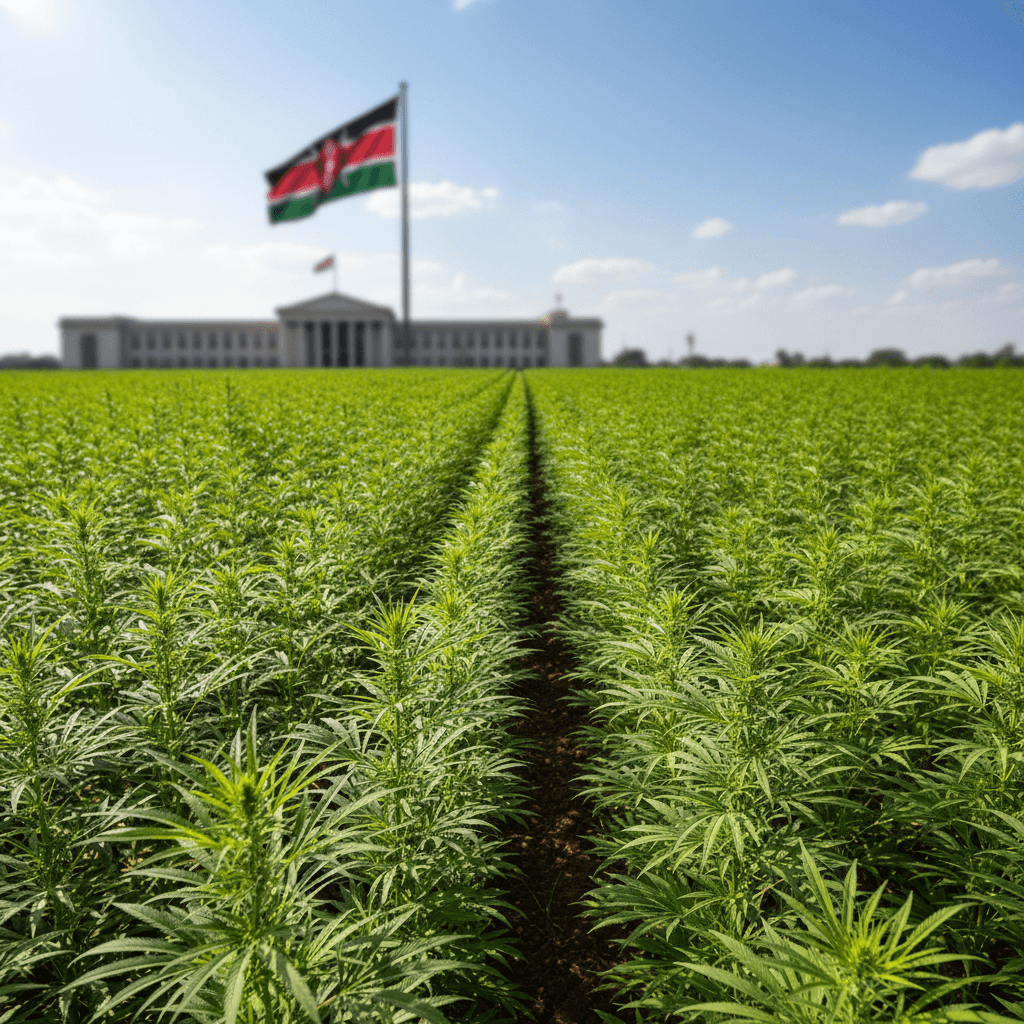
George Wajackoyah, leader of Kenya’s Roots Party, has announced his intention to contest the 2027 presidential election, centering his campaign on a proposal for large-scale industrial hemp cultivation to address the nation’s economic challenges. According to a report by Streamlinefeed.co.ke, Wajackoyah’s platform includes an aggressive push for the legalization and commercialisation of cannabis, aiming to leverage the crop’s economic potential.
Industrial Hemp as an Economic Strategy
Wajackoyah’s manifesto proposes dedicating 200,000 acres of the Galana Kulalu food security project to the cultivation of industrial and medicinal cannabis. He projects that a 50-kilogram harvest of cultivated hemp could generate USD 307 million on the international export market, a figure that economic analysts have questioned for its mathematical feasibility. His plan suggests that establishing this export pipeline would instantly eradicate Kenya’s KES 10.5 trillion public debt and fully fund a massive overhaul of the deteriorating national infrastructure.
To counter persistent moral objections from conservative religious groups, Wajackoyah has utilized theological arguments, claiming the biblical burning bush was a manifestation of burning hemp. This approach attempts to frame cannabis cultivation as a divinely sanctioned economic remedy, challenging entrenched orthodoxies within the Kenyan clergy.
Global Market Dynamics and Implementation Challenges
The international legal cannabis market is currently expanding, with North American and European nations generating substantial tax revenue from regulated cultivation. African countries, traditionally reliant on volatile cash crops, are increasingly exploring medicinal cannabis as a viable economic frontier. Neighboring nations such as Rwanda and Uganda have already initiated legislative frameworks to explore the highly regulated cultivation of medicinal cannabis for exclusive export.
However, the international market is fiercely competitive and dominated by corporate conglomerates utilizing advanced hydroponic technologies. Kenya’s potential entry into this arena would necessitate billions of shillings in infrastructure investment, stringent security protocols, and rigorous compliance with international pharmaceutical standards. Economists at the University of Nairobi caution that Wajackoyah’s vision may oversimplify the monumental logistical challenges of establishing a state-run cannabis export industry. They highlight that the global supply chain is fraught with complex banking restrictions, as major financial institutions frequently refuse to process transactions linked to cannabis, irrespective of local legality. Transforming a large agricultural tract like Galana Kulalu into a productive industrial hemp hub would require more than political will; it would demand a comprehensive restructuring of Kenya’s diplomatic and financial treaties to navigate these international complexities.
Political Context and Broader Policy Framework
Wajackoyah’s 2027 bid follows his 2022 general election performance, where the Roots Party secured 61,969 verified votes, placing a distant fourth. While his rhetoric often includes controversial elements, his focus on industrial hemp taps into a broader global discussion about alternative cash crops and economic diversification. Beyond agricultural reform, his platform also includes proposals for instituting the death penalty for public officials convicted of graft, drawing comparisons to penal systems in China and Somaliland. Legal scholars note that such a measure would require an unprecedented constitutional overhaul and could impact Kenya’s adherence to numerous international human rights treaties. Wajackoyah’s campaign heavily targets the youth demographic, which comprises over 65 percent of the registered voting block, aiming to solidify his political base through a blend of radical economic policies and traditional political engagement.
Disclaimer: This article is for informational purposes only and does not constitute medical advice. Hemp Gazette does not provide medical recommendations, diagnoses, or treatment plans. Always consult a qualified healthcare practitioner before making any decisions regarding your health or any medical condition. Statements concerning the therapeutic uses of hemp, cannabis, or cannabinoid-derived products have not been evaluated by Australia’s Therapeutic Goods Administration (TGA). Medicinal cannabis products in Australia are accessed via prescription pathways under TGA regulation.