
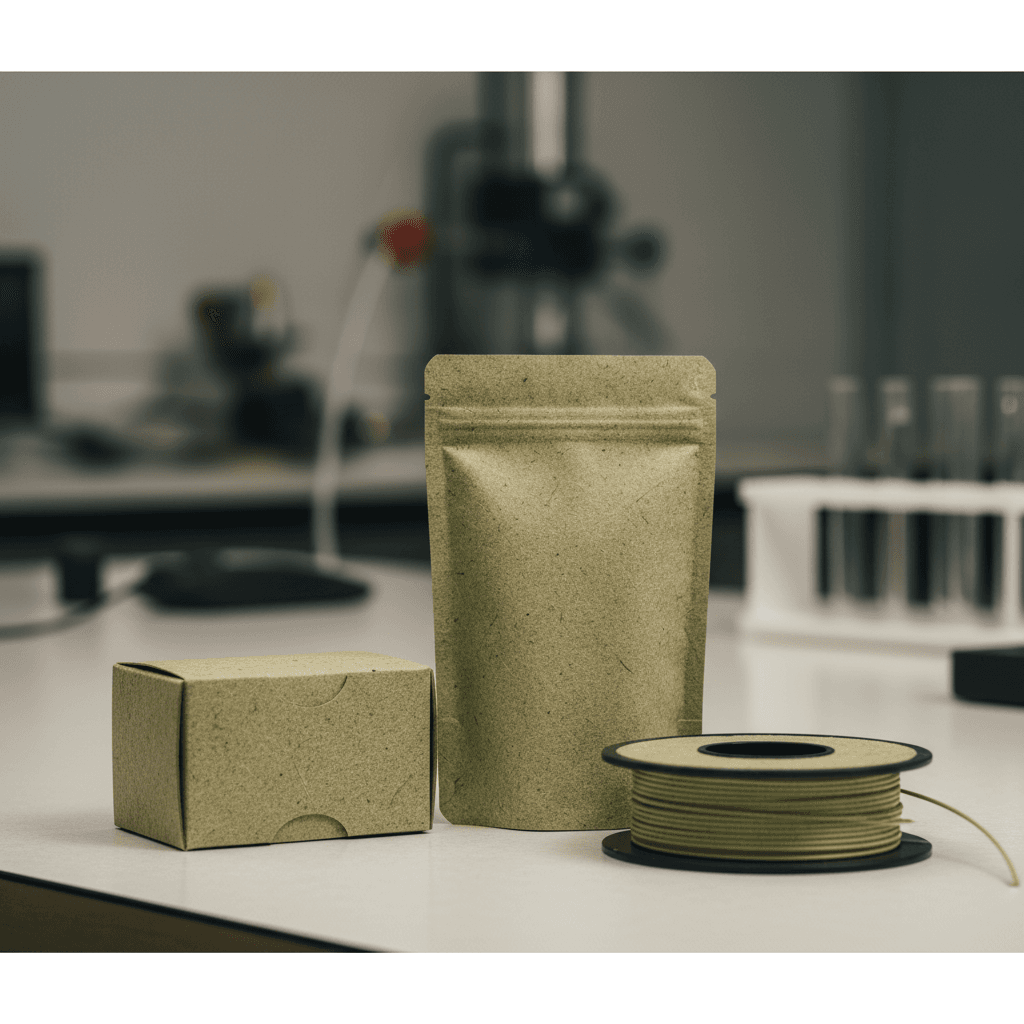
The industrial hemp sector is seeing a rise in companies dedicated to developing and manufacturing hemp-based packaging solutions. This expansion comes as demand accelerates for sustainable alternatives to traditional materials, driven by regulatory changes and the growth of e-commerce. A diverse range of enterprises, from specialist developers to vertically integrated processors, are contributing to the material science and production capabilities necessary for this evolving market.
Innovations in Hemp Bioplastics and Resins
A core area of development for hemp-based packaging lies in bioplastics and composite materials. Several companies are focusing on creating the foundational resins and compounds that can be molded into various packaging forms:
- Hemp Plastic Headquarters, based in the United States, specializes in developing hemp bioplastic resins and compounds. Their work aims to provide versatile materials for manufacturing.
- Green Dot Bioplastics, also from the United States, produces Terratek hemp-based biocomposites, which offer a sustainable option for various applications.
- Italian company Kanesis has developed HempBioPlastic, a hemp-based filament specifically designed for 3D printing, opening avenues for custom and on-demand packaging solutions.
- Hemp Plastic Company, an Australian manufacturer, focuses on producing finished hemp plastic products and packaging, indicating the readiness of these materials for market.
- Hemp Black, from the United States, is developing eco-engineered materials that include applications for packaging, leveraging advanced material science.
- Cannabrick, a developer of hemp-based biocomposite materials, contributes to the broader range of sustainable material options.
- Even companies like Hemp Eyewear in the United Kingdom, known for consumer goods, are manufacturing their packaging from hemp biocomposite, showcasing practical adoption.
From Raw Fiber to Finished Packaging Products
The journey from cultivated hemp to a finished packaging product involves significant processing and material development. Several entities are working across this supply chain:
- Dutch company HempFlax is a major European hemp processor, supplying hemp fiber for composites and various other materials, including those suitable for packaging.
- Another Netherlands-based firm, Dun Agro, focuses on hemp cultivation and fiber products, providing raw hemp fiber that serves as a crucial input for composite materials.
- In the United States, American Hemp supplies hemp fiber and hurd products, essential raw materials for the packaging industry.
- Hemp Inc., a vertically integrated U.S. company, engages in industrial hemp processing, with its product range including packaging materials.
- HempWood, based in the United States, offers a hemp-based wood alternative that can be utilized for rigid packaging applications, demonstrating the plant’s versatility.
- While primarily known for hemp insulation, U.S. company Hempitecture’s work with hemp-based building materials suggests potential for future packaging uses, especially for protective or structural elements.
- Treefiber, also from the United States, produces specialized hemp fiber mats, which could find applications in protective or cushioning packaging.
Supporting the Hemp Material Supply Chain
Efficient distribution and supply of raw hemp materials are crucial for the growth of the hemp-based packaging sector. Specialized distributors and material suppliers play a vital role:
- Hemp Traders, a U.S. distributor, facilitates the supply of hemp fiber and other raw industrial hemp materials to manufacturers.
- Hemp Logistics, a specialized distributor, focuses on the hemp material supply chain, ensuring that processors and manufacturers have access to the necessary inputs for their packaging innovations.
The collective efforts of these companies underscore a concerted drive within the industrial hemp sector to establish robust, sustainable alternatives for packaging. As research and development continue, the range and performance of hemp-based packaging are expected to expand, offering more environmentally sound choices for consumers and industries alike.
Disclaimer: This article is for informational purposes only and does not constitute medical advice. Hemp Gazette does not provide medical recommendations, diagnoses, or treatment plans. Always consult a qualified healthcare practitioner before making any decisions regarding your health or any medical condition. Statements concerning the therapeutic uses of hemp, cannabis, or cannabinoid-derived products have not been evaluated by Australia’s Therapeutic Goods Administration (TGA). Medicinal cannabis products in Australia are accessed via prescription pathways under TGA regulation.