
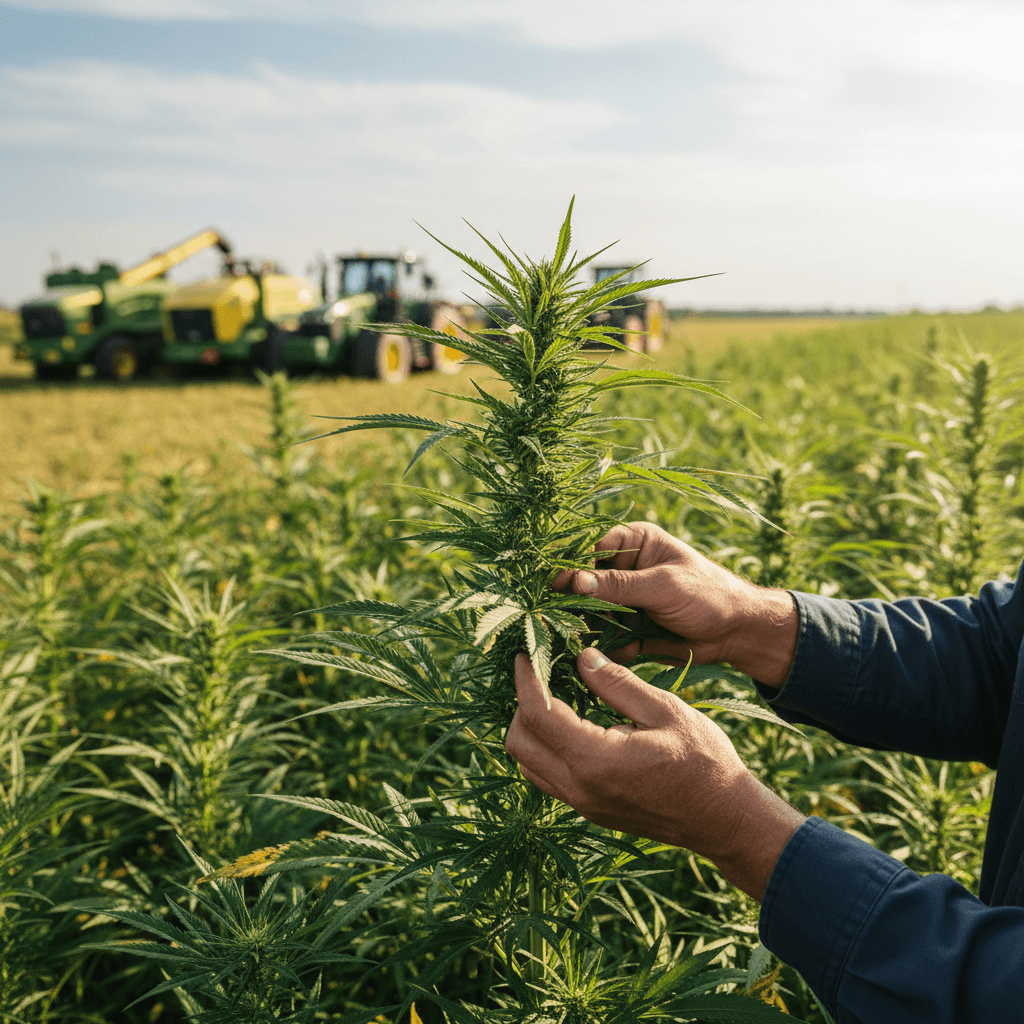
The United States industrial hemp market is navigating significant regulatory challenges, with industry stakeholders advocating for clear policy frameworks to distinguish legitimate agricultural uses from unregulated cannabinoid products. Despite considerable economic potential and farmer adoption, the sector faces disruption from products operating in a legal gray area, according to an opinion piece by Geoff Whaling, Chairman of the Board of Directors of The National Hemp Association (NHA), published by AOL News.
Economic Potential of Industrial Hemp
Since the enactment of the 2018 Farm Bill, which included the Hemp Farming Act, the intent was to re-establish industrial hemp as a legitimate agricultural commodity. Data indicates that hemp farming is expanding, with growth rates exceeding 30% year-over-year. This expansion signals demand and opportunity within the agricultural sector. The broader economic potential, particularly in grain, feed, and oilseed markets, is estimated to be in the multi-tens-of-billions-of-dollars, supporting tens of thousands of jobs in the United States, as detailed in Whaling’s analysis.
Legitimate operators, including farmers, processors, researchers, and manufacturers, are focused on building supply chains, investing in infrastructure, and developing markets for fiber and grain. These stakeholders are seeking clarity, consistency, and a fair regulatory framework to facilitate growth and competition.
Regulatory Ambiguity and Market Disruption
Progress within the industrial hemp sector is reportedly being undermined by a segment of actors operating outside traditional agriculture. These entities are manipulating trace cannabinoids into high-potency intoxicating tetrahydrocannabinol (THC) products, which are then marketed under the “hemp” banner. These products, sometimes referred to as “gas station weed,” exist in a legal gray area with limited oversight, raising public health concerns.
Recent legislative proposals have reportedly reinforced these concerns by prioritizing the protection of an unregulated intoxicant market. These proposals, according to Whaling, often fail to address core agricultural needs, such as providing pathways for fiber and grain, frameworks for food, feed, or low-dose beverages, or strategies for building a domestic supply chain. This approach risks hindering the development of the broader industrial hemp industry.
Proposed Policy Solutions for Industrial Hemp
To address the current challenges, Whaling suggests a multi-faceted approach to policy reform. The proposed solutions aim to provide a clear framework for the industrial hemp market:
- Statutory Distinction: Establish a clear legal separation between true industrial hemp, encompassing fiber and grain, and cannabinoid products. These are identified as distinct markets with differing risk profiles, end uses, and regulatory requirements.
- Rational Cannabinoid Framework: Develop a structured regulatory pathway for cannabinoids, including:
- A lawful pathway for non-intoxicating, naturally occurring cannabinoids through the U.S. Food and Drug Administration (FDA).
- Clear guardrails and appropriate oversight for intoxicating products.
- A defined regulatory lane for low-dose hemp beverages, potentially overseen and taxed by the Alcohol and Tobacco Tax and Trade Bureau (TTB).
- Agricultural Economy Integration: Unlock the full agricultural potential of hemp by:
- Achieving federal recognition of hemp grain and ingredients within food and feed systems.
- Establishing pathways for domestic animal feed approvals.
- Supporting fiber processing, manufacturing, and market development initiatives.
- Ensuring alignment with relevant federal programs, including Centers for Medicare & Medicaid Services (CMS) pathways where appropriate.
Policymakers are reportedly engaging in discussions that suggest a willingness to reassess and refine existing frameworks. The National Hemp Association advocates for a deliberate and thoughtful process, incorporating input from stakeholders actively building the industry. The objective is to establish policy that supports the economic reality of industrial hemp, enabling it to contribute to a new manufacturing base and rural investment.
Disclaimer: This article is for informational purposes only and does not constitute medical advice. Hemp Gazette does not provide medical recommendations, diagnoses, or treatment plans. Always consult a qualified healthcare practitioner before making any decisions regarding your health or any medical condition. Statements concerning the therapeutic uses of hemp, cannabis, or cannabinoid-derived products have not been evaluated by Australia’s Therapeutic Goods Administration (TGA). Medicinal cannabis products in Australia are accessed via prescription pathways under TGA regulation.