
Senator Tim Scott (R-SC), who chairs the U.S. Senate Committee on Banking, Housing, and Urban Affairs, recently described the current state of cannabis banking access as a “quandary.” Speaking at the Milken Institute’s Global Conference, Senator Scott underscored the challenges faced by cannabis businesses and financial institutions due to the discrepancy between state-level legalization and federal prohibition.
The Federal-State Discrepancy and Banking Challenges
Senator Scott stated that while many states have legalized cannabis, its continued federal illegality prevents businesses from accessing the federal banking system. He noted, “Congress is going to have to make it legal, because today even though the president has declassified it or reduced its impact, the truth is it is still illegal.” This statement referred to the Trump administration’s recent move to federally reschedule marijuana, which Scott suggested did not resolve the core banking issue for financial institutions.
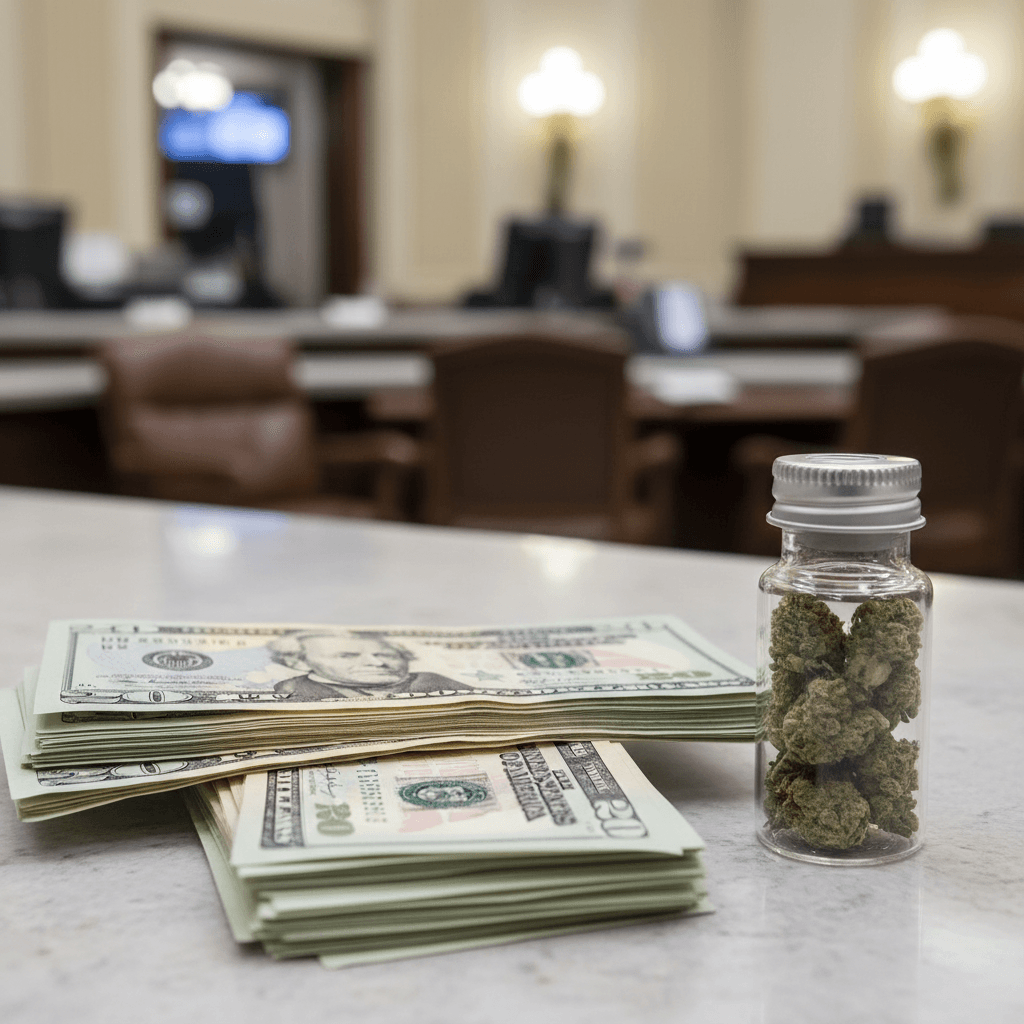
The Senator highlighted the practical implications of this federal-state conflict, particularly the prevalence of cash-only operations within the industry. “What you don’t want is to have a situation where you have these cash rooms where you have hundreds of thousands of dollars cash sitting in a location,” he explained. Such environments, he added, contribute to higher risks of criminal activity due to the inability to bank these funds through conventional channels. This situation creates a clear need for legislative intervention to integrate state-legal cannabis enterprises into the broader financial system.
The SAFER Banking Act and Legislative Outlook
To address the challenges in cannabis banking access, Senator Scott pointed to the Secure and Fair Enforcement Regulation (SAFER) Banking Act. This legislation aims to provide federal protections to banks that serve state-legal cannabis businesses, thereby enabling them to operate within the mainstream financial system. Versions of this bill have passed the U.S. House of Representatives multiple times but have not received a vote on the Senate floor, as previously reported by Hemp Gazette.
Despite articulating the benefits of such reform, Senator Scott has previously opposed cannabis banking legislation, including when it advanced through the Banking Committee under prior Democratic control in 2023. During his prior service in the House, Scott also voted against an amendment designed to protect state medical cannabis programs from federal interference. As of the current congressional session, the SAFER Banking Act has not yet been refiled in either chamber during the 119th Congress, which the source notes began in January 2025.
At an American Bankers Association (ABA) Washington Summit in 2023, Scott predicted that the federal-state marijuana banking conflict would “come to a conclusion likely in this Congress.” He emphasized the importance of addressing the bill through “regular order,” rather than rushing it to a vote, asking whether the legislation would “solve more challenges than it creates harm.”
Senator Scott’s Stance and Broader Cannabis Policy
Senator Scott clarified his broader views on cannabis, stating he is “not agnostic” and holds “a strong opinion.” He raised concerns about what he termed the “synthetic nature of marijuana and how it’s 300 percent stronger than it was naturally,” but distinguished this from the immediate need for banking reform. “The real conversations we’re having though is about access to the banking system,” he affirmed.
He acknowledged a bipartisan coalition interested in having a “serious conversation” about the challenges the SAFER Banking Act could address. While he noted he is not among the Republicans who have “come out very positively” on the SAFE Act, he expressed optimism that a solution would be reached, stating, “I think we’ll get to a solution.” Scott also indicated that lawmakers need to engage in a broader debate about federal marijuana legalization, describing it as “something that we’re going to have to wrestle with as a nation and as a Congress and get to an answer there.” This reflects a continued legislative effort to integrate state-legal cannabis businesses into the federal financial system, building on earlier coverage of the ongoing cannabis banking crisis in the U.S. Senate.
Disclaimer: This article is for informational purposes only and does not constitute medical advice. Hemp Gazette does not provide medical recommendations, diagnoses, or treatment plans. Always consult a qualified healthcare practitioner before making any decisions regarding your health or any medical condition. Statements concerning the therapeutic uses of hemp, cannabis, or cannabinoid-derived products have not been evaluated by Australia’s Therapeutic Goods Administration (TGA). Medicinal cannabis products in Australia are accessed via prescription pathways under TGA regulation.