
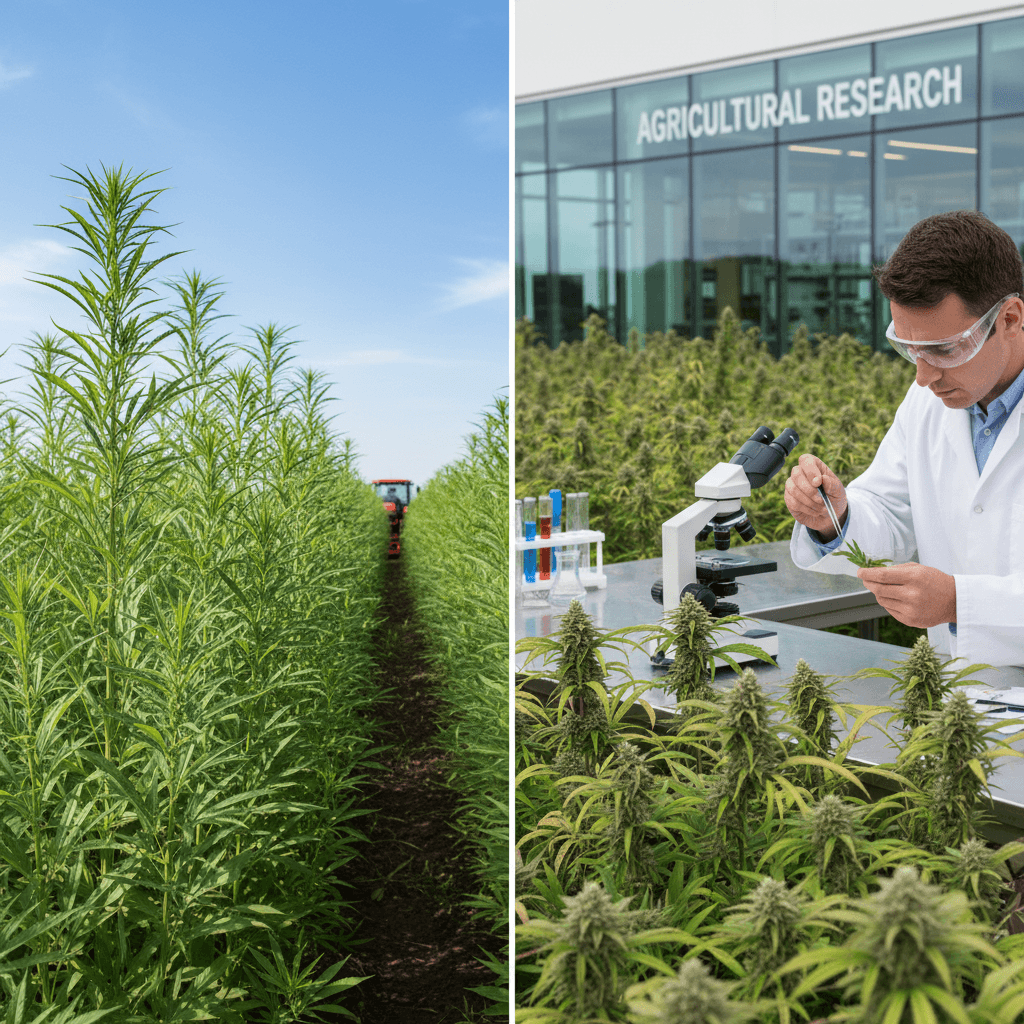
The U.S. House of Representatives has passed a version of the Farm Bill, formally known as the Farm, Food, and National Security Act of 2026, which introduces a formal separation between industrial hemp (fiber and grain) and cannabinoid-linked crops. The measure passed in a 224–200 vote, aligning farm-level regulations with previous congressional actions to address the market for intoxicating hemp products, according to Hemp Today. This legislative package is intended to replace the 2018 omnibus agriculture law, which had been subject to repeated extensions.
The draft bill maintains a regulatory approach that treats hemp as a controlled-risk crop, diverging from the standard commodity classification applied to other major U.S. agricultural products. This framework narrows the upstream supply chain for CBD while adjusting compliance requirements for industrial hemp fiber and grain producers.
Changes to Cannabinoid Hemp Regulation
For producers cultivating hemp for cannabinoid extraction, the most significant alteration involves the methodology for THC testing. The new rule mandates testing for total THC, which includes tetrahydrocannabinolic acid (THCA), rather than solely delta-9 THC at the time of sampling. This change is designed to account for the conversion of THCA to THC during the drying and processing phases, thereby closing a regulatory loophole that allowed some crops to pass initial tests but later exceed the federal 0.3% THC limit.
The implications of this revised testing protocol include:
- Fewer compliant raw material inputs for cannabinoid products.
- Increased crop risk for cultivators.
- Tighter traceability requirements throughout the supply chain.
These factors are expected to constrain the upstream supply of material utilized for CBD and other derivatives from the hemp flower. Downstream, the bill does not resolve core issues regarding finished products; the U.S. Food and Drug Administration (FDA) retains authority over aspects such as safety, dosage, labeling, and marketing of wellness CBD. The legislation does not delay or revise the enforcement timeline of November 2026 for hemp-derived intoxicating products, which was set in motion by the 2025 appropriations law and targets synthetic and chemically converted cannabinoids.
Industrial Hemp Fiber and Grain Provisions
Conversely, the Farm Bill aims to streamline processes for industrial hemp fiber and grain operators, though this relief is accompanied by new controls and documentation requirements. Growers seeking “industrial hemp” status must provide verifiable proof of their production’s consistency with industrial use. This documentation may include certified seed tags, sales contracts, Farm Service Agency filings, or specific harvest methods. Producers unable to provide such evidence will be subject to the full testing regime.
Additional provisions reinforcing the distinct regulatory system for industrial hemp include:
- Relaxation of the 10-year felony ban for controlled-substance convictions for producers designated solely as industrial hemp growers.
- Introduction of a specific penalty (a five-year program ban) for knowingly misrepresenting crops as industrial hemp.
- A new requirement for producers to provide laboratory certificates of analysis for non-compliant hemp crops that are destroyed.
- Lighter-touch compliance options for industrial hemp, allowing states and the USDA to permit visual inspections, certified seed, or performance-based sampling in lieu of full testing.
- Establishment of a USDA role in hemp laboratory accreditation, in consultation with the Drug Enforcement Administration (DEA).
The House draft integrates hemp into a regulatory structure closely linked to law enforcement, a model not applied to other major U.S. crops. This approach is anticipated to persist, reflecting the regulatory response to the proliferation of intoxicating hemp products.
Future Legislative Frameworks
Beyond the House Farm Bill, other legislative proposals are under consideration to address the unresolved regulatory status of cannabinoids. Notably, proposals from Kentucky Republican Representative Andy Barr (Lawful Hemp Protection Act) and Oregon Democrat Senator Ron Wyden (Cannabinoid Safety and Regulation Act) aim to regulate intoxicating hemp products and define the role of CBD. While both seek to curb intoxicating products, Barr’s proposal would significantly narrow the cannabinoid market, whereas Wyden’s envisions a broader, federally regulated system.
Disclaimer: This article is for informational purposes only and does not constitute medical advice. Hemp Gazette does not provide medical recommendations, diagnoses, or treatment plans. Always consult a qualified healthcare practitioner before making any decisions regarding your health or any medical condition. Statements concerning the therapeutic uses of hemp, cannabis, or cannabinoid-derived products have not been evaluated by Australia’s Therapeutic Goods Administration (TGA). Medicinal cannabis products in Australia are accessed via prescription pathways under TGA regulation.