
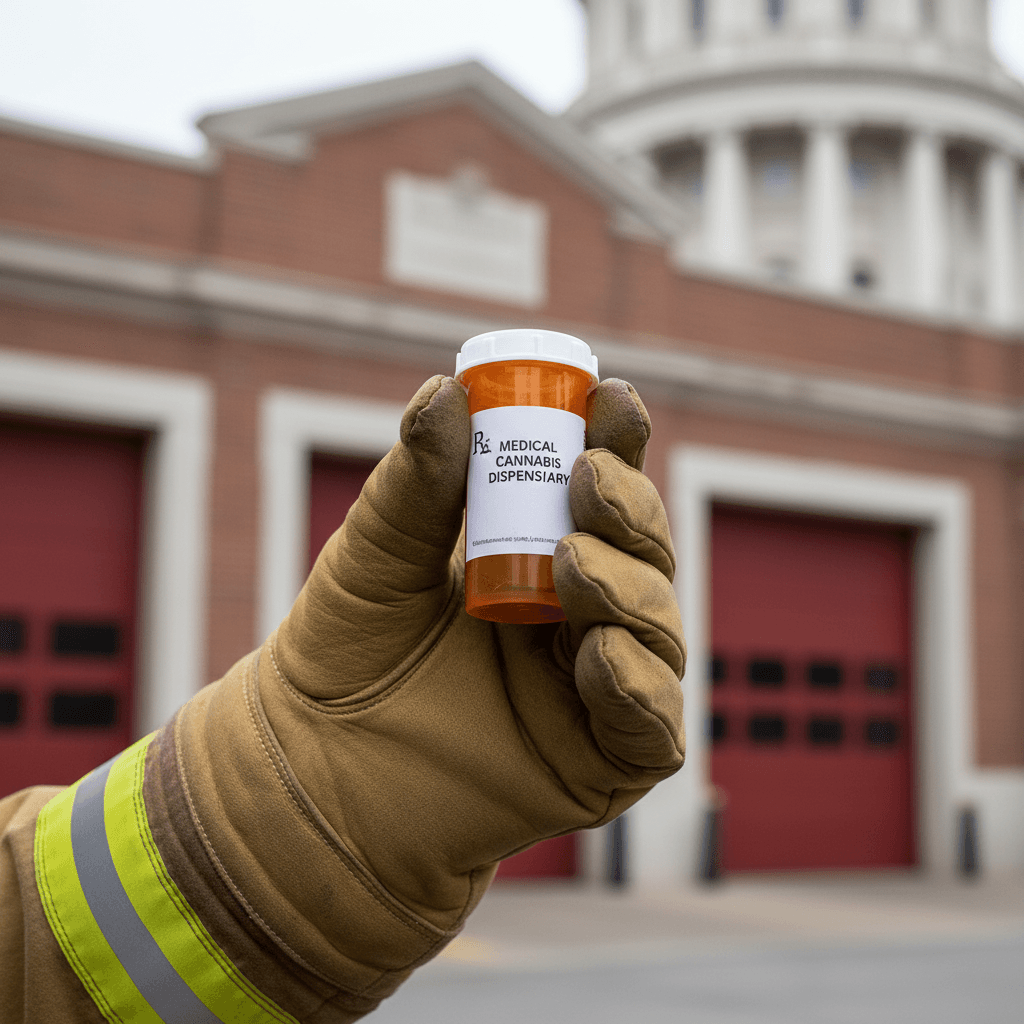
A San Antonio firefighter and paramedic, Zachary Crumley, states he was terminated from his position after testing positive for tetrahydrocannabinol (THC) despite possessing a valid medical cannabis prescription under the Texas Compassionate Use Program. This action has prompted the San Antonio Professional Firefighters Association to threaten legal action against the City of San Antonio, alleging a violation of their collective bargaining agreement.
Regulatory Framework: Texas Compassionate Use Program
The Texas Compassionate Use Program, enacted in 2015, permits patients to use low-THC cannabis for a range of medical conditions. These conditions include epilepsy, post-traumatic stress disorder (PTSD), chronic pain, cancer, and Crohn’s disease. Mr. Crumley, who joined the San Antonio Fire Department in 2018, reported that he began using low-THC cannabis approximately one year prior to his termination, under the state program, for a medical condition he stated stemmed from his on-the-job duties.
Employment Dispute and City’s Position
The dispute centers on the interpretation of employment agreements and public safety mandates. According to Mr. Crumley, he underwent a random drug test on November 21, and immediately provided documentation for his medical cannabis prescription. However, on December 8, fire officials placed him on administrative leave due to a positive drug test. He was subsequently required to complete a medical evaluation to determine his fitness for duty. On December 14, he was notified he was found unfit for duty.
A second drug test administered on January 20 also returned positive for THC. Mr. Crumley stated, “The issue was not that I had ever been impaired at work. The issue was not that I had failed to perform the essential functions of my job. The issue is simply that the psychiatrist the city sent me to did not believe a THC prescription is compatible with the duties of a first responder.”
City officials maintain that public safety is paramount. Fire Chief Valerie Frausto stated that the City of San Antonio must ensure firefighters are not impaired when performing critical duties such as responding to emergencies, operating heavy equipment, or providing medical treatment. City Attorney Andy Segovia affirmed that fire department officials followed the city’s administrative process after a medical professional concluded Mr. Crumley was “found not fit for duty while using marijuana.” Mr. Segovia further stated that while the City respects the collective bargaining agreement and state law, neither requires the City to permit “unfettered use of medical marijuana by a firefighter in a public safety role.” After exhausting paid leave, Mr. Crumley’s request for additional unpaid leave was denied, leading to his deemed resignation on May 22 for missing consecutive shifts.
Union Response and Legal Implications
The San Antonio Professional Firefighters Association alleges that the City of San Antonio has violated its collective bargaining agreement, which stipulates that positive drug tests are not counted as negative results if the “circumstances leading to the test result were other than illicit drug use.” Union officials claim there have been at least five instances, including Mr. Crumley’s case, where the city has not accepted positive drug test results for firefighters with Compassionate Use cards.
Union President Joe Jones stated that Mr. Crumley was not the first firefighter penalized for low-dose cannabis use and threatened a lawsuit if Mr. Crumley is not reinstated. This legal challenge follows a prior action where a Bexar County judge on May 6 denied a request by the union to prevent the city from placing firefighters with Compassionate Use Cards on leave when they test positive for marijuana. The ongoing dispute highlights the complexities arising at the intersection of state-level medical cannabis policy, employment law, and public safety regulations.
Disclaimer: This article is for informational purposes only and does not constitute medical advice. Hemp Gazette does not provide medical recommendations, diagnoses, or treatment plans. Always consult a qualified healthcare practitioner before making any decisions regarding your health or any medical condition. Statements concerning the therapeutic uses of hemp, cannabis, or cannabinoid-derived products have not been evaluated by Australia’s Therapeutic Goods Administration (TGA). Medicinal cannabis products in Australia are accessed via prescription pathways under TGA regulation.