
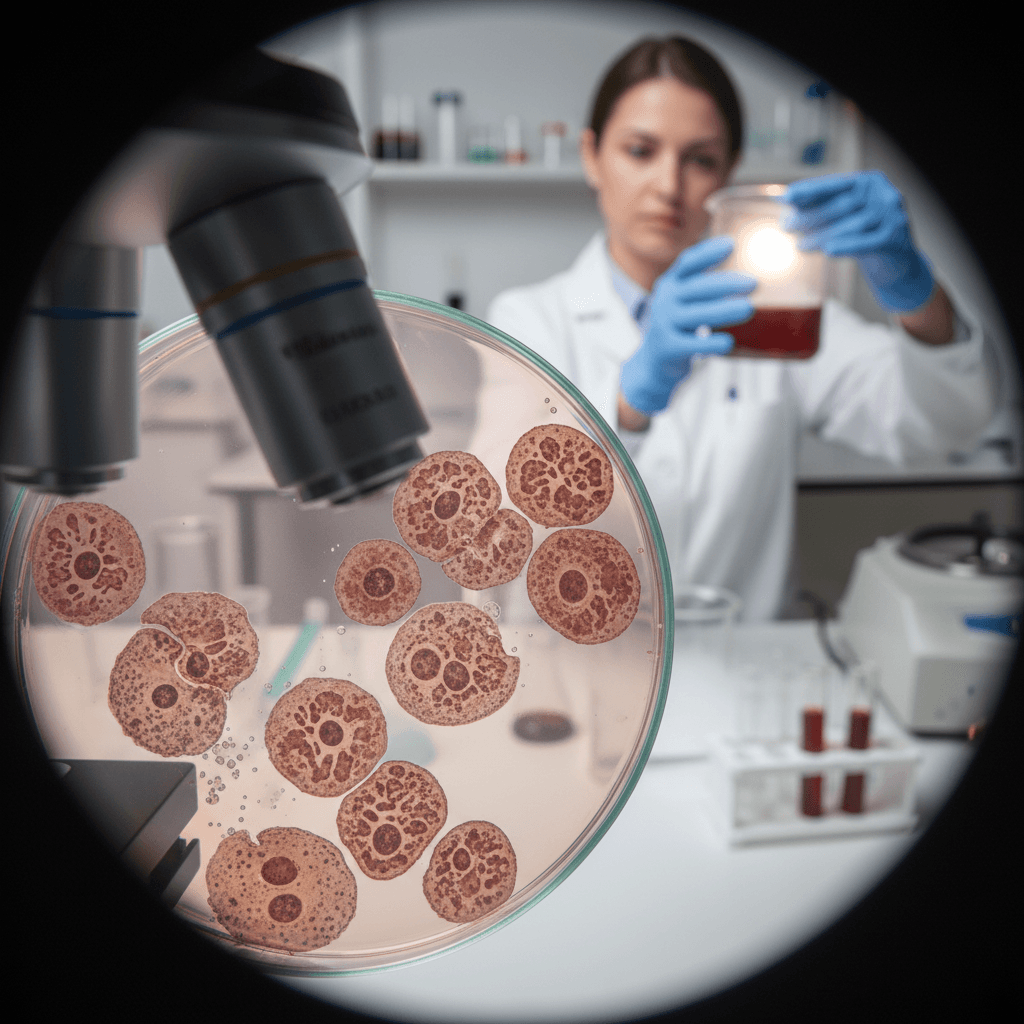
New research published in Frontiers in Pharmacology explores the potential mechanisms of Inonotus hispidus, a medicinal mushroom, in suppressing the proliferation of renal cell carcinoma (RCC) cells. This preliminary investigation delves into the molecular pathways through which compounds from this mushroom may exert an effect, contributing to the growing body of knowledge on natural compounds in cancer research.
Understanding the Research Approach
Researchers undertook a systematic assessment of I. hispidus‘s potential against RCC, particularly the clear cell form (ccRCC), using a combination of network pharmacology, docking simulations, and biological experiments. The study aimed to identify the bioactive constituents of the mushroom and their potential molecular targets within the context of RCC, according to the article in Frontiers in Pharmacology.
Identifying Bioactive Compounds and Targets
The research team utilised advanced analytical techniques, including UHPLC-Q-Exactive HRMS, alongside literature mining, to identify 49 bioactive compounds within I. hispidus. These compounds were then cross-referenced with RCC-associated genes from various databases to predict potential molecular targets. Key constituents identified included cerevisterol, withanolide, inonoterpene A, and polyporusterone D. Network analysis and docking studies further indicated that core targets such as AKT1, EGFR, CTNNB1, STAT3, and BCL2 exhibited strong binding affinities with these compounds.
Investigating Molecular Pathways
To understand the underlying biological mechanisms, the researchers applied GO and KEGG enrichment tools. This analysis suggested the involvement of the PI3K/Akt/mTOR pathway, among other cancer-related pathways. The PI3K/Akt/mTOR pathway is a crucial intracellular signalling pathway involved in regulating cell growth, proliferation, metabolism, and survival, and its dysregulation is frequently observed in various cancers, including renal cell carcinoma.
Preliminary Findings on Renal Cell Carcinoma
In Vitro and In Vivo Observations
The study progressed to in vitro experiments using 769-P and ACHN renal cell carcinoma cell lines. Treatment with an ethanol extract of I. hispidus (EEIH) reportedly inhibited RCC cell proliferation and triggered apoptosis, a form of programmed cell death. Western blot analysis further indicated that EEIH treatment downregulated phosphorylated Akt and mTOR, supporting the hypothesis that the PI3K/Akt/mTOR pathway is involved in its observed effects.
Beyond cell cultures, the researchers also conducted in vivo experiments using xenograft models in mice. These models demonstrated that EEIH treatment was associated with significant tumour suppression. Importantly, the study reported that these effects occurred in the absence of systemic toxic responses in the xenograft-bearing mice, suggesting a lack of systemic toxicity in this specific animal model.
Implications for Future Research
The findings from this research provide preliminary insights into the potential of Inonotus hispidus as a subject for further investigation in renal cell carcinoma. The identification of specific compounds and their interaction with key signalling pathways, such as PI3K/Akt/mTOR, offers a foundation for future studies. While these results are promising, it is important to note that this is early-stage research. Further comprehensive studies, including clinical trials, would be necessary to fully understand the therapeutic potential and safety profile of I. hispidus or its isolated compounds in human patients.
This work contributes to the broader exploration of natural compounds in cancer research, highlighting the complex interplay between botanical extracts and cellular mechanisms. As with any emerging area of medical science, a cautious and evidence-based approach remains essential.
Disclaimer: This article is for informational purposes only and does not constitute medical advice. Hemp Gazette does not provide medical recommendations, diagnoses, or treatment plans. Always consult a qualified healthcare practitioner before making any decisions regarding your health or any medical condition. Statements concerning the therapeutic uses of hemp, cannabis, or cannabinoid-derived products have not been evaluated by Australia’s Therapeutic Goods Administration (TGA). Medicinal cannabis products in Australia are accessed via prescription pathways under TGA regulation.