
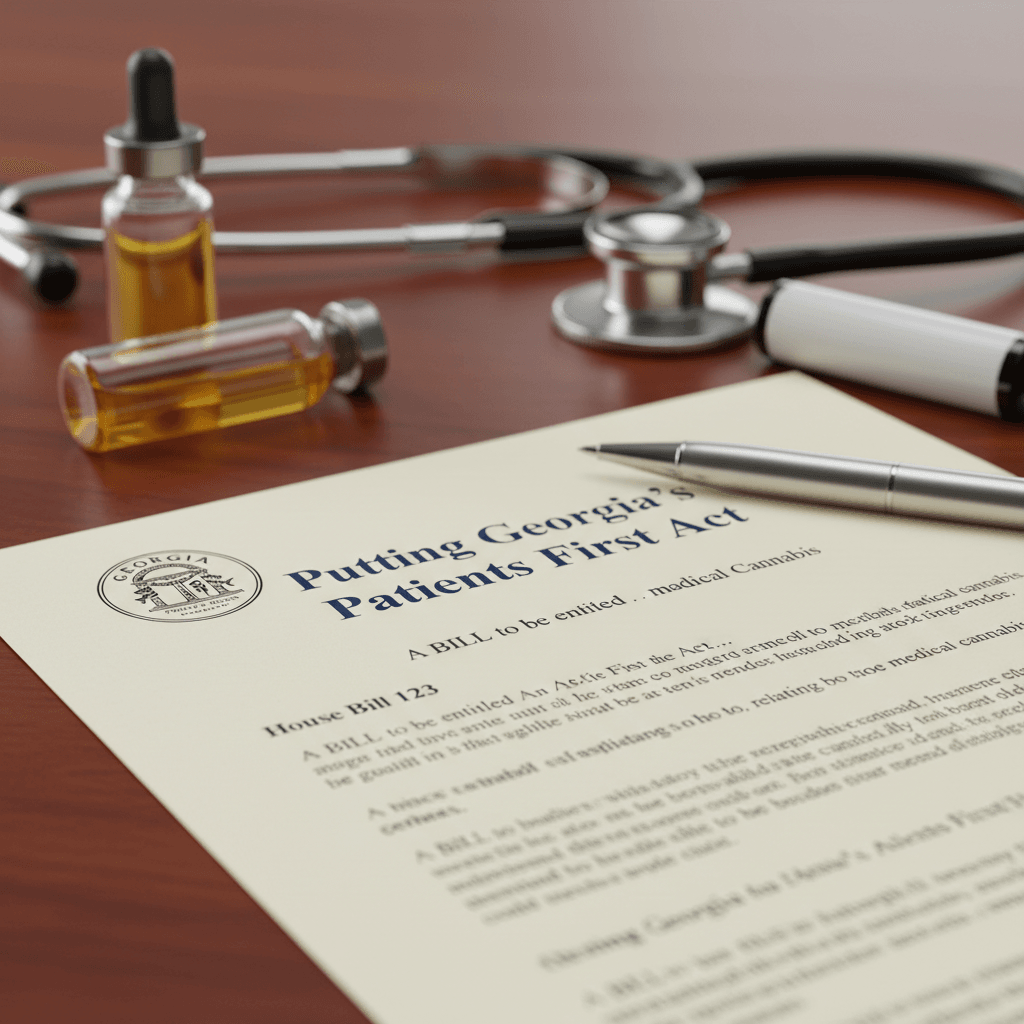
Georgia Governor Brian Kemp has signed legislation expanding medical cannabis access for registered patients in the state. The measure, known as the “Putting Georgia’s Patients First Act,” removes the previous THC potency cap and introduces a milligram dosing system to determine legal possession limits. This development, previously covered by Hemp Gazette regarding its enactment, also adds new health conditions to the list of qualifying medical ailments.
Legislative Changes and Product Expansion
The newly enacted law significantly alters the framework for medical cannabis in Georgia. Prior to this legislation, state law restricted legal medical cannabis products to those containing less than five percent THC, primarily available in low-quantity forms such as oils, lotions, and capsules. The “Putting Georgia’s Patients First Act” eliminates this five percent THC cap, replacing it with a legal possession limit for registered patients that will be determined by a milligram dosing system, according to the Georgia Medical Cannabis Society.
A key change involves the expansion of permissible product forms. Angela Weston, Co-Founder of the Georgia Medical Cannabis Society, noted that the state previously had only a “low dose THC oil program.” The new law allows for a more robust selection of products, including plant material that can be used for vaporisation. Registered Nurse Hannah Jones highlighted the clinical benefit of this expansion, stating that inhalation forms of cannabis offer a more immediate onset of relief compared to oral or topical applications. This can be particularly relevant for patients experiencing acute symptoms such as panic attacks or severe pain, where delayed onset of medication may be less effective.
- THC Potency Cap Removed: The previous limit of less than five percent THC has been eliminated.
- Milligram Dosing System: Legal possession limits will now be based on a milligram dosing system.
- Expanded Product Forms: Plant material for vaporisation is now permitted, alongside oils, lotions, and capsules.
- New Qualifying Conditions: Additional health conditions have been added to the list of those eligible for medical cannabis.
Governor’s Stance and Broader Context
In his signing statement on the bill, Governor Brian Kemp acknowledged reservations about recreational cannabis legalisation, stating, “I like many of those who expressed opposition to this bill, have reservations about the legalization of recreational cannabis. Many states that have legalized recreational cannabis have come to regret that decision.” However, he also recognised the therapeutic value of medical cannabis, noting that “for some patients, medical cannabis provides significant relief to symptoms that would otherwise go untreated or would be treated with even more harmful opioids.”
This legislative update positions Georgia within a broader national trend, as at least 40 other states in the United States have laws permitting medical cannabis use. The state’s approach reflects a measured expansion, focusing on patient access to a wider range of therapeutic options while maintaining a distinction from recreational use.
Implications for Georgia’s Medical Cannabis Program
The implementation of the “Putting Georgia’s Patients First Act” is expected to broaden the therapeutic options available to patients within Georgia’s medical cannabis program. By removing the THC potency cap and allowing for varied delivery methods, the state aims to enhance the efficacy and accessibility of medical cannabis for individuals with qualifying conditions. This regulatory adjustment represents a significant step in the evolution of Georgia’s medical cannabis framework, aligning it more closely with programs in other jurisdictions that offer a wider spectrum of product choices and administration routes.
Disclaimer: This article is for informational purposes only and does not constitute medical advice. Hemp Gazette does not provide medical recommendations, diagnoses, or treatment plans. Always consult a qualified healthcare practitioner before making any decisions regarding your health or any medical condition. Statements concerning the therapeutic uses of hemp, cannabis, or cannabinoid-derived products have not been evaluated by Australia’s Therapeutic Goods Administration (TGA). Medicinal cannabis products in Australia are accessed via prescription pathways under TGA regulation.