
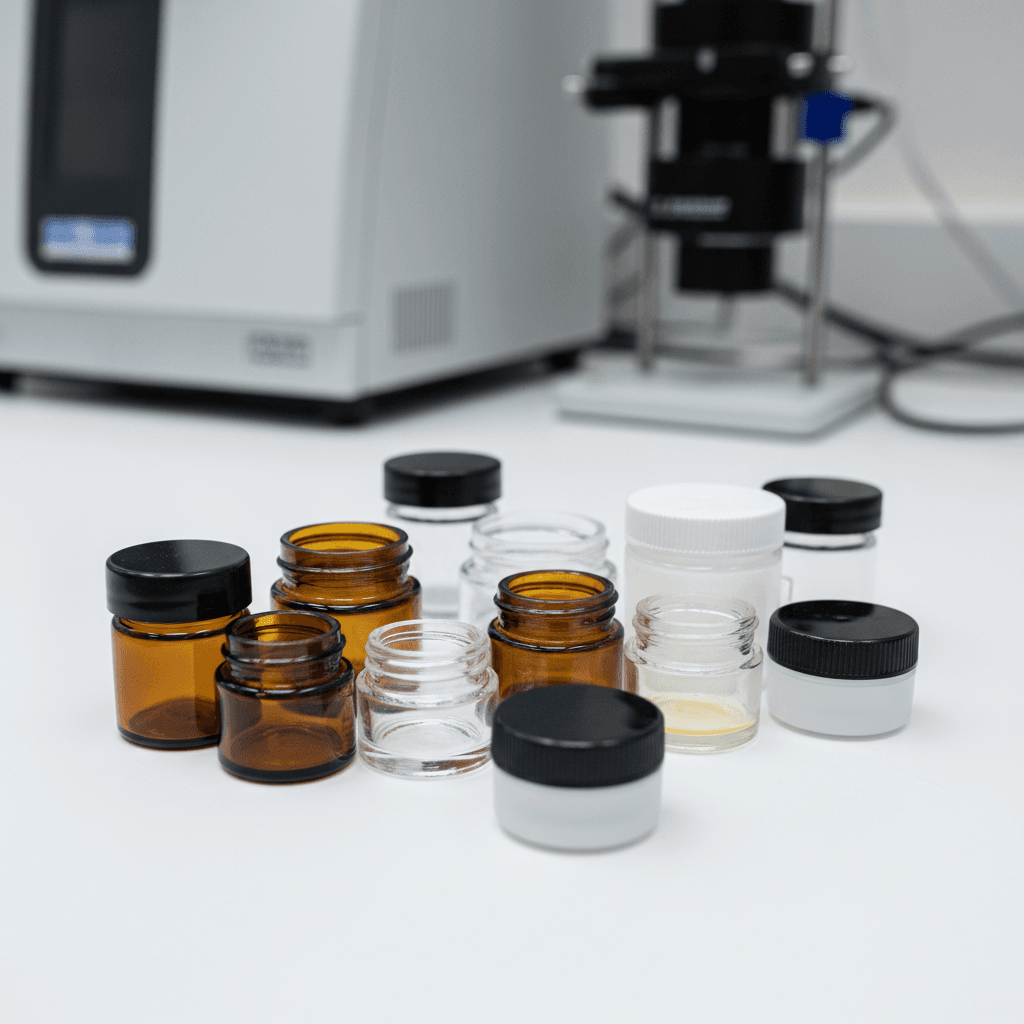
The selection of appropriate cannabis concentrate packaging is a strategic decision for operators, influencing product integrity, regulatory compliance, consumer perception, operational costs, and brand positioning. As the concentrates category continues to expand within the legal cannabis market, the choice between glass and plastic materials carries significant downstream consequences.
The U.S. cannabis industry is projected to grow at a 12.2% compound annual rate through 2030, with concentrates capturing an increasing market share, according to the Cannabis Industry Journal. This growth underscores the importance of packaging solutions that align with evolving consumer preferences for potency, terpene profiles, and premium product experiences. The decision extends beyond procurement, affecting shelf life, compliance with varying state regulations, consumer evaluation at the point of sale, shipping logistics, and sustainability initiatives.
Product Integrity and Preservation
A primary function of cannabis concentrate packaging is to safeguard the product from degradation. Cannabinoids and terpenes are susceptible to light, oxygen, heat, and time. Research, including early cannabinoid stability studies, indicates that light is the most significant factor in THC degradation, with oxygen and heat acting as compounding elements. Recent laboratory testing has shown that terpene profiles in samples stored under standard LED lighting can diminish by 15% to 20% within 90 days, whereas dark-stored controls maintain over 95% of their original profile. For terpene-rich concentrates such as live resin, rosin, and sauce, this degradation affects the product received by the consumer compared to label claims.
- Light Exposure: Amber or UV-coated glass offers more effective light blocking than most plastics. Clear glass and clear plastic both permit light transmission, accelerating degradation.
- Oxygen Barrier: Glass is impermeable to oxygen. Most plastics exhibit some degree of oxygen permeability, which can reduce shelf life and potency over time.
- Temperature Stability: Glass withstands temperature fluctuations without warping or leaching. Plastics vary in heat tolerance, with some grades softening or off-gassing at elevated temperatures.
- Chemical Compatibility: Cannabis concentrates are oil-based and can interact with certain plastics, particularly under heat or extended storage. Glass is chemically inert and does not leach into the product.
These factors suggest that for premium, terpene-forward concentrates requiring extended shelf or storage life, glass concentrate jars offer measurable preservation advantages. For high-velocity, lower-cost concentrates with rapid turnover, the preservation differences of plastic may be less critical.
Compliance, Perception, and Operational Factors
Regulatory Compliance
Cannabis packaging compliance requirements vary by jurisdiction, but common themes include child-resistant certification, tamper-evidence, and opaque packaging mandates. Both glass and plastic can meet most requirements, though implementation differs.
- Child-Resistant Certification: Both materials can accommodate certified child-resistant closures. The closure mechanism, not the container, receives certification. Multi-use formats often have stricter requirements; for instance, the Texas Department of State Health Services’ rules under HB 28, effective March 2026, mandate that multi-serve consumable hemp products maintain child-resistant function through repeated openings.
- Tamper-Evidence: Both materials support tamper-evident features. Glass often employs shrink bands or specialized lids, while plastic may offer integrated solutions like induction seals or break-away rings.
- Opaque Packaging: Some state regulations require opaque packaging. Amber glass and frosted finishes generally meet these requirements; clear plastic typically necessitates an additional sleeve or label.
- Material Safety: Food-grade certification, BPA-free plastic, and lead-free glass are baseline expectations in regulated cannabis markets.
Regulatory changes, such as the Texas HB 28 rollout, which provided approximately 20 days’ notice between rule publication and effective date, underscore the need for packaging strategies to anticipate future requirements.
Consumer Perception and Shelf Appeal
Concentrate consumers often represent a premium segment, evaluating product quality signals rapidly at the point of sale. Glass typically conveys a premium signal through its weight, tactile feel, and visual cues, communicating craftsmanship. Clear glass allows the product’s visual attributes, such as color and texture, to be visible, which is important for distinctive concentrates like live resin or live rosin. While plastic can mimic the appearance, it often registers as less premium in direct comparison. Industry analysts note that packaging is a visible signal consumers use to assess quality before purchase.
However, plastic is not inherently inferior for branding. Distillate cartridges, single-use applicator syringes, and value-tier concentrate formats often utilize plastic due to its flexibility, light weight, or disposability. The choice depends on aligning the material with the brand’s market position.
Cost and Operational Considerations
The practical tradeoffs between glass and plastic are evident in unit economics and operational footprint.
- Unit Cost: Plastic is generally less expensive per unit than glass, a difference that can be significant for early-stage brands or value-tier product lines.
- Shipping Weight: Glass is considerably heavier than plastic, impacting freight costs and carbon footprint for high-volume or multi-state operations.
- Breakage Risk: Glass is prone to breakage during shipping, retail handling, and consumer use, leading to replacement costs and customer service issues.
- Fill Operations: Both materials are compatible with manual and automated fill lines, but specific closure types and container geometries can influence throughput.
- MOQs and Lead Times: Glass containers often have higher minimum order quantities and longer lead times, particularly for custom designs. Plastic generally offers more flexibility for smaller runs and faster turnarounds.
The optimal material choice must align with the operational scale, whether for a boutique extractor or a multi-state operator with high volume.
Sustainability and Environmental Impact
Sustainability is an increasing factor in packaging decisions, with both materials presenting trade-offs. As previously reported by Hemp Gazette in articles such as “Hemp Plastics – A Greener Approach To Plastic Production,” plant-based alternatives are gaining traction.
- Recyclability: Glass is infinitely recyclable without quality loss. Plastic recyclability varies by resin type and local infrastructure, and post-consumer plastic recycling rates remain lower than glass.
- PCR Options: Post-consumer recycled (PCR) plastic is increasingly used in cannabis packaging, offering a lower environmental footprint than virgin resin.
- Carbon Footprint: Glass production is energy-intensive. Plastic production has a lower upfront carbon footprint, but the end-of-life cycle generally favors glass, which can be remelted indefinitely.
- Consumer Reuse: Glass concentrate containers are frequently reused by consumers, a practice less common with plastic.
If sustainability is central to a brand’s positioning, the packaging choice must support that claim, whether through glass with reuse messaging or PCR plastic with verified recycled content.
Strategic Decision Framework for Cannabis Concentrate Packaging
The decision between glass and plastic for cannabis concentrate packaging is a strategic one, requiring careful consideration of product, brand, and operational factors.
- Choose glass when:
- Premium positioning is a core brand strategy.
- Terpene-rich concentrates (live resin, rosin, sauce) demand maximum preservation.
- The brand competes on craftsmanship and quality cues.
- Sustainability messaging focuses on reuse or infinite recyclability.
- Choose plastic when:
- High-volume distribution requires lower per-unit cost and lighter freight.
- The product has a rapid turnover, making long-term preservation less critical.
- Operational scale necessitates flexibility in minimum order quantities and lead times.
- PCR plastic supports a sustainability narrative without the weight or cost of glass.
- The product format (e.g., applicator syringes, distillate cartridges) benefits from plastic’s flexibility.
- Consider hybrid approaches when:
- A glass body with a plastic closure balances preservation and cost.
- Different product tiers within the same brand serve varied price points and use cases.
- Specialty SKUs (e.g., limited drops, premium collaborations) justify glass, while the core line uses plastic.
Brands that align their packaging material with their strategic objectives are better positioned to maintain their market presence and long-term operational viability as the concentrate category evolves and consumer expectations become more refined.
Disclaimer: This article is for informational purposes only and does not constitute medical advice. Hemp Gazette does not provide medical recommendations, diagnoses, or treatment plans. Always consult a qualified healthcare practitioner before making any decisions regarding your health or any medical condition. Statements concerning the therapeutic uses of hemp, cannabis, or cannabinoid-derived products have not been evaluated by Australia’s Therapeutic Goods Administration (TGA). Medicinal cannabis products in Australia are accessed via prescription pathways under TGA regulation.