Federal Scrutiny on Intoxicating Hemp Products
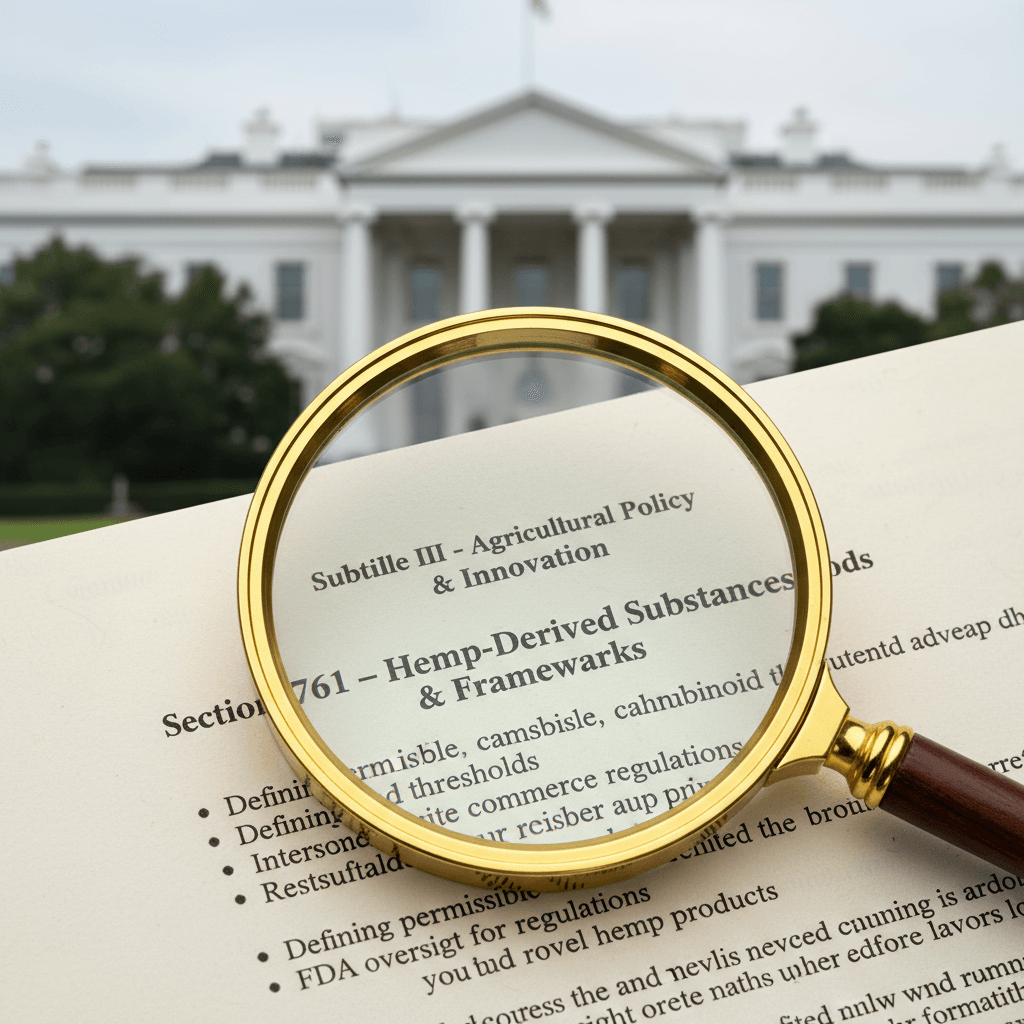
The Trump administration’s 2026 National Drug Control Strategy has asserted a “new legal authority” to address intoxicating hemp products, a development that has captured the attention of industry stakeholders. This claim stems from a “hemp loophole closure” signed into law last year, according to a report by Cannabis Business Times. The biennial report, prepared by the White House Office of National Drug Control Policy (ONDCP), outlines a strategic approach to dismantle the illicit drug supply in the U.S., specifically including unregulated psychoactive derivatives of hemp such as delta-8 THC, delta-10 THC, THC-O, and THCP.
The ONDCP report states that “Enforcement will focus on substances falling outside regulatory frameworks or being sold illegally.” This focus is described as crucial to reducing the availability of illicit drugs. The administration’s stance suggests a tightening of federal oversight on substances derived from hemp that possess intoxicating properties, potentially reclassifying them as Schedule I chemicals.
Legislative Developments and the 2026 Farm Bill
The U.S. House of Representatives recently passed the 2026 Farm Bill, which maintains the federal government’s forthcoming ban on intoxicating hemp products. Despite assurances from some lawmakers about working towards potential fixes to keep these products on the market, the legislation as passed would keep the impending ban in place. The bill also aims to reduce regulatory burdens for industrial hemp producers.
This legislative action underscores the ongoing debate within federal policy circles regarding the classification and regulation of hemp and its various derivatives, particularly those that fall into a grey area of psychoactivity.
DEA Registration for Medical Cannabis Businesses Under Schedule III
Mandatory Registration and Legal Warnings
Following the Acting Attorney General (AAG) Todd Blanche’s Schedule III order, a legal sidebar from the nonpartisan Congressional Research Service indicates that all entities, excluding end users, that handle medical cannabis products covered under this order will need to register with the Drug Enforcement Administration (DEA) to operate lawfully. This requirement applies to cultivators, manufacturers, distributors, and laboratories, with the application process for non-dispensary businesses expected to be available soon.
However, former federal prosecutor Julie Werner-Simon and former IRS lawyer Jonathan Kalinski have issued warnings to medical cannabis operators regarding the implications of this DEA registration. They contend that becoming part of the new federal “registration pathway” cedes significant authority to federal agencies. Werner-Simon and Kalinski highlight the DEA’s “discretionary denial doorway,” which permits federal approval to be denied if granting a state-licensed business federal registration is deemed “inconsistent with the public interest” or inconsistent with drug treaty requirements.
DEA Clarification on Application Questions
In response to inquiries about a “red-flag” question on the Schedule III registration application—which asks about past federally noncompliant actions—the DEA clarified its intent. The agency stated that the question “is not intended to serve as a categorical barrier, but rather to support a complete and fair evaluation of each application.” The DEA further explained that the broader registration process is designed to evaluate applicants based on their current ability to operate within the federal framework. State-licensed medical cannabis businesses reportedly have 60 days to apply for federal registration to receive an expedited review, with false information punishable by law.
Disclaimer: This article is for informational purposes only and does not constitute medical advice. Hemp Gazette does not provide medical recommendations, diagnoses, or treatment plans. Always consult a qualified healthcare practitioner before making any decisions regarding your health or any medical condition. Statements concerning the therapeutic uses of hemp, cannabis, or cannabinoid-derived products have not been evaluated by Australia’s Therapeutic Goods Administration (TGA). Medicinal cannabis products in Australia are accessed via prescription pathways under TGA regulation.