
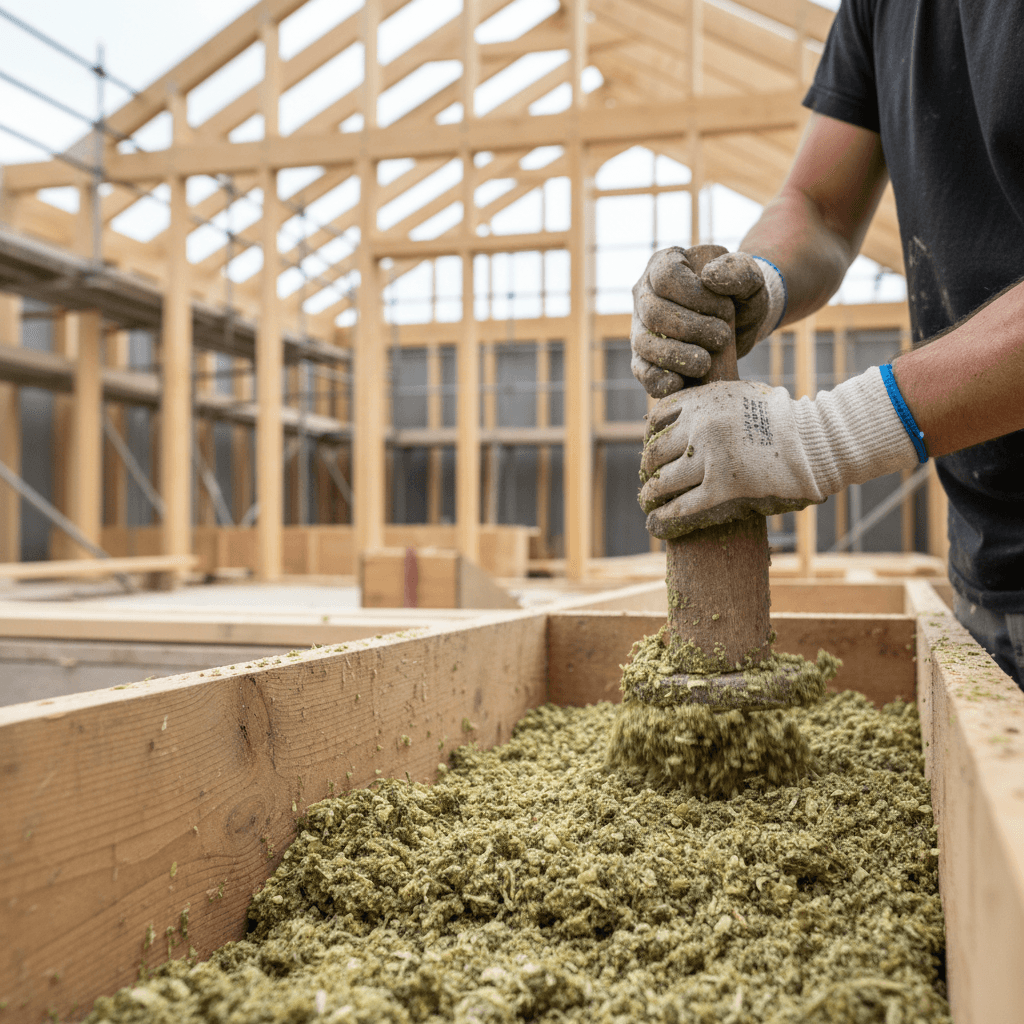
The International Code Council has formally approved hemp-lime construction for integration into the 2024 International Residential Code. This regulatory update allows builders in many US states to utilize industrial hemp-based materials in residential structures without requiring custom engineering variances. The decision marks a significant development for the industrial hemp sector, which has seen its products restricted for nearly a century due to federal laws that did not differentiate industrial hemp from other cannabis varieties.
The material, often referred to as hempcrete, combines the woody inner core of hemp plants with a lime-based binder to create non-structural wall infills. This approval follows a multi-year effort by the US Hemp Building Association to submit testing data and architectural standards to national code administrators, building on earlier coverage of industrial hemp as a building material.
Regulatory Pathway for Hemp-Lime Construction
Prior to this regulatory update, contractors faced administrative and legal barriers when attempting to use hemp-based materials in construction. The 2018 Farm Bill was instrumental in altering this pathway by legally separating industrial hemp from marijuana at the federal level. This legislative change provided the foundation for the subsequent efforts to integrate industrial hemp materials into established building codes.
The International Code Council’s approval specifically applies to one- and two-family dwellings. Builders must adhere to precise blending ratios and thickness parameters for the hemp-lime mixtures, as specified in the updated annex. This formal inclusion streamlines the process for architects and builders, removing the need for individual project variances that previously complicated the use of these materials.
Physical Properties and Environmental Benefits
Hemp-lime mixtures offer distinct physical properties that contribute to thermal efficiency and moisture management in buildings. The inner core of the hemp stalk, known as the hurd, is processed and mixed with hydrated lime and water. This initiates a chemical curing process where the lime binder coats the porous hemp hurds, forming a lightweight matrix. Over time, the lime reacts with atmospheric carbon dioxide, undergoing carbonation to gradually convert into calcium carbonate stone.
- Thermal Insulation: The resulting composite material provides thermal insulation capacity up to 15 times greater than standard concrete. This property helps stabilize indoor temperatures by reducing heat transfer through exterior walls.
- Moisture Regulation: The material exhibits hygroscopic behavior, meaning its open pore structure allows walls to absorb water vapor during high humidity and release it when the air is dry. This breathability prevents moisture accumulation within wall assemblies.
- Mold and Pest Resistance: The chemical composition of the lime binder maintains a high pH level, which naturally resists mold growth and deters insect infestations.
Beyond its functional properties, industrial hemp acts as a carbon sink during its growth phase, absorbing carbon dioxide through photosynthesis. The volume of carbon dioxide captured and stored within the plant tissue often exceeds the total emissions generated by harvesting, processing, and transporting the material, allowing the final assembled material to approach a carbon-negative profile.
Supply Chain and Processing Challenges
While the updated building codes provide a clear legal framework for hemp-lime construction, the sector faces ongoing infrastructure limitations within regional supply chains. Specialized machinery, particularly industrial decorticators required to separate the woody hurds from the outer fibers of raw hemp stalks, remains scarce in many parts of North America. This scarcity necessitates long-distance transportation of harvested stalks to processing facilities, which can increase the financial feasibility challenges for regional projects.
Historically, many early hempcrete structures relied on imported hurds from European countries where industrial hemp cultivation remained legal throughout the 20th century. However, domestic processing capacity is gradually expanding with investment in agricultural manufacturing hubs. The growth of these regional processing centers is expected to influence the availability and retail cost of hemp-lime materials for local contractors. Additionally, architectural firms are exploring pre-fabricated hemp blocks and spray-applied application methods to reduce the manual labor and time required for traditional on-site installation, which typically involves hand-tamping wet mixtures into temporary wooden forms.
Disclaimer: This article is for informational purposes only and does not constitute medical advice. Hemp Gazette does not provide medical recommendations, diagnoses, or treatment plans. Always consult a qualified healthcare practitioner before making any decisions regarding your health or any medical condition. Statements concerning the therapeutic uses of hemp, cannabis, or cannabinoid-derived products have not been evaluated by Australia’s Therapeutic Goods Administration (TGA). Medicinal cannabis products in Australia are accessed via prescription pathways under TGA regulation.