
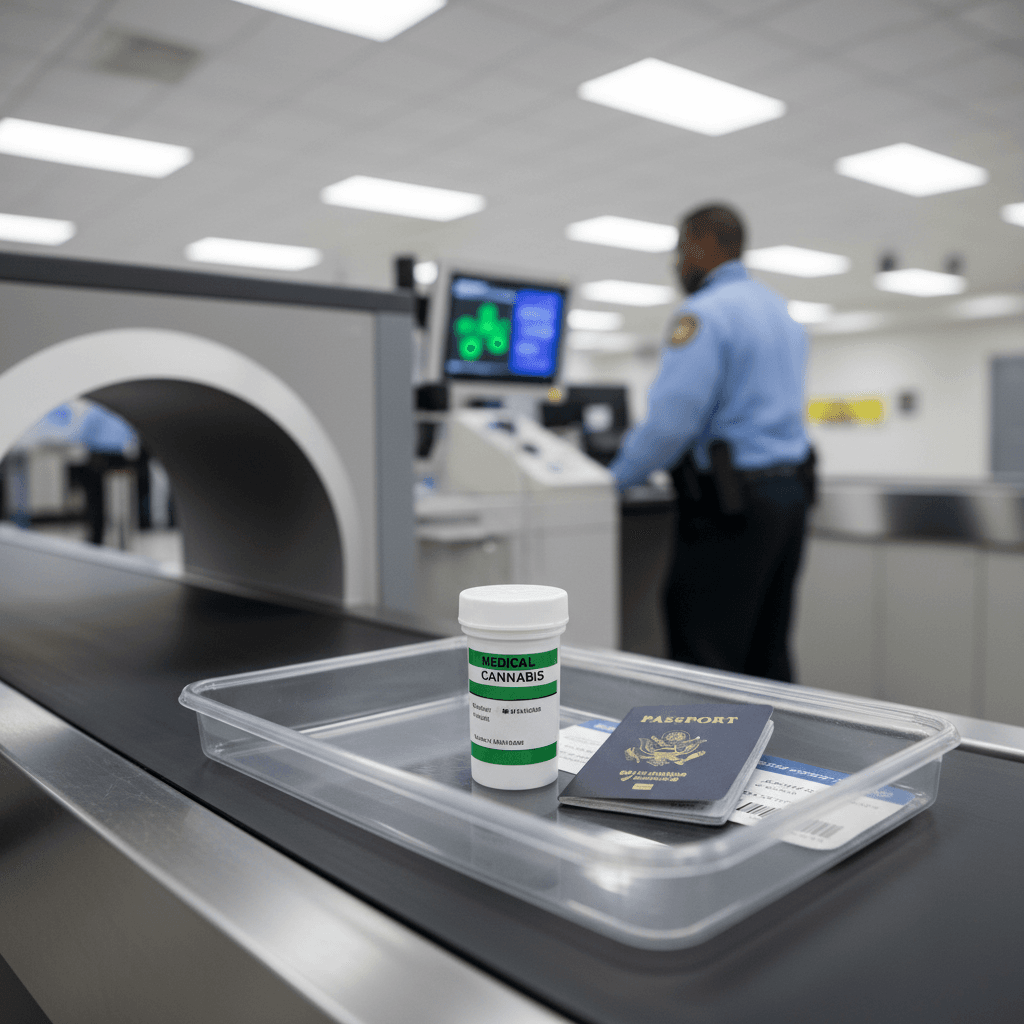
TSA Clarifies Medical Cannabis Travel Policy
The Transportation Security Administration (TSA) has updated its guidelines concerning medical cannabis travel, a development impacting individuals utilizing prescribed cannabis products. The agency’s “What Can I Bring?” page now explicitly lists “medical marijuana” as permissible in both carry-on and checked bags, accompanied by a notation for “Special Instructions,” according to a report by Vice.
This update represents a clarification of the TSA’s operational stance rather than a change in federal law. For years, the prevailing assumption among travelers was that transporting any form of cannabis through airports was strictly prohibited. The revised language on the TSA’s public information portal acknowledges the increasing prevalence of cannabis and hemp products in daily life.
Understanding the Regulatory Framework
While the TSA’s updated guidance provides more clarity for medical cannabis travel, it is crucial to understand the broader legal context. Cannabis remains federally illegal in the United States, meaning that federal law enforcement agencies retain jurisdiction.
State laws regarding cannabis vary significantly across the United States. A product considered legal in one state may be illegal in another. Furthermore, international travel with cannabis products, even those prescribed for medical use, carries substantial risks. This aligns with previous reporting by Hemp Gazette on the complexities of flying with medical cannabis.
Implications for Patients and Industry
The updated TSA guidance primarily affects patients traveling domestically with legally prescribed medical cannabis. This nuanced approach reflects the ongoing tension between federal prohibition and the increasing number of states that have legalized medical cannabis.
For the industrial hemp sector, the distinction between federally legal hemp-derived products and state-legal medical cannabis remains critical. Travelers carrying hemp products are generally not subject to the same restrictions as those with cannabis, provided the products meet federal definitions.
Ancillary Market Adaptation
The evolving landscape of medical cannabis access has also influenced ancillary markets. The demand for discreet and organized travel solutions for medical cannabis and federally legal hemp products has led to the development of specialized accessories. These products, designed for odor control and secure storage, reflect an industry adapting to the practical needs of consumers navigating varied legal environments. This market segment caters to individuals seeking to transport their permitted medical cannabis or hemp-derived products in an organized manner, without drawing undue attention.
The TSA’s updated guidance underscores a pragmatic adjustment to current realities, acknowledging the presence of medical cannabis within the travel ecosystem while reiterating that federal law has not changed.
Disclaimer: This article is for informational purposes only and does not constitute medical advice. Hemp Gazette does not provide medical recommendations, diagnoses, or treatment plans. Always consult a qualified healthcare practitioner before making any decisions regarding your health or any medical condition. Statements concerning the therapeutic uses of hemp, cannabis, or cannabinoid-derived products have not been evaluated by Australia’s Therapeutic Goods Administration (TGA). Medicinal cannabis products in Australia are accessed via prescription pathways under TGA regulation.