
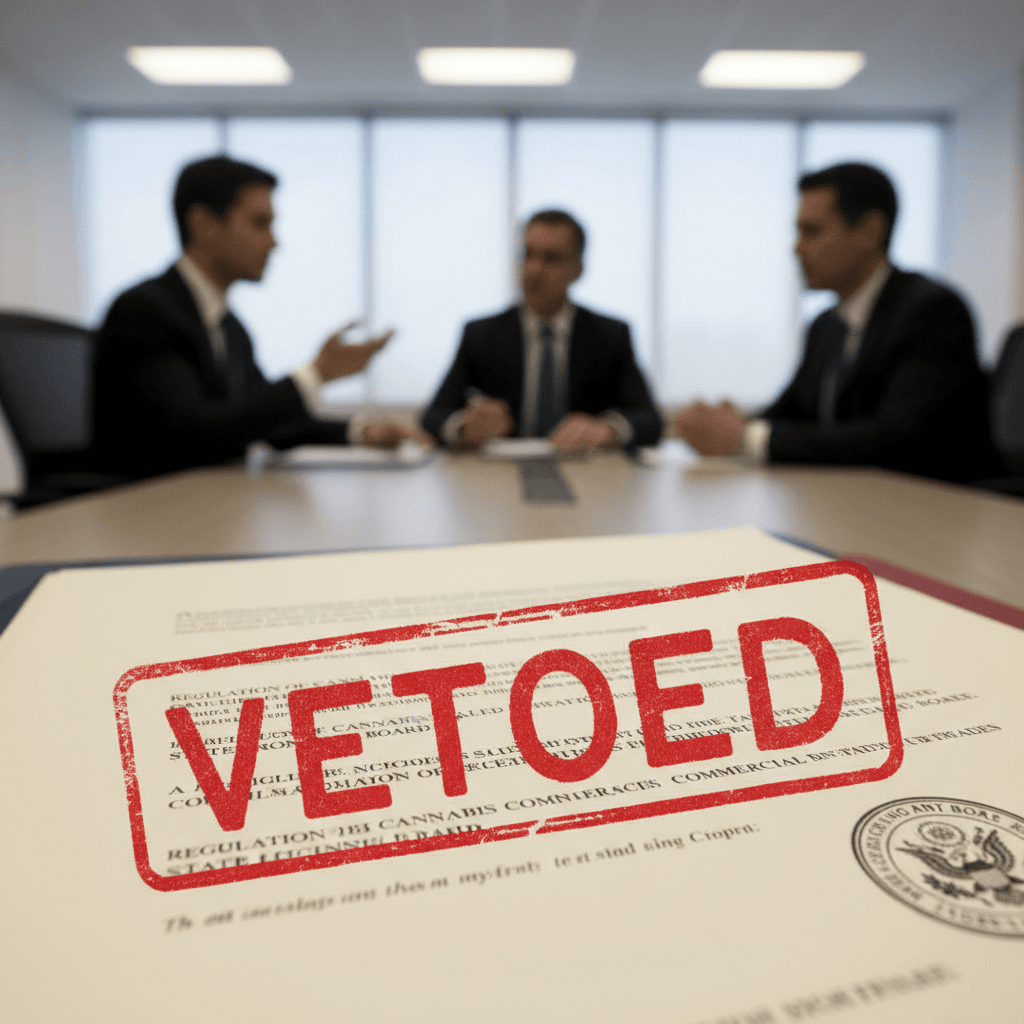
Virginia Governor Abigail Spanberger has vetoed legislation aimed at establishing a regulated adult-use for the Virginia cannabis market, a move that has drawn varied reactions from industry stakeholders. While some advocacy groups expressed disappointment, a coalition of hemp businesses, including the Cannabis Small Business Association (CSBA), views the veto as an “opportunity” to develop a more inclusive regulatory framework.
The veto follows the General Assembly’s rejection of Governor Spanberger’s proposed amendments to the cannabis commercialization bills (SB 542 and HB 642) last month. This decision effectively delays the establishment of a legal retail market in Virginia, with further progress unlikely until the 2027 legislative session, as reported by Ganjapreneur.
Impact on Virginia Cannabis Market Development
Governor Spanberger stated that while she supports the goal of a legal and regulated cannabis retail market, she believed the vetoed legislation lacked the necessary “timeline, structure, or resources to be successfully implemented” and a regulatory framework prepared for “strong oversight from day one,” according to GN: cannabis pharmaceutical.
The legislation, as approved by lawmakers, included provisions such as:
- A target start date for legal sales of January 1, 2027.
- An excise tax of 6 percent on cannabis sales, a 5.3 percent retail sales and use tax, and an allowance for municipalities to levy an additional local tax of up to 3.5 percent.
- Distribution of revenue to the Cannabis Equity Reinvestment Fund (30 percent), early childhood education (40 percent), the Department of Behavioral & Developmental Health Services (25 percent), and public health initiatives (5 percent).
- A purchase limit of up to 2.5 ounces of marijuana per transaction.
- Oversight by the Virginia Cannabis Control Authority, which would also assume responsibility for hemp regulation from the Department of Agriculture and Consumer Services.
Governor Spanberger’s proposed amendments, which were rejected by the legislature, included:
- Delaying the sales start date to July 1, 2027.
- Increasing the excise tax to 8 percent by July 1, 2029.
- Placing all revenue into the general fund with earmarks for various public services, rather than specific allocations.
- Reducing the purchase limit to 2 ounces.
- Introducing new criminal penalties, such as classifying public marijuana use as a Class 4 criminal misdemeanor and possession by individuals under 21 as a Class 1 misdemeanor.
- Eliminating support for the Cannabis Equity Reinvestment Fund.
Hemp Industry Concerns and Policy Recommendations
The Cannabis Small Business Association (CSBA), alongside other hemp companies and alcohol retailer Total Wine & More, had urged the governor to veto the legislation. Their primary concern was that the bills, as passed, would have significantly altered Virginia’s hemp regulations, specifically by limiting hemp products to no more than 2 milligrams of total THC per package. This provision, they argued, would have had significant consequences for aspiring and existing operators and left small hemp businesses without a viable path forward, as detailed by Marijuana Moment.
CSBA President Barbara Biddle, also founder of District Hemp Botanicals, emphasized the group’s support for adult-use cannabis legalization but not the specific legislation due to its potential consequences for small businesses. Looking ahead, CSBA advocates for a future Virginia cannabis market regulatory framework that:
- Establishes clear, accessible licensing pathways for existing small hemp operators and independent cannabis businesses.
- Provides workable transition timelines for compliant businesses.
- Builds a market structure that supports Virginia’s entrepreneurial community.
- Prioritizes consumer safety and market integrity alongside small business inclusion.
- Engages a broad coalition of stakeholders throughout the drafting process.
This state-level discussion occurs amidst looming federal changes to hemp policy, where new legislation redefines hemp to allow only products with 0.4 milligrams of total THC per container after November 12, a significant reduction from the 2018 Farm Bill’s <0.3 percent delta-9 THC dry-weight basis.
Stakeholder Reactions and Future Outlook
The veto drew criticism from various cannabis reform advocates. JM Pedini, Development Director for NORML and Executive Director for Virginia NORML, expressed disappointment, stating that the voices of thousands of Virginians who supported the bills were “outweighed by a handful of corporations led by a major alcohol retailer.”
Bill sponsors Senator Lashrecse Aird (D) and Delegate Paul Krizek (D) also criticized the governor’s decision, asserting that it ignores the reality of an already existing, unregulated cannabis market in Virginia. They stated that the veto and its consequences “belong to the Governor and Governor alone,” and that it “prolongs uncertainty and provides comfort to those profiting from the illicit market.”
Despite the legislative setback for a regulated sales market, Virginia has maintained legal personal marijuana possession and home cultivation since 2021. Governor Spanberger recently signed separate legislation providing resentencing relief for individuals with past cannabis convictions, as well as measures to protect parental rights of cannabis consumers and allow medical cannabis access in hospitals.
Disclaimer: This article is for informational purposes only and does not constitute medical advice. Hemp Gazette does not provide medical recommendations, diagnoses, or treatment plans. Always consult a qualified healthcare practitioner before making any decisions regarding your health or any medical condition. Statements concerning the therapeutic uses of hemp, cannabis, or cannabinoid-derived products have not been evaluated by Australia’s Therapeutic Goods Administration (TGA). Medicinal cannabis products in Australia are accessed via prescription pathways under TGA regulation.