
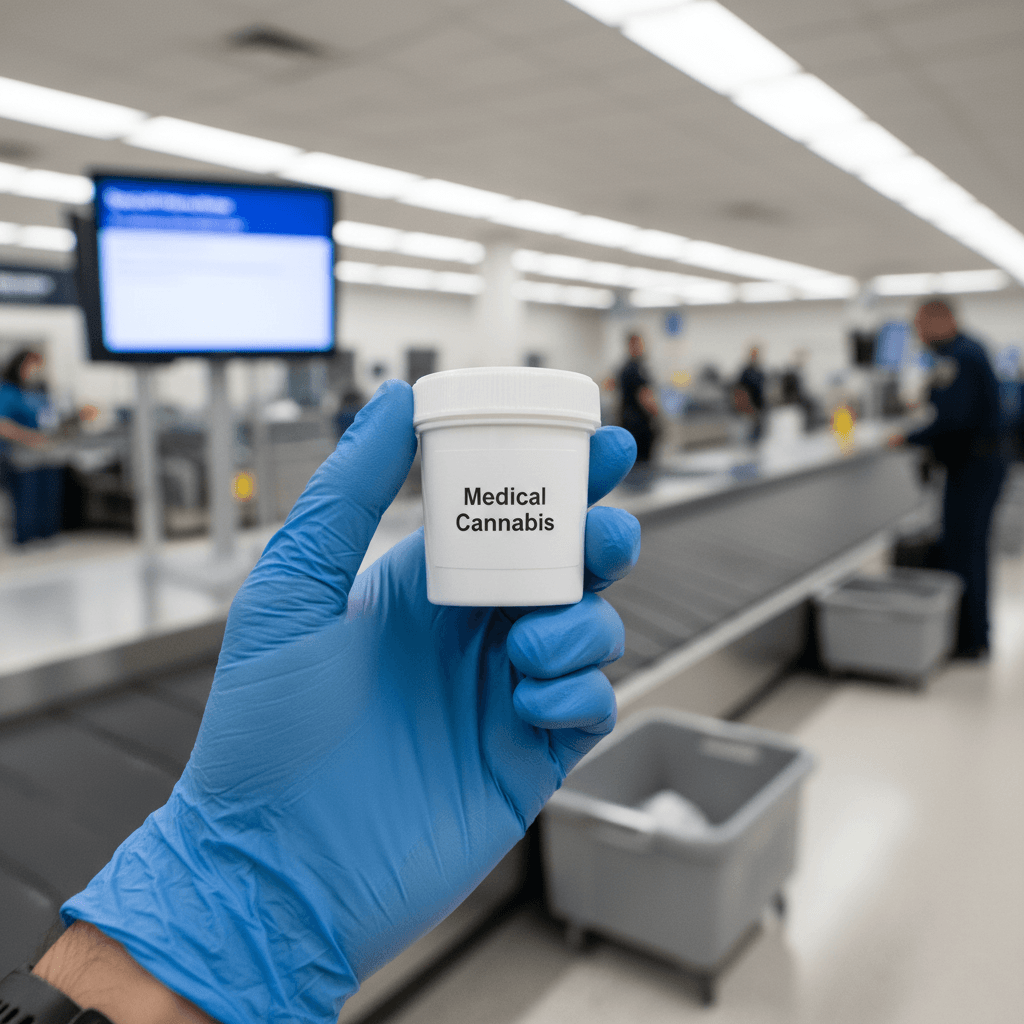
The Transportation Security Administration (TSA) has updated its guidance regarding travel with medical cannabis, a development that follows the federal rescheduling of certain cannabis products to Schedule III. While the TSA’s ‘What Can I Bring?’ tool now lists “Medical Marijuana” as permitted in both carry-on and checked bags, the agency has not yet provided explicit guidelines for travelers, labeling the allowance with “Special Instructions” that remain undefined.
Federal Rescheduling and TSA Policy Adjustments
The TSA’s policy adjustment, noted on April 27, occurred the day before Acting Attorney General Todd Blanche’s order officially moved specific cannabis derivatives and state-licensed medical products from Schedule I to Schedule III under the Controlled Substances Act. This marks a shift in federal posture, as previously, all cannabis was uniformly treated as Schedule I contraband. As detailed in this report, the agency removed a paragraph from its website that explicitly stated marijuana was illegal under federal law. Additionally, the standing search-disclaimer language, which previously mentioned that TSA officers do not search for “marijuana or other illegal drugs,” now refers only to “illegal drugs.”
Despite these changes, other sections of the TSA’s guidance remain consistent:
- Standard screening procedures are unchanged.
- Any illegal substance discovered during screening will still be referred to law enforcement.
- The final decision regarding an item’s permissibility rests with the individual TSA officer.
Defining Permitted Medical Cannabis
The scope of the federal rescheduling order is specific and does not apply to all cannabis products. The April 28 order rescheduled two categories:
- FDA-approved drugs containing cannabis derivatives, such as Epidiolex, Marinol, Syndros, and Cesamet.
- Marijuana products regulated under a qualifying state-issued medical license.
This means that while a state-licensed medical product from a jurisdiction like Florida is now federally classified as Schedule III, recreational cannabis from states like California remains Schedule I. The legal status of cannabis during air travel is now contingent on its associated documentation and regulatory pathway.
Unaddressed Questions for Travelers
The current lack of detailed “Special Instructions” from the TSA leaves several critical questions unanswered for individuals traveling with medical cannabis:
- What specific documents are required to satisfy the state-license requirement?
- Are there quantity limits for permitted medical cannabis?
- Is original packaging mandatory?
- What are the protocols for patients flying between two states where medical cannabis is legal, or from a legal state to one without a medical program?
Historically, the TSA provides comprehensive guidelines for items designated with “Special Instructions,” such as firearms or lithium batteries, detailing requirements like specific containers, declaration procedures, or quantity limits. The absence of such clarity for medical cannabis introduces ambiguity for travelers and enforcement personnel.
Operational Realities and Future Outlook
The practical implications at airport checkpoints remain largely consistent with previous operations. A TSA officer who identifies cannabis during screening can still refer the matter to local law enforcement. Local police departments continue to operate under state laws, which may still criminalize unauthorized possession. This creates a potential enforcement gap for patients, even those with federally compliant medical cannabis, if state laws have not aligned with the federal rescheduling.
Furthermore, the TSA’s updated guidance is an isolated change. Other federal agencies have not yet adjusted their policies. The Department of Veterans Affairs still prohibits VA physicians from recommending cannabis, the Department of Housing and Urban Development continues to allow federal cannabis status as grounds for eviction from subsidized housing, and the Internal Revenue Service has not moved on Section 280E, which impacts tax rates for state-licensed cannabis operators. The Federal Aviation Administration also maintains its prohibition on cannabis in aircraft cabins.
A broader shift in the federal landscape for cannabis may depend on future regulatory actions, such as the June 29 DEA administrative hearing on wider marijuana rescheduling, which is a separate process from the recent Schedule III reclassification.
Disclaimer: This article is for informational purposes only and does not constitute medical advice. Hemp Gazette does not provide medical recommendations, diagnoses, or treatment plans. Always consult a qualified healthcare practitioner before making any decisions regarding your health or any medical condition. Statements concerning the therapeutic uses of hemp, cannabis, or cannabinoid-derived products have not been evaluated by Australia’s Therapeutic Goods Administration (TGA). Medicinal cannabis products in Australia are accessed via prescription pathways under TGA regulation.