
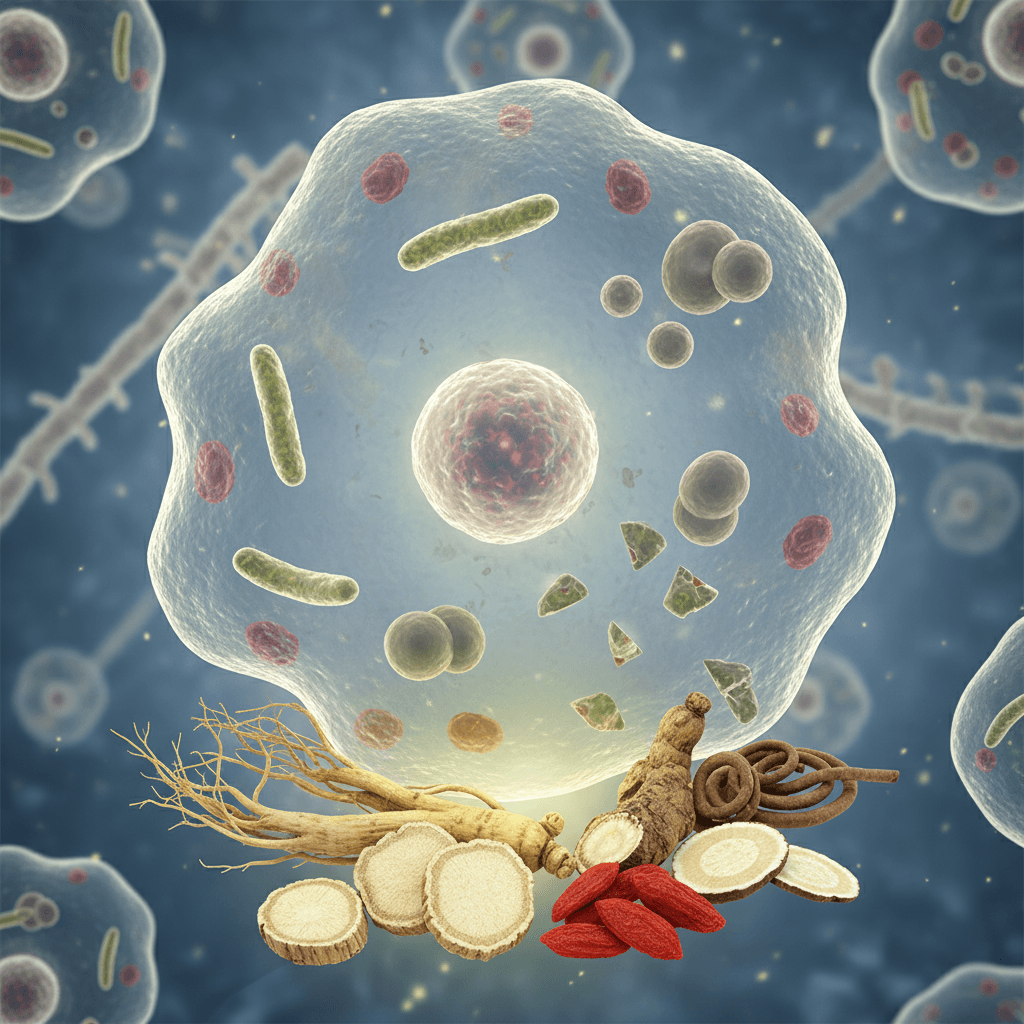
Osteoporosis, a chronic metabolic disease characterised by reduced bone mass and impaired bone microstructure, presents a significant global health challenge. While various clinical treatments exist, a recent review published in Frontiers in Pharmacology highlights the emerging role of mitochondrial dysfunction in its pathogenesis and explores Chinese botanical drugs as a novel research direction for mitigating mitochondrial dysfunction in osteoporosis.
Understanding Mitochondrial Dysfunction in Osteoporosis
Mitochondria, often referred to as the “powerhouse” of the cell, are crucial for cellular energy demands and influence processes like differentiation and apoptosis. Research indicates that mitochondrial dysfunction, including abnormalities in biogenesis, dynamics, oxidative stress, and mitophagy, plays a key role in the development of osteoporosis.
- Mitochondrial Biogenesis: This process involves the synthesis of new mitochondria, essential for maintaining cellular energy metabolism and overall mitochondrial stability.
- Mitochondrial Dynamics: A balance between mitochondrial fusion and fission is maintained to repair or eliminate damaged mitochondria and ensure proper function.
- Mitochondrial Oxidative Stress: Excessive reactive oxygen species (ROS) can damage mitochondrial structures. Cells activate antioxidant defence systems to counteract this.
- Mitophagy: This is a selective process that removes damaged and dysfunctional mitochondria, ensuring the health and efficiency of the mitochondrial network.
Under physiological conditions, bone cells maintain a delicate balance between bone formation (by osteoblasts) and bone resorption (by osteoclasts). This balance is regulated by a “Mitochondria-bone” biological axis, which relies on mitochondrial homeostasis. When this axis is disrupted, for example, due to aging, estrogen depletion, or chronic inflammation, it can lead to the reduced bone mass and increased fragility seen in osteoporosis, as detailed by the researchers from the Central Hospital of Dalian University of Technology and Guangdong Prison.
Chinese Botanical Drugs as a Research Approach
The review explores how Chinese botanical drugs are being investigated for their potential to modulate mitochondrial function and alleviate mitochondrial dysfunction in the context of osteoporosis. These botanical therapies are often characterised by their “multiple targets, multi-levels, and holistic regulation” approach, which may be well-suited to the complex nature of osteoporosis.
According to the authors, Shiyu Li and Hongyu Liu, modern research suggests that natural chemical metabolites derived from Chinese botanical drugs, such as resveratrol, and classic formulations like Zuogui Pill, can regulate mitochondrial function through specific pathways. By targeting and ameliorating mitochondrial dysfunction, these botanical interventions may exert effects relevant to osteoporosis.
Mechanisms of Action
The review summarises several core mechanisms through which mitochondrial dysfunction drives osteoporosis and how botanical drugs may intervene:
- Modulating mitochondrial biogenesis pathways to ensure adequate energy supply for bone cells.
- Restoring the balance of mitochondrial fusion and fission to maintain healthy mitochondrial networks.
- Reducing oxidative stress within mitochondria, thereby protecting cellular structures from damage.
- Enhancing mitophagy to clear damaged mitochondria and promote cellular health.
Future Directions in Research
While existing evidence points to the potential of Chinese botanical drugs in addressing mitochondrial dysfunction in osteoporosis, the authors note that large-scale clinical trials are still relatively scarce. The precise mechanisms by which these botanical treatments exert their effects on osteoporosis also require further clarification, making it challenging to definitively establish their efficacy and identify the most active constituents.
This review aims to establish a “Chinese botanical drug-mitochondrial-bone” research paradigm, highlighting promising candidates and providing a theoretical basis for developing more precise strategies for osteoporosis. Further research is needed to translate these preliminary findings into robust clinical applications, ensuring that potential therapies are both effective and safe for patients.
Disclaimer: This article is for informational purposes only and does not constitute medical advice. Hemp Gazette does not provide medical recommendations, diagnoses, or treatment plans. Always consult a qualified healthcare practitioner before making any decisions regarding your health or any medical condition. Statements concerning the therapeutic uses of hemp, cannabis, or cannabinoid-derived products have not been evaluated by Australia’s Therapeutic Goods Administration (TGA). Medicinal cannabis products in Australia are accessed via prescription pathways under TGA regulation.