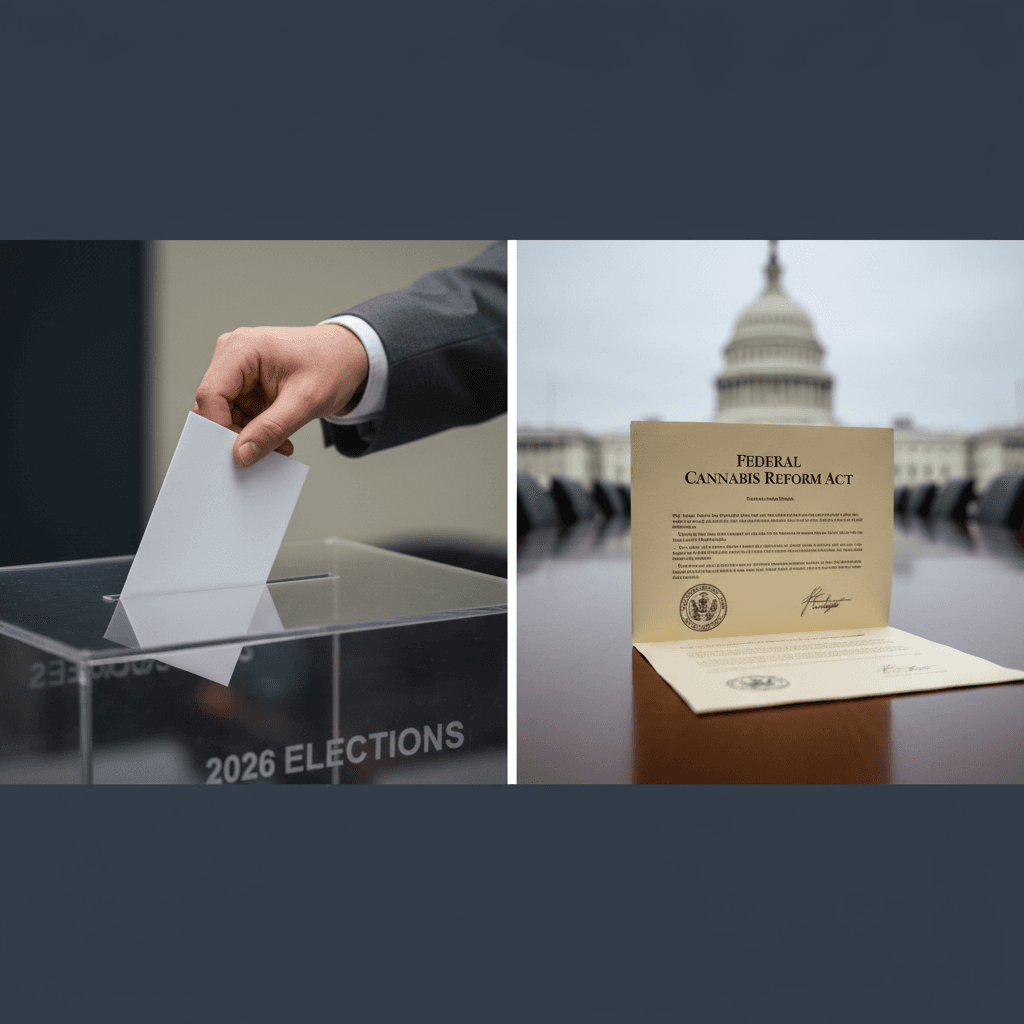
The trajectory of federal cannabis reform in the United States is more likely to be determined by the political landscape shaped by the 2026 elections than by any single piece of legislation, according to an analysis published by Marijuana Moment. Jordan Isenstadt of the National Cannabis Industry Association (NCIA) posits that while specific bills like the Secure and Fair Enforcement (SAFE) Banking Act or proposals for rescheduling garner significant attention, their passage ultimately depends on the broader political environment.
The Political Environment and Federal Cannabis Reform
Isenstadt, drawing on his background in government, argues that legislative outcomes are rarely isolated to the merits of a single issue. Instead, they are influenced by who holds power, controls the legislative agenda, and determines which issues warrant political capital. For the cannabis industry, this implies that the focus should extend beyond the introduction of bills to the underlying political alignment that dictates their viability.
- Committee Chairs: The leadership of key congressional committees can significantly impact whether a bill advances or stalls.
- Party Control: The majority party in Congress sets the legislative priorities and controls the floor schedule.
- Agency Leadership: Appointments to federal agencies can influence regulatory interpretations and enforcement actions related to cannabis.
- State-Level Influence: Governors and state legislatures continue to define cannabis policy through implementation, enforcement, and, in some instances, efforts to modify existing market structures.
The 2026 elections will directly shape these forces, thereby influencing the pace and direction of federal cannabis reform.
State-Level Dynamics and Perception Management
While federal discussions often dominate headlines, policy evolution continues at the state level. Isenstadt highlights that prohibitionist organizations, such as Smart Approaches to Marijuana, actively engage in elections and statehouses to influence policy and public perception. This sustained engagement underscores the importance of narrative in policymaking, as policymakers often respond to perceived public pressure and support.
Public opinion regarding cannabis has shown progress, but this does not automatically translate into legislative action. The industry’s ability to translate public support into policy outcomes requires active engagement with the political system. This includes understanding the priorities of candidates and demonstrating how cannabis-related issues align with broader political agendas.
Industry Engagement and Future Outlook for Federal Cannabis Reform
The cannabis industry, encompassing state-regulated operators, hemp and cannabinoid businesses, and technology companies, represents a diverse and growing economic sector. This broad reach, while a strength, also presents challenges in achieving unified political alignment. However, such alignment is critical for advancing legislative priorities, whether related to banking access, taxation, or broader regulatory adjustments.
The analysis suggests that the industry’s sustained momentum, built over years, must now be channeled into active participation in the political process. Outcomes in Washington are not solely driven by the introduction of legislation but by the individuals involved in decision-making processes. As previously reported by Hemp Gazette on topics such as rescheduling medical cannabis, the interplay of regulatory frameworks and political will is a constant factor in the sector’s development.
Therefore, the 2026 elections are not merely a procedural event but a determinant of the political environment that will either facilitate or impede the next phase of federal cannabis reform. The industry’s strategic engagement with this electoral cycle will be a key factor in shaping its future regulatory and business landscape.
Disclaimer: This article is for informational purposes only and does not constitute medical advice. Hemp Gazette does not provide medical recommendations, diagnoses, or treatment plans. Always consult a qualified healthcare practitioner before making any decisions regarding your health or any medical condition. Statements concerning the therapeutic uses of hemp, cannabis, or cannabinoid-derived products have not been evaluated by Australia’s Therapeutic Goods Administration (TGA). Medicinal cannabis products in Australia are accessed via prescription pathways under TGA regulation.