
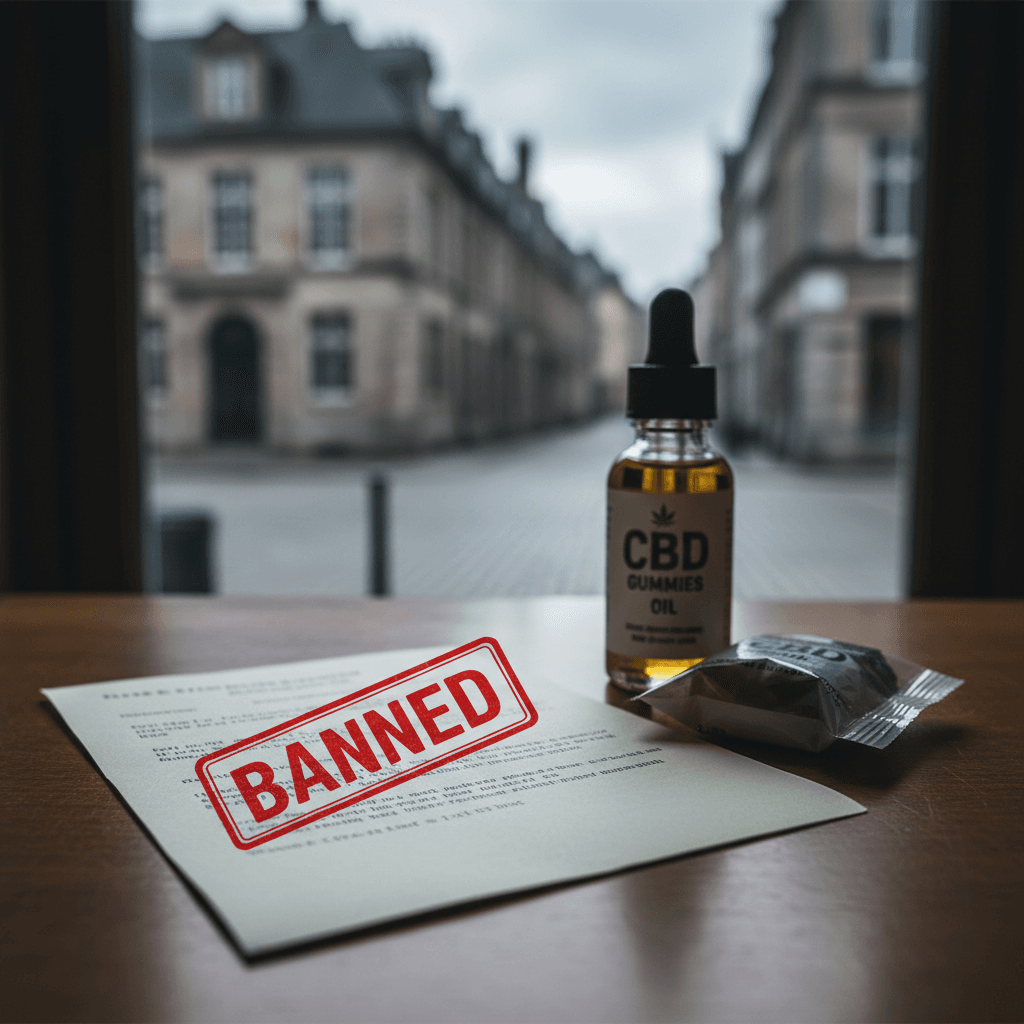
France is implementing stricter enforcement of European Union Novel Food rules, leading to a restriction on the sale of CBD edibles. This measure, effective May 15, is expected to affect a segment of the hemp-derived food market, prohibiting edible products containing cannabidiol (CBD), the primary non-intoxicating compound found in hemp, according to reporting by Forbes.
The restriction is not based on new legislation but rather a more stringent interpretation of the European Union’s food safety guidelines. As previously reported by Hemp Gazette in “A Beginner’s Guide To Cannabidiol (CBD)”, cannabidiol is a compound of increasing interest, and its regulatory status is evolving across jurisdictions.
Regulatory Framework and Enforcement
The European Union’s regulatory framework classifies CBD as a novel food. This designation applies to any food product not consumed in significant quantities within the EU before May 15, 1997. Consequently, CBD products require approval from the European Food Safety Authority (EFSA) before they can be legally marketed. To date, despite over 200 applications, no CBD-containing product has received this approval.
While many EU member states have historically adopted a tolerant approach to CBD, the EFSA’s establishment of provisional safe intake levels has prompted France to take a more assertive stance. The EFSA has set a provisional safe intake level of 0.0275 mg per kilogram of body weight per day, which equates to approximately 2 mg per day for a 70-kilogram adult. France’s Directorate-General for Food presented its enforcement plan to professional organizations on April 15, leading to the imminent restriction.
In practical terms, this means that retailers, including dedicated CBD shops, pharmacies, and supermarkets, selling products such as CBD gummies, sublingual CBD oils, capsules, CBD snacks, and CBD drinks, could face product recalls.
Market Impact and Industry Response
The Union of Industries for the Valorization of Hemp Extracts (UIVEC) estimates that France has 2,000 hemp producers, 20,000 pharmacies, and 1,500 CBD shops. The turnover for CBD-based food supplements alone is estimated at €100 million, which this new restriction may impact.
In response, professional organizations are advocating for:
- An immediate suspension of the control plan.
- An emergency meeting with relevant ministries.
- The implementation of rules that would permit compliant operators to continue operations while the European Novel Food approval process remains pending.
France’s Broader Hemp and Cannabis Policy
This restriction on CBD edibles aligns with France’s generally restrictive approach to cannabis and hemp. While recreational cannabis remains illegal, medical use is permitted only within tightly controlled trials. Conversely, industrial hemp is legal, and France is a significant producer, accounting for over 60% of EU production.
CBD extracted from EU-certified hemp varieties with less than 0.3% THC is generally legal to produce, market, and consume. However, regulations vary among EU member states, and many products are subject to EU Novel Food requirements and national drug regulations.
French authorities previously attempted to ban retail sales of CBD flowers and leaves in 2021, a ban that was subsequently overturned. A significant legal precedent for CBD in France and the EU was the Kanavape case. In November 2020, the Court of Justice of the European Union ruled that CBD does not possess a psychotropic effect, does not qualify as a narcotic, and that a member state cannot prohibit CBD lawfully produced in another EU country unless the restriction is necessary and proportionate for public health reasons. Despite this ruling, French authorities have continued to pursue restrictions on hemp products, and this latest step regarding CBD edibles is likely to prompt further legal challenges, particularly as European thresholds for CBD food remain provisional and the EFSA has indicated that further evaluation is needed.
Disclaimer: This article is for informational purposes only and does not constitute medical advice. Hemp Gazette does not provide medical recommendations, diagnoses, or treatment plans. Always consult a qualified healthcare practitioner before making any decisions regarding your health or any medical condition. Statements concerning the therapeutic uses of hemp, cannabis, or cannabinoid-derived products have not been evaluated by Australia’s Therapeutic Goods Administration (TGA). Medicinal cannabis products in Australia are accessed via prescription pathways under TGA regulation.