
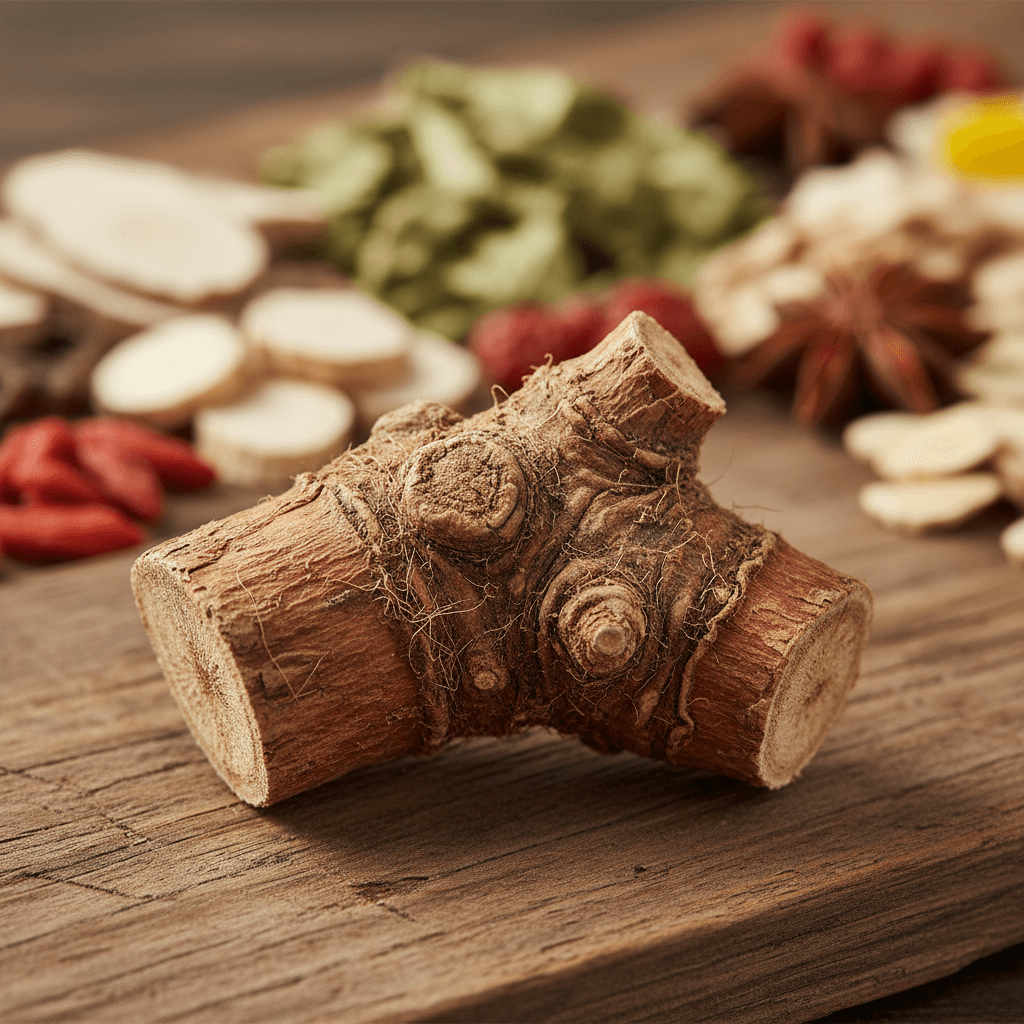
New research published in Frontiers in Pharmacology has investigated the anti-inflammatory properties of Saussurea costus, a plant traditionally used in Chinese medicine. The study aimed to identify the specific compounds within Saussurea costus that contribute to its reported effects, particularly in the context of rheumatoid arthritis (RA).
Rheumatoid arthritis is a chronic autoimmune condition characterised by persistent joint inflammation and damage. While various disease-modifying antirheumatic drugs (DMARDs) are available, a notable proportion of patients continue to experience disease activity, prompting interest in complementary approaches.
Investigating Anti-Inflammatory Compounds in Saussurea Costus
Researchers from institutions including Karolinska Institutet and Uppsala University in Sweden, and Guangzhou University of Chinese Medicine in China, focused on Saussurea costus (also known as Mu Xiang in Traditional Chinese Medicine) as part of a broader investigation into Formulation C (Qushi-Juanbi Granules), a multi-herbal formulation used clinically for RA.
The study specifically sought to understand the contribution of reactive sesquiterpene lactones, which have long been associated with the plant’s anti-inflammatory properties, versus other non-reactive compounds.
Key Findings from the Research
- An aqueous extract of Saussurea costus demonstrated potent anti-inflammatory activities in laboratory cell-based assays. These activities primarily affected key inflammatory signalling pathways relevant to RA, such as NF-κB and NFAT, and influenced cytokine production in primary B cells.
- When electrophilic compounds, including sesquiterpene lactones, were selectively removed from the extract using a thiol-reactive compound depletion method, the observed anti-inflammatory activity was largely diminished.
- Two sesquiterpene lactones, costunolide and dehydrocostus lactone, were identified as major active constituents responsible for the in vitro effects. These compounds are known for their ability to interact with proteins, which underlies a broad range of biological activities.
- In an in vivo KRN T cell transfer arthritis model, the aqueous extract of Saussurea costus modestly reduced paw swelling during the early phase of the disease. In contrast, the electrophile-depleted extract showed minimal activity in this model.
The findings suggest that sesquiterpene lactones are significant contributors to the overall anti-inflammatory activity of Saussurea costus. However, the researchers also noted that other, non-thiol-reactive compounds may play a role in its in vivo activity, indicating a complex bioactive profile.
Future Directions for Rheumatoid Arthritis Research
This research provides a more detailed characterisation of the bioactive components within Saussurea costus. The depletion method used in this study offers a straightforward strategy that could be applied to explore bioactive constituents in other natural product extracts. The authors suggest that these results support further mechanistic and preclinical investigations into Saussurea costus for rheumatoid arthritis research.
As previously reported by Hemp Gazette, other natural compounds, including cannabinoids, are also being investigated for their potential benefits in managing arthritis symptoms.
Disclaimer: This article is for informational purposes only and does not constitute medical advice. Hemp Gazette does not provide medical recommendations, diagnoses, or treatment plans. Always consult a qualified healthcare practitioner before making any decisions regarding your health or any medical condition. Statements concerning the therapeutic uses of hemp, cannabis, or cannabinoid-derived products have not been evaluated by Australia’s Therapeutic Goods Administration (TGA). Medicinal cannabis products in Australia are accessed via prescription pathways under TGA regulation.