
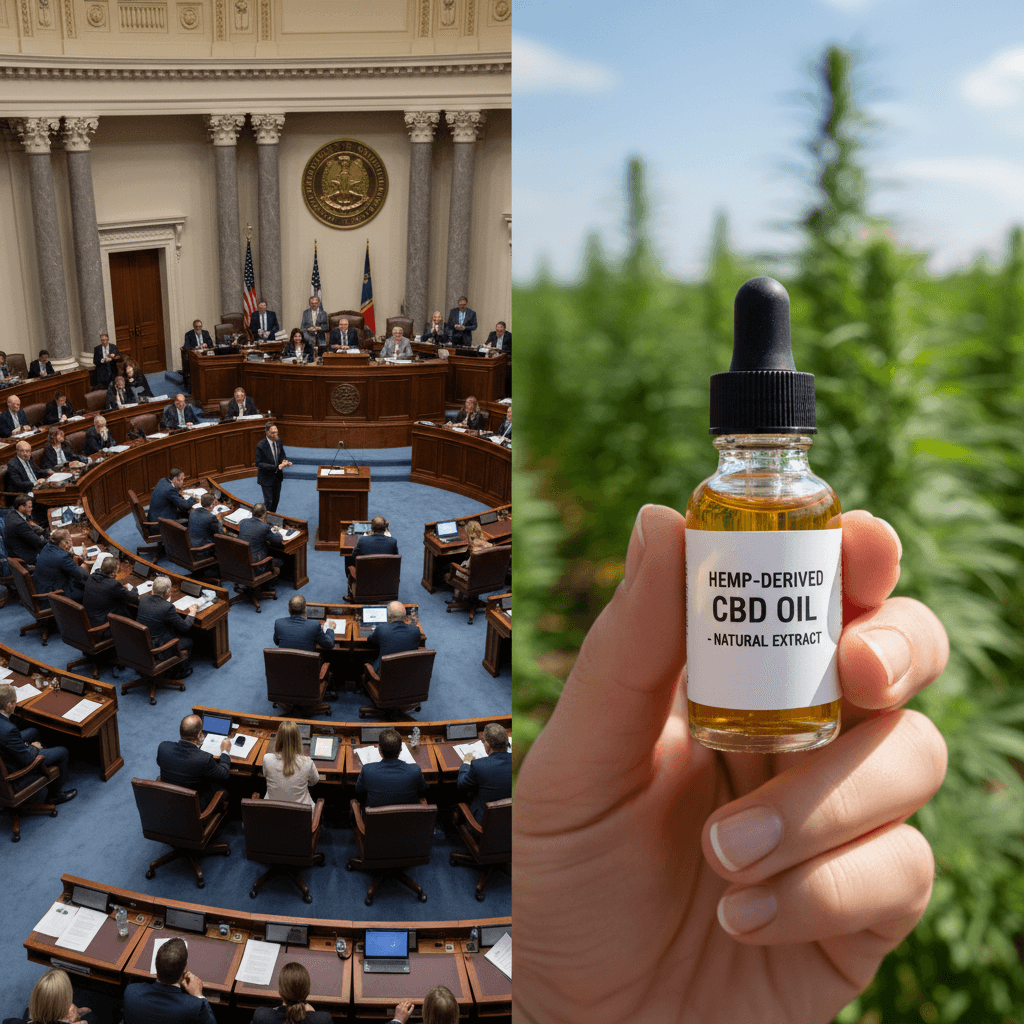
Recent legislative actions in the U.S. Congress have introduced a dual dynamic for the cannabis sector, with implications for both marijuana policy reform and the future of the industrial hemp industry. These developments include efforts to impede federal marijuana rescheduling while simultaneously advancing policies that could restrict the market for hemp-derived cannabinoid products.
For states like Michigan, a significant cannabis market, these federal shifts are prompting regulatory agencies to assess potential impacts. David Harns, a spokesperson for the Michigan Cannabis Regulatory Agency (CRA), stated that the agency is conducting a thorough analysis of federal orders to understand their scope and any potential effects on Michigan’s operations, policies, and compliance obligations, as reported by MITECHNEWS.COM on May 1, 2026.
Congressional Action on Marijuana Rescheduling
Efforts to Block Schedule III Reclassification
While federal agencies evaluate a proposed shift of cannabis from Schedule I to Schedule III under the Controlled Substances Act, a Republican-led congressional committee has moved to block this rescheduling. Language has been introduced that aims to prevent the Justice Department from implementing the reclassification.
A move to Schedule III could have several business implications for the regulated cannabis industry:
- Elimination of the IRS 280E tax burden, which currently prevents cannabis businesses from deducting ordinary business expenses.
- Expanded access to traditional banking services.
- Broader opportunities for scientific research into cannabis.
For large multi-state operators active in Michigan, such as Green Thumb Industries, Cresco Labs, Verano, and Curaleaf, a federal tax relief measure could substantially improve profit margins in a market characterized by price compression and competition.
Industrial Hemp Faces Federal Policy Shift
Farm Bill’s Impact on Hemp-Derived THC
Concurrently, the U.S. House has passed a Farm Bill that does not include provisions to delay a federal crackdown on certain hemp-derived THC products. This legislative omission keeps a federal policy on track for implementation later in 2026, which could impose stricter THC limits on a range of products.
This policy aims to address the so-called “hemp loophole” by enforcing strict THC caps, potentially affecting:
- Delta-8 THC products.
- Hemp-derived beverages.
- CBD products containing trace amounts of THC.
Blain Becktold, president of the Industrial Hemp Association of Michigan (iHemp), noted that the industry is still assessing the full impact of the U.S. House version of the Farm Bill on current and future markets for industrial hemp products. He indicated that the administration’s position suggests continued access to CBD products, which he views as a positive direction for industrial hemp, despite broader industry concerns about product restrictions.
Michigan’s Regulatory Landscape
State-Level Responses and Market Dynamics
Michigan’s cannabis market is one of the largest in the U.S., with annual sales exceeding $3 billion. However, the market has experienced softening monthly sales in early 2026, and over 500 cannabis businesses have closed in recent years due to intense competition and falling prices.
In response to the evolving federal landscape, Michigan lawmakers are attempting to establish a state-level framework. The Michigan CRA has supported Senate Bill 599, which seeks to create a legal structure for non-intoxicating consumable hemp products within the state. This bill has passed the Michigan Senate and is currently pending in the House, aligning with broader discussions among the Cannabis Regulators Association to foster consistency in cannabis and hemp oversight.
The confluence of these federal and state policy developments creates distinct implications for various market segments. While large cannabis operators could benefit from federal tax relief if rescheduling proceeds, craft and local growers continue to face challenges from falling prices and oversupply. Hemp businesses, in particular, face significant uncertainty as they evaluate the potential disruption from new federal THC limits.
Disclaimer: This article is for informational purposes only and does not constitute medical advice. Hemp Gazette does not provide medical recommendations, diagnoses, or treatment plans. Always consult a qualified healthcare practitioner before making any decisions regarding your health or any medical condition. Statements concerning the therapeutic uses of hemp, cannabis, or cannabinoid-derived products have not been evaluated by Australia’s Therapeutic Goods Administration (TGA). Medicinal cannabis products in Australia are accessed via prescription pathways under TGA regulation.