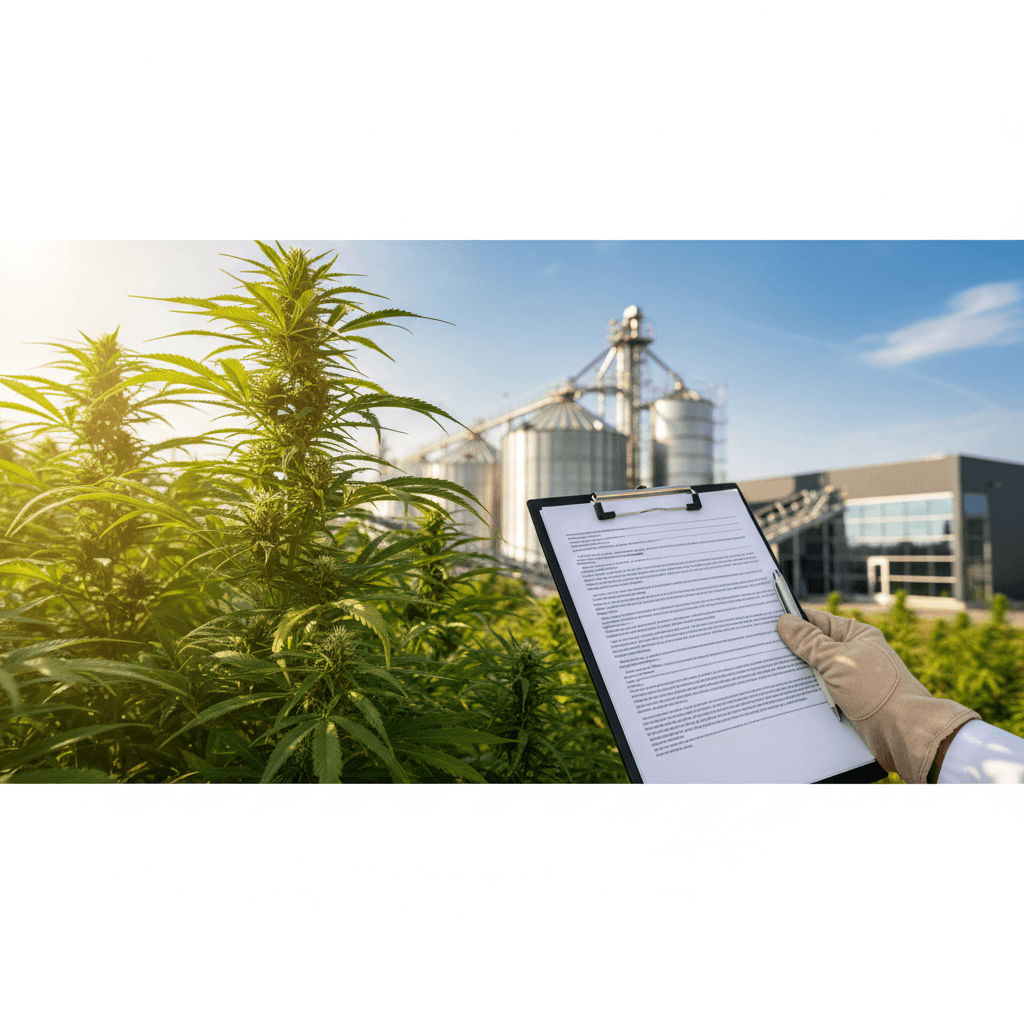
The re-legalisation of industrial hemp in the United States through the Agriculture Improvement Act of 2018, commonly known as the 2018 Farm Bill, aimed to re-establish the plant as a legitimate agricultural commodity. Championed by Kentucky Senator Mitch McConnell, the legislation included the Hemp Farming Act, and permitted its cultivation under federal oversight. However, the subsequent market development has introduced regulatory complexities and challenges to the sector’s integrity, as reported by Cannabis Now.
The 2018 Farm Bill and Industrial Hemp’s Re-emergence
Signed into law by then-President Donald Trump, the 2018 Farm Bill addressed hemp. The explicit intent, as articulated during the bill’s passage, was to foster a new agricultural industry, providing economic opportunities for farmers and processors by distinguishing industrial hemp from illicit cannabis varieties.
Prior to this, hemp cultivation had been largely prohibited for decades under federal law, despite its historical uses in textiles, paper, and various industrial applications. The Hemp Farming Act sought to differentiate industrial hemp from cannabis varieties cultivated for recreational or medical use with higher THC content, thereby opening pathways for research, cultivation, and commercialisation under a controlled framework.
Market Dynamics and Regulatory Ambiguities
While the 2018 Farm Bill provided a federal framework for industrial hemp cultivation, its implementation has revealed areas of ambiguity, particularly concerning hemp-derived cannabinoid products. This inadvertently created a pathway for the proliferation of products containing other cannabinoids, such as delta-8 THC, which can have intoxicating effects. These products have entered markets without clear federal oversight, creating a complex and sometimes contentious regulatory environment.
The lack of specific federal guidance on the safety and legality of these novel hemp-derived cannabinoids in food, beverages, and dietary supplements has posed significant challenges. This regulatory vacuum has allowed some market participants to operate in a manner that may not align with the original legislative intent of restoring a legitimate agricultural commodity. Concerns have been raised regarding inconsistent product labelling, variable potency, and the potential for contaminants, undermining consumer safety and fair competition for compliant operators within the legitimate industrial hemp sector.
States have responded with varying approaches, with some enacting bans or strict regulations on delta-8 THC and similar compounds, while others have allowed their sale. This patchwork of state-level regulations further complicates interstate commerce and enforcement, creating an uneven playing field for businesses and consumers.
Implications for the Industrial Hemp Sector and Global Policy
The ongoing regulatory uncertainty impacts various stakeholders, from farmers investing in industrial hemp cultivation to businesses developing compliant hemp-derived products. For the broader market, this situation introduces risks related to product quality, labelling accuracy, and consumer perception, potentially hindering the long-term growth of the sector. Legitimate businesses adhering to stringent testing and manufacturing standards face competition from products that may not meet similar benchmarks, impacting their market share and profitability.
This dynamic also has implications for investor confidence, as the lack of a clear and consistent federal regulatory framework creates an environment of unpredictability. The challenges in the US market serve as a case study for other jurisdictions which are developing or refining their own regulatory frameworks for industrial hemp and cannabinoid products. International policy professionals and operators monitor these developments closely, understanding that robust and clear regulations are considered essential to ensure market stability, protect consumers, and allow the industrial hemp sector to realise its full economic potential without being undermined by non-compliant practices or market distortions.
As discussions continue for a new US Farm Bill, stakeholders anticipate potential amendments that could address these ambiguities, either by explicitly regulating or prohibiting certain hemp-derived intoxicating cannabinoids, or by providing clearer pathways for their legal production and sale under federal oversight.
Disclaimer: This article is for informational purposes only and does not constitute medical advice. Hemp Gazette does not provide medical recommendations, diagnoses, or treatment plans. Always consult a qualified healthcare practitioner before making any decisions regarding your health or any medical condition. Statements concerning the therapeutic uses of hemp, cannabis, or cannabinoid-derived products have not been evaluated by Australia’s Therapeutic Goods Administration (TGA). Medicinal cannabis products in Australia are accessed via prescription pathways under TGA regulation.