
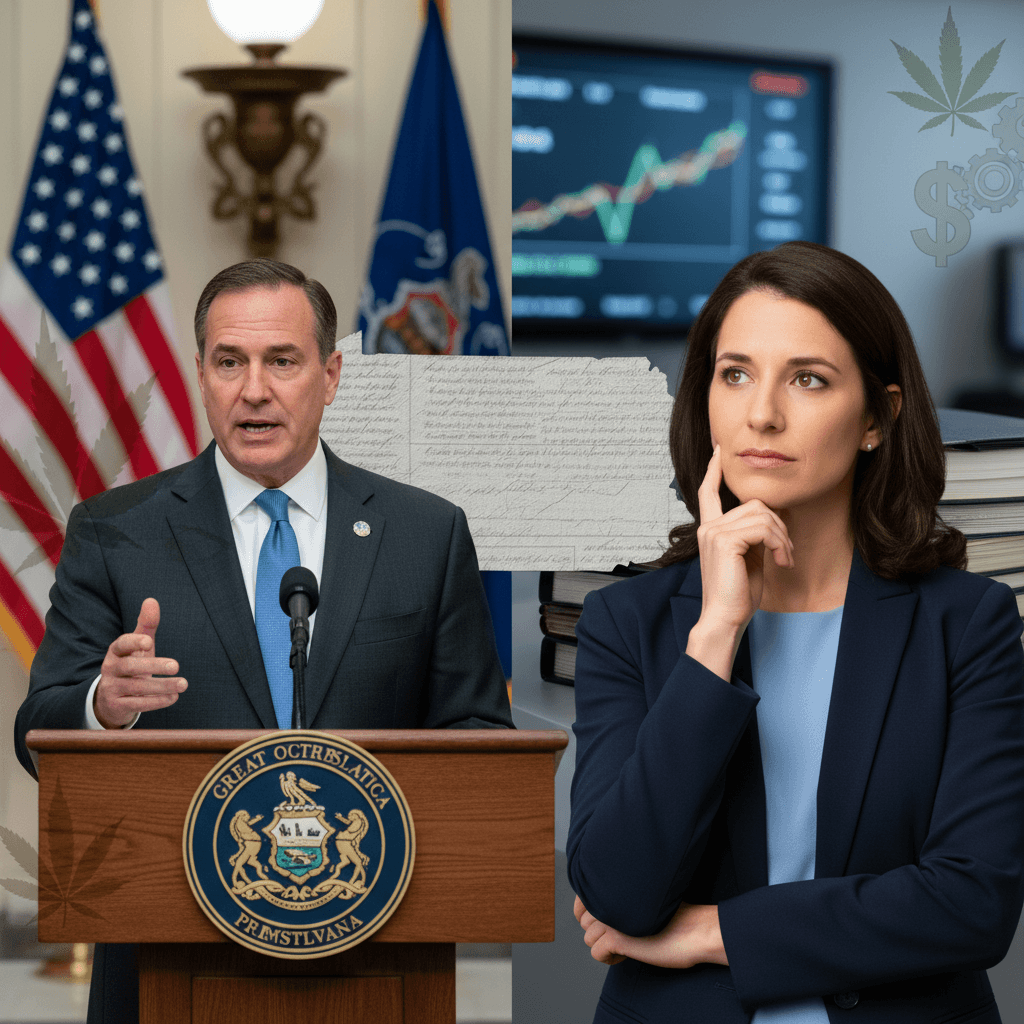
Political Landscape and the Push for Pennsylvania Cannabis Legalization
The debate surrounding Pennsylvania cannabis legalization has become a focal point in the state’s gubernatorial election, with incumbent Governor Josh Shapiro (D) and his Republican challenger, State Treasurer Stacy Garrity (R), holding differing positions on the reform. Governor Shapiro has consistently advocated for ending cannabis prohibition, integrating legalization into his annual budget requests to the legislature. His campaign emphasizes the potential for significant state revenue and increased competitiveness, noting that neighboring states have already legalized adult-use cannabis.
Conversely, Treasurer Garrity’s stance has been less explicit in recent public statements. While she stated last year that she holds no “policy position” on the issue, a 2020 questionnaire from the Pennsylvania Family Council revealed her opposition to recreational cannabis legalization, where her response to the question, “Should marijuana be legalized for recreational use?” was recorded as “N.” Campaign staff for Ms. Garrity did not respond to inquiries from Marijuana Moment regarding an updated position or whether the recent federal rescheduling of cannabis influences her view.
Legislative Progress and Standoffs
The legislative path for Pennsylvania cannabis legalization has seen movement in the Democratic-controlled House of Representatives, which passed a bill last year to end prohibition and establish state-owned dispensaries. However, the Republican-controlled Senate has not advanced similar legislation, expressing criticism of the House’s model without proposing an alternative. This legislative impasse continues despite Governor Shapiro’s repeated calls for lawmakers to send him a bill, including a social media appeal on April 20, highlighting the hundreds of millions in revenue lost to neighboring states.
Recent legislative actions include:
- The Pennsylvania House of Representatives passed budget legislation proposed by Governor Shapiro that incorporates revenue projections from future recreational cannabis sales.
- The House Health Committee approved a bill allowing terminally ill patients to use medical cannabis within hospitals and other healthcare facilities.
- The Senate Law and Justice Committee amended and approved a bill to establish a Cannabis Control Board (CCB) to oversee the state’s medical marijuana program and intoxicating hemp products, with the potential to regulate adult-use cannabis if it is legalized.
Economic Projections and Public Support for Cannabis Reform
The economic implications of Pennsylvania cannabis legalization are a key component of the ongoing debate. Governor Shapiro’s office projects that legalization could generate approximately $36.9 million in tax revenue in its first year from a 20 percent wholesale tax, gradually increasing to $223.8 million by 2030-2031. However, the state’s Independent Fiscal Office (IFO) provided a significantly higher estimate in February, reporting that cannabis legalization could generate nearly half a billion dollars in annual revenue by 2028.
The IFO’s analysis suggests that with a proposed 20 percent wholesale cannabis excise tax, a 6 percent state sales tax for retail, and licensing fees, the governor’s plan could yield $140 million in tax revenue in the first year of implementation (2027-2028), escalating to $432 million by 2030-2031. These figures underscore the potential fiscal benefits that proponents argue could be invested into public services, schools, and small businesses.
Public opinion in Pennsylvania strongly favors legalization. A recent poll indicated that 69 percent of likely voters support the regulation and taxation of legal cannabis for adults 21 and older. This support spans party lines, with 72 percent of Democrats, 67 percent of Republicans, and 64 percent of independents expressing approval for the reform.
Federal Context and Future Outlook
The recent move by the Trump administration to federally reschedule cannabis has been cited by Governor Shapiro’s office as an “important step” that “adds support” to his ongoing efforts for state-level legalization. This federal development provides additional context to the state’s internal discussions, potentially influencing future legislative actions.
As the gubernatorial election approaches, the divergent views on Pennsylvania cannabis legalization between Governor Shapiro and Treasurer Garrity will likely remain a significant policy discussion. The sustained public support and the potential for substantial state revenue continue to fuel the push for comprehensive cannabis reform within the Commonwealth.
Disclaimer: This article is for informational purposes only and does not constitute medical advice. Hemp Gazette does not provide medical recommendations, diagnoses, or treatment plans. Always consult a qualified healthcare practitioner before making any decisions regarding your health or any medical condition. Statements concerning the therapeutic uses of hemp, cannabis, or cannabinoid-derived products have not been evaluated by Australia’s Therapeutic Goods Administration (TGA). Medicinal cannabis products in Australia are accessed via prescription pathways under TGA regulation.