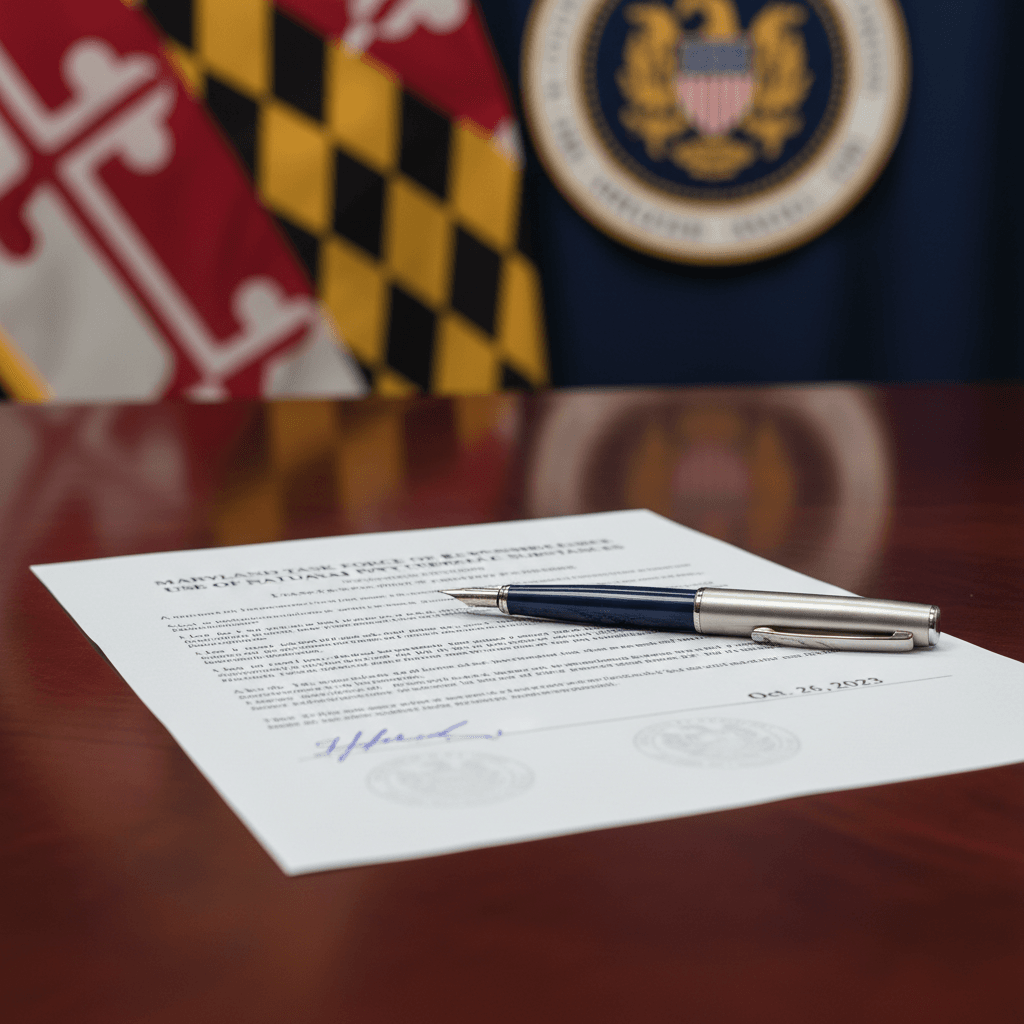
Maryland Governor Wes Moore has signed legislation extending the Maryland psychedelics task force until the end of 2027. This legislative action aims to further develop recommendations for expanding therapeutic access to natural psychedelic substances and potentially establish a comprehensive regulatory framework for their supervised use within the state.
Continued Mandate for the Maryland Psychedelics Task Force
Governor Moore approved Senate Bill 336 (SB 336) and House Bill 427 (HB 427) on Tuesday. These proposals, put forth by Senator Brian Feldman (D) and Delegate Pam Guzzone (D), build upon earlier legislation that initially established the Maryland Task Force on Responsible Use of Natural Psychedelic Substances. The 17-person task force, operating under the oversight of the Maryland Cannabis Administration (MCA), is specifically charged with studying how to ensure “broad, equitable and affordable access to psychedelic substances” in Maryland.
The newly enacted legislation extends the panel’s work through December 31, 2027. In the interim, the task force is required to submit an updated report to state legislators with additional findings and recommendations by October 31, 2024. Furthermore, the approved legislation mandates the addition of a representative from a historically Black college or university to the panel, enhancing its diversity and perspective.
Developing a Multi-Pathway Framework for Therapeutic Access
The Maryland psychedelics task force released an initial final report last year, outlining recommendations for a phased implementation of reforms. This report advised a “multi-pathway framework for safe, broad, and equitable access to natural psychedelic substances, with an initial focus on psilocybin.” The proposed model is designed to serve the needs of Maryland’s diverse population while establishing unified safety standards, accountability, and viable economic pathways for small businesses.
The recommended framework involves three distinct phases:
- Phase One: Advisory Board Establishment – This initial phase focuses on creating an advisory board tasked with establishing safety parameters, data monitoring protocols, practice guidelines, licensing protections, public education campaigns, training for facilitators, law enforcement, and testing facilities. It also includes “immediate restorative justice measures.”
- Phase Two: Deprioritization and Supervised Use – Under this phase, the state would implement “deprioritization measures” to mitigate the harms associated with criminalization. It would also provide for supervised medical and adult-use consumption facilities, allow personal cultivation for “permitted individuals,” and promote research processes.
- Phase Three: Commercial Sales Program – This final phase is contingent on “demonstrated safety outcomes and provider confidence” based on the successful implementation of the prior steps. If these factors are satisfied, it would lead to a commercial sales program for adults who maintain an active license to use natural psychedelic substances, coupled with an evaluation of the state’s readiness for expanding to additional natural psychedelic substances.
Currently, the task force’s scope of investigation is limited to psilocybin, mescaline, and DMT, reflecting a conservative approach in its initial work despite legislative empowerment to investigate other substances.
Strategic Approach and Broader Policy Context
Notably, the task force has expressed a clear stance against “delaying state action pending future federal [Food and Drug Administration] approval.” Instead, it advocates for a coordinated launch of multiple pathways, emphasizing that its recommendation for simultaneous implementation does not mean all components must activate on the exact same day, but rather that Maryland should avoid the sequential approach seen in other jurisdictions where implementing one pathway causes others to “languish” or bolster black and gray markets.
This multi-phase approach aims to establish foundational systems that support all pathways equally, followed by a coordinated launch of medical, supervised adult use, and deprioritization pathways, with commercial sales following once product safety systems are operational. The task force also suggested that this model could serve as a blueprint for other states developing their own regulatory frameworks.
In broader legislative developments, Governor Moore also signed other bills this week. These include measures to protect firefighters and rescue workers from penalties related to their lawful use of medical marijuana off-duty, and legislation providing legal protections for veterinarians who recommend medical cannabis for animals. These actions align with Maryland’s ongoing policy evolution in cannabis and related substances, building on earlier coverage by Hemp Gazette regarding initiatives such as mass pardons for cannabis convictions.
Disclaimer: This article is for informational purposes only and does not constitute medical advice. Hemp Gazette does not provide medical recommendations, diagnoses, or treatment plans. Always consult a qualified healthcare practitioner before making any decisions regarding your health or any medical condition. Statements concerning the therapeutic uses of hemp, cannabis, or cannabinoid-derived products have not been evaluated by Australia’s Therapeutic Goods Administration (TGA). Medicinal cannabis products in Australia are accessed via prescription pathways under TGA regulation.