
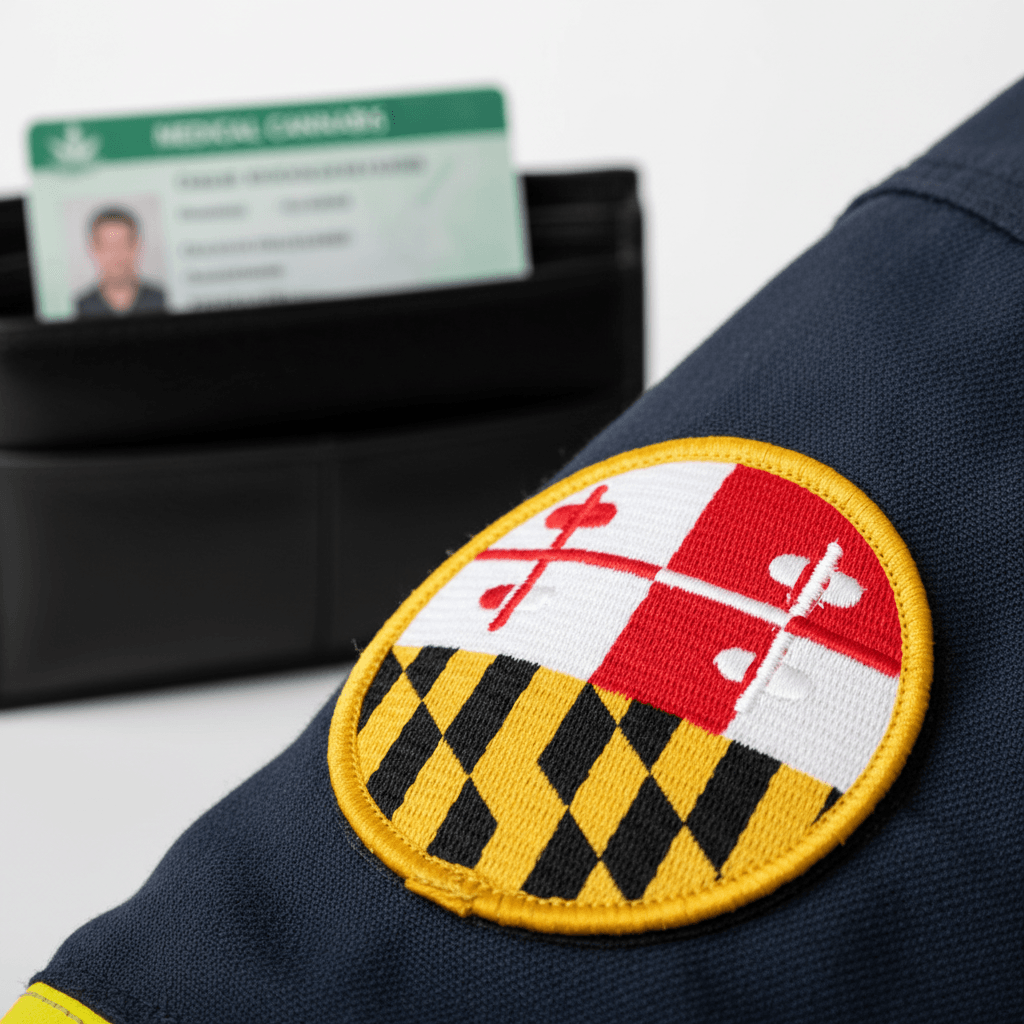
Maryland Governor Wes Moore signed legislation on Tuesday allowing fire and rescue public safety employees to engage in off-duty medical cannabis use without fear of employment repercussions. The new law, which takes effect on October 1, prohibits employers from penalizing employees who hold valid medical cannabis ID cards for their use outside of work hours.
The legislation represents the culmination of a multi-year advocacy effort by firefighter unions across the state, particularly those in Howard County, who had previously secured similar protections at the county level. Matt Johnson, Vice President of IAFF Local 2000, noted the effort was three years in the making, stating, “We were told by a lot of people it would never get done. So, it’s really surreal after three years and going through all of this that it’s actually done.”
Protections and Prohibitions Under the New Law
The newly enacted law introduces specific protections for fire and rescue public safety employees while also maintaining critical safety standards. According to a report by Ganjapreneur, the bill prohibits employers from:
- Disciplining, discharging, or otherwise discriminating against an employee regarding compensation, terms, conditions, or privileges of employment.
- Limiting, segregating, or classifying employees in a way that would deprive or tend to deprive them of employment opportunities or adversely affect their job status.
However, the legislation explicitly prohibits fire and public safety employees from reporting for duty under the influence of cannabis. Furthermore, it mandates that employers report any instances of on-duty impairment to the State Emergency Medical Services Board.
Advocacy and Rationale for Medical Cannabis Access
Proponents of the bill highlighted the potential for medical cannabis to assist firefighters and EMTs. These professionals often face elevated risks of certain cancers, chronic pain, and post-traumatic stress disorder (PTSD) due to the nature of their work. Brad Klukas, an executive board representative for IAFF Local 2000, emphasized that medical cannabis may offer an alternative to opioids, which carry a risk of addiction. He stated that access to such options could enable firefighters to perform their duties.
Jeffrey Buddle, President of the Professional Fire Fighters of Maryland, provided testimony in support of the bill, asserting that the legislation aims to balance workplace safety with equitable employment practices. Buddle’s testimony underscored that employees lawfully using medical cannabis for qualifying conditions should not face automatic or unjust employment consequences, provided they are not impaired while on duty.
Addressing Impairment Concerns
During the legislative process, concerns were raised regarding potential on-the-job impairment. Eric Smothers, a former president of the Maryland State Firefighters Association, testified against the bill, arguing that it could diminish the authority of medical directors to determine an individual’s fitness for duty.
In response, advocating unions maintained that robust “fitness of duty” tests are already in place to address any potential impairment. Jeffrey Buddle, President of the Professional Fire Fighters of Maryland, stated, “[We screen for] any type of medication that would cause them any sort of impairment, or that would affect their ability to perform their duties. They’re already prohibited from reporting to duty under those type of conditions.” Andrew Pantelis, Vice President of the International Association of Firefighters, further noted that other states, such as Pittsburgh, Pennsylvania, have had similar laws for over 10 years without instances of on-duty impairment challenges.
Disclaimer: This article is for informational purposes only and does not constitute medical advice. Hemp Gazette does not provide medical recommendations, diagnoses, or treatment plans. Always consult a qualified healthcare practitioner before making any decisions regarding your health or any medical condition. Statements concerning the therapeutic uses of hemp, cannabis, or cannabinoid-derived products have not been evaluated by Australia’s Therapeutic Goods Administration (TGA). Medicinal cannabis products in Australia are accessed via prescription pathways under TGA regulation.