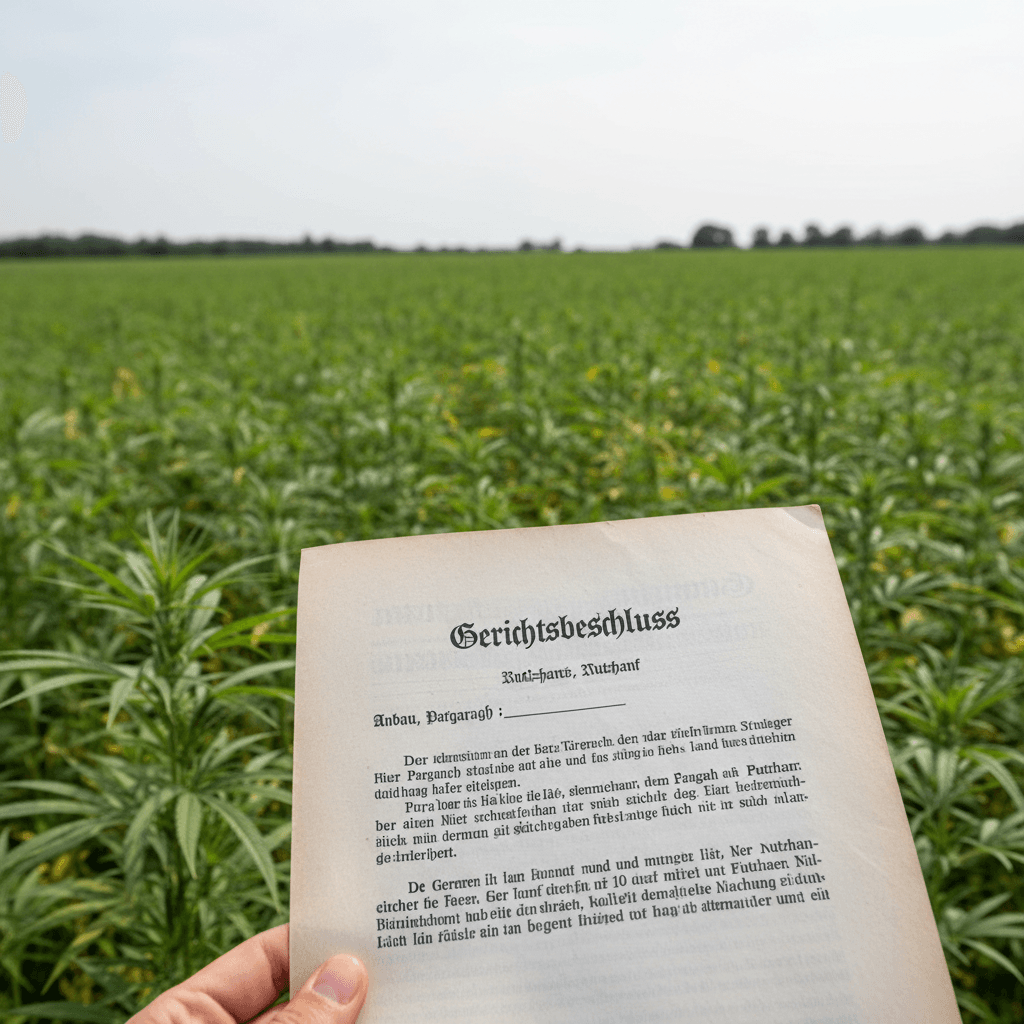
A recent ruling from a Bavarian court is set to have a significant impact on the legal framework governing the industrial hemp industry in Germany, according to MMJDaily.com. The Amberg District Court acquitted a defendant charged with illegally trading industrial hemp containing less than 0.3 percent THC. Following this decision, the public prosecutor’s office withdrew its appeal, rendering the verdict legally binding. This development provides a new interpretation of the so-called “intoxication clause” that has long affected the German industrial hemp sector.
The “Intoxication Clause” and its Legal History
The “intoxication clause” is a specific legal provision unique to Germany within Europe. This clause previously allowed for the prosecution of individuals involved in the trade of industrial hemp if it was deemed that the product could theoretically be misused for intoxication purposes, even if its THC content was below the legal threshold.
The legal precedent for these prosecutions stemmed from a Federal Court of Justice ruling on March 21, 2021. This ruling stated that larger quantities of industrial hemp flowers with more than 0.1 percent THC could, in theory, be processed to produce an intoxicating effect. Based on this interpretation, public prosecutor’s offices across Germany pursued cases against distributors and producers, despite the industrial hemp being cultivated and distributed in compliance with existing regulations regarding THC content.
Impact on German Industrial Hemp Cultivation
The legal uncertainty created by the “intoxication clause” and subsequent prosecutions had measurable negative consequences for the German industrial hemp industry. Data from 2025 indicates a reduction of 1,842 hectares in the area under industrial hemp cultivation across Germany. Furthermore, 127 farmers ceased their cultivation activities, citing the increased pressure and legal ambiguity.
The impact extended beyond commercial farms. Even academic and research institutions, including museums, reportedly lost their cultivation permits due to the heightened legal risks. This regulatory environment created operational challenges and deterred investment and expansion within the sector.
Implications of the Amberg District Court Decision
The Amberg District Court’s recent acquittal and the subsequent withdrawal of the public prosecutor’s appeal introduce a new legal perspective. The court reasoned that with the implementation of the Consumer Cannabis Act, which permits adults to legally purchase THC-containing cannabis, the potential for misusing industrial hemp for intoxication purposes is no longer considered realistic. This shift in legal interpretation effectively diminishes the rationale behind the “intoxication clause” as it pertains to industrial hemp.
This legally binding verdict is expected to provide clarity and stability for German industrial hemp producers, processors, and distributors. By addressing a significant regulatory hurdle, the decision may support renewed growth and investment in the cultivation and commercialisation of industrial hemp products within Germany, aligning its legal framework more closely with other European nations that do not enforce a similar “intoxication clause.”
Disclaimer: This article is for informational purposes only and does not constitute medical advice. Hemp Gazette does not provide medical recommendations, diagnoses, or treatment plans. Always consult a qualified healthcare practitioner before making any decisions regarding your health or any medical condition. Statements concerning the therapeutic uses of hemp, cannabis, or cannabinoid-derived products have not been evaluated by Australia’s Therapeutic Goods Administration (TGA). Medicinal cannabis products in Australia are accessed via prescription pathways under TGA regulation.