
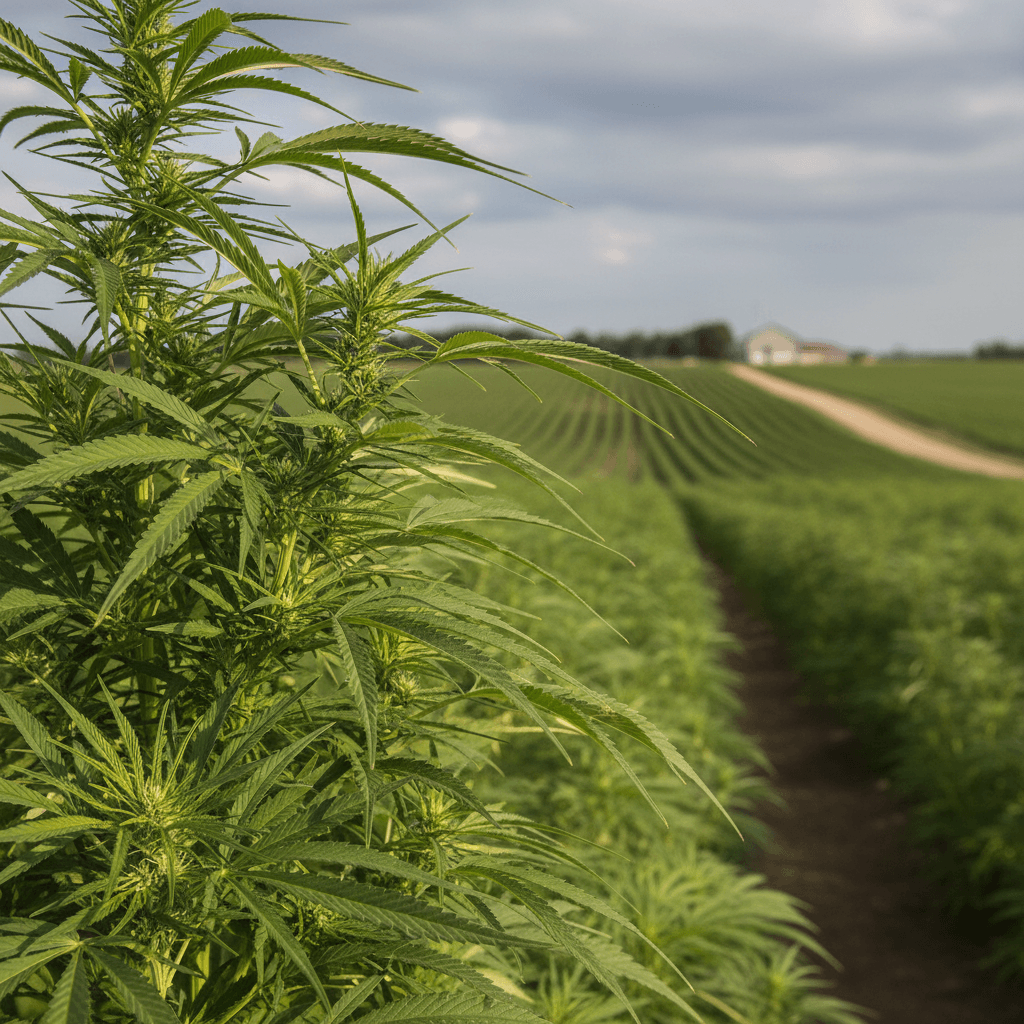
The Virginia hemp industry is navigating a complex regulatory landscape marked by impending federal restrictions on hemp-derived tetrahydrocannabinol (THC) products and unresolved state legislation for a retail cannabis market. This dual challenge is prompting businesses to consider strategic adjustments to their operations, as reported by the Virginia Mercury and Marijuana Moment.
Graham Redfern, owner of Redfern Hemp Co. in Caroline County, highlighted the uncertainty facing his business, which employs 14 full-time and 5 part-time staff. His company produces various hemp-based products, including body creams, dog treats, chocolates, and gummies. Redfern expressed concern that many of his products could become illegal later this year due to federal changes.
Federal Regulatory Framework for Hemp
The federal regulatory environment for hemp has shifted significantly since the 2018 Farm Bill, which initially allowed for the cultivation and processing of hemp so long as products maintained a specific concentration of THC. However, recent updates in a government spending bill last fall include provisions that will further restrict, and effectively ban, many hemp-based products. The U.S. House of Representatives recently passed its newest version of the Farm Bill, which will proceed to the U.S. Senate for review, without bipartisan efforts to reverse the forthcoming illegality of certain hemp products.
U.S. Rep. Eugene Vindman, representing Virginia’s 7th Congressional District, visited Redfern Hemp Co. to understand the implications of these federal shifts. Redfern urged Rep. Vindman to advocate for the hemp industry, particularly regarding potential adjustments to the federal Farm Bill. Rep. Vindman indicated his interest in continuing discussions on hemp policy in Washington D.C.
Virginia’s Unresolved Retail Cannabis Market
Concurrently, the Virginia hemp industry is contending with the state’s stalled efforts to establish a regulated retail cannabis market. Despite recreational cannabis being legalized in Virginia half a decade ago, a framework for retail sales remains unfinalized. A multi-pronged plan to roll out a retail market passed the legislature with bipartisan support this year but was returned by Governor Abigail Spanberger with amendments. Lawmakers subsequently rejected these proposed changes, leaving the Governor with the choice to sign the original bill or veto it entirely.
Challenges for Small Businesses
Redfern noted that even if the legislature had accepted Governor Spanberger’s amendments, some provisions would pose difficulties for small business owners. Specifically, the state lawmakers’ bill stipulates that businesses’ agricultural, production, and commercial spaces must operate within a 20-mile radius. Redfern’s farm is in Caroline County, while his commercial kitchen is in Richmond, a distance that would necessitate significant operational changes.
- Redfern’s farm and local storefront are in Caroline County.
- His commercial kitchen, where products are tested and created, is located in Richmond.
- The 20-mile radius requirement would prevent his current business model from transitioning into the regulated marijuana market without substantial investment or relocation.
Del. Paul Krizek, D-Fairfax, the author of the House version of the bill, expressed frustration with the Governor’s amendments but indicated openness to future collaboration. Redfern has urged Governor Spanberger to veto the current bill and engage in further negotiations with lawmakers, particularly as state budget discussions continue ahead of the July 1 budget lapse.
Industry Adaptation and Future Outlook
In response to the regulatory uncertainty, businesses in the Virginia hemp industry are exploring alternative ventures. Redfern Hemp Co. is investigating the use of hemp fibers to stabilize plastic in the recycling process, aiming to reduce microplastic proliferation. Additionally, Redfern is considering how to transition his business into selling cannabis products, contingent on the establishment of a viable state retail market.
Another example is Richmond-based restaurateur Jay Bayer of Bingo Beer, who partnered with Pure Shenandoah to produce low-dose THC seltzers. Bayer had hoped this partnership could evolve into a marijuana-based product line once a legal market was established in Virginia, providing an alcohol alternative for consumers. The future of these pivots remains dependent on the resolution of both federal hemp regulations and Virginia’s state-level cannabis market framework.
Disclaimer: This article is for informational purposes only and does not constitute medical advice. Hemp Gazette does not provide medical recommendations, diagnoses, or treatment plans. Always consult a qualified healthcare practitioner before making any decisions regarding your health or any medical condition. Statements concerning the therapeutic uses of hemp, cannabis, or cannabinoid-derived products have not been evaluated by Australia’s Therapeutic Goods Administration (TGA). Medicinal cannabis products in Australia are accessed via prescription pathways under TGA regulation.