
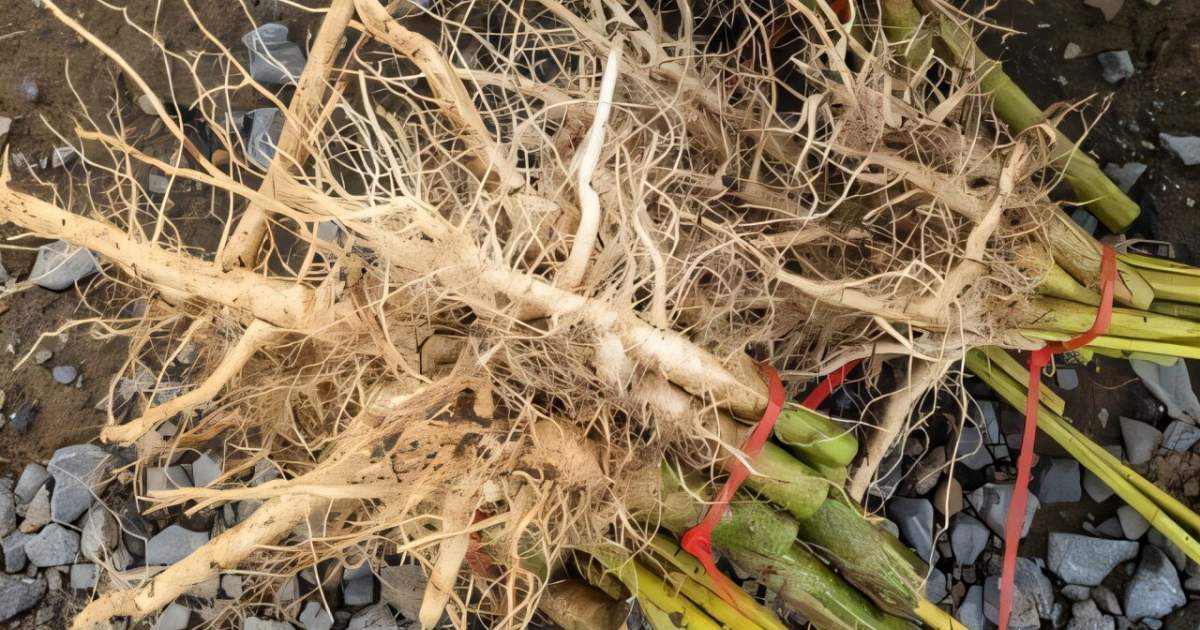
Every part of the cannabis plant is useful, including the roots — and the the U.S. Department of Agriculture’s Agricultural Research Service (ARS) has redefined the value of these roots, indicating opportunities for farmers and the pharmaceutical industry.
The industrial hemp plant has a deep taproot system that develops into a vast, fibrous network of lateral roots. The roots help break up hard soil and can suck up contaminants such as heavy metals and “forever” chemicals (phytoremediation). They also act as fertiliser post-cropping.
A research chemist with the National Center for Agricultural Utilization Research in Peoria, IL, Dr. Korey Brownstein, noticed an unfamiliar substance appearing in his chemical analysis of hemp roots that led him and his team to look more into it to determine its structure.
The substance was found to consist of four compounds (‘neolignans’), the first time such molecules have been isolated from hemp roots. The researchers thought the discovery was important enough that three years were spent on “complex and increasingly difficult” isolation and purification of these compounds.
After collaborating with scientists at the Pediatric Oncology Laboratory at the University of Illinois College of Medicine Peoria, these molecules showed moderate activity in killing pediatric cancer cells in a laboratory setting.
“Refining and understanding the effect of this molecule on pediatric cancers will open new alternatives for children’s cancers that are unresponsive to current therapies,” says the ARS team.
The discovery could offer industrial hemp growers a potential new source of revenue from a plant component previously not well-utilised.
“.. if we treat hemp as a multi-use crop, we can expand its applications and market—paper, grain, fiber, and now, potentially, pharmaceutical compounds from the roots,” said Brownstein.
The team is now moving on to scaling up compound extraction for larger, more controlled functional studies; aiming to investigate a wide range of cancer cell lines and in greater depth to assess the therapeutic potential of these ‘neolignans’.
The study has been published in the Journal of Cannabis Research.
Industrial hemp, although when a strict definition is used only includes food, fibre, and grain, is already an important source of pharmaceutical compounds, including cannabidiol (CBD).